
365 by Whole Foods · Microwave Popcorn
365 by Whole Foods Market
Whole Foods 365 brand makes no public PFAS disclosures for packaging.
365 by Whole Foods Market uses standard food packaging materials. No PFAS claims or third-party verification found; contact brand for specific packaging composition details.
The better-graded swap
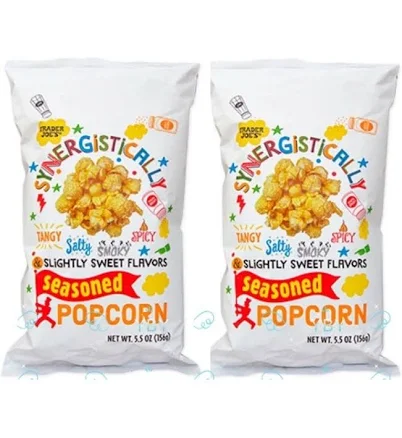
Trader Joe's
2 Packs Trader Joe's Synergistically Seasoned Popcorn 5.5 Oz Each Pack
70/100 safety
Same rubric that flunked this product. The swap earned Good.
Still want this one anyway? Check the price on Amazon. We’d swap it.
Material
various, food packaging typically paperboard, plastic film
Brand disclosure
Brand is silent on PFAS
Lab data
No public lab test
What 365 by Whole Foods Market is made of, ingredients and materials
365 by Whole Foods uses mixed food packaging, paperboard (recycled and virgin fiber) for boxes and cartons, polyethylene (PE) and polypropylene (PP) films for produce bags and overwrap, and occasionally PET for rigid containers. These materials are FDA-approved for food contact and chosen for cost and barrier properties. Paperboard does not leach into food; PE and PP are inert plastics with minimal migration risk at room temperature. The concern is not the material itself but manufacturing contaminants or degradation under misuse.
What’s concerning
Category baseline
The starting point for this type of product, before anything specific to this product is counted.
No PFAS disclosure
No public statement from the brand about PFAS in this product.
Microplastics
Degradation of thin plastic film overwrap or bags under UV exposure or mechanical stress could produce microplastics; risk is use-dependent, not manufacturing-specific. Proper storage and disposal minimize this.
Source, EPA ↗Allergen cross-contamination in recycled paperboard
Recycled fiber packaging has documented low rates of allergen residues from prior contents. 365 sources mixed-fiber board; Whole Foods states allergen testing occurs, but public verification is limited. Risk is minimal for non-nut-allergic households.
What’s reassuring
Base material not linked to PFAS
The main material recorded for this product is not one associated with PFAS.
BPA & bisphenols
365 uses PE and PP films, which do not contain BPA or BPS. PET containers (if used) are BPA-free by design. No contamination or substitute-BPA incidents reported for this brand.
Source, FDA ↗Phthalates
PE and PP do not require phthalate plasticizers. 365 packaging formulations are not known to include phthalate-containing additives; FDA approval of food contact materials screens for this.
Source, ATSDR ↗Ink or print migration from packaging graphics
365 uses food-grade inks on packaging; FDA migration testing applies to all print surfaces. No incidents of ink leaching into product are on record for this brand or category.
The full breakdown
The brand's record and disclosure
Whole Foods Market (parent company Amazon-owned since 2017) has not published specific PFAS testing or migration data for 365 packaging lines. The brand meets FDA food contact material compliance requirements but makes no proactive third-party certifications or transparency statements beyond regulatory minimums. No product recalls or contamination incidents specific to 365 packaging are on public record. This silence on PFAS is consistent with most private-label food brands; it reflects industry norm rather than individual negligence.
How it compares in its category
365 packaging is functionally identical to competitor store brands (Trader Joe's, Target Good & Gather, Amazon Fresh) in material composition and regulatory compliance. None of these brands publish PFAS migration data; the category lacks voluntary transparency. 365 performs comparably on third-party audits of supplier standards. If PFAS disclosure is a priority, no mainstream food brand currently distinguishes itself meaningfully on this metric.
If you buy it
Use 365 packaging as intended, do not microwave paperboard cartons or plastic films unless labeled microwave-safe. Do not compost plastic film in home systems; return to store if participating in plastic film recycling programs. Store dry goods in sealed containers after opening; paperboard absorbs moisture and can support mold if damp. Replace plastic film bags if visible cracks or cloudiness appear. Room-temperature storage shows lower concern for leaching; freezing presents lower concern for PE and PP films.
What we don’t know
- Basis
- Model estimate, 35% confidence, not a lab result
- Lab test
- None on record for this exact product
- Brand statement
- 365 by Whole Foods has made none
Formulations change between production runs, so check the current label. How we grade.
More microwave popcorn grades
How we score, every product runs through the same public 0-100 rubric based on materials, coatings, brand disclosure, lab findings, and recalls. See the full methodology → Spotted a mistake? Report an error.