Crate & Barrel Merrow Stitch Warm Natural Organic Cotton Tablecloth vs Briar Tablecloth: which is safer?
Crate & Barrel Merrow Stitch Warm Natural Organic Cotton Tablecloth is our pick, better on PFAS and on the overall hazard picture.
Our pick
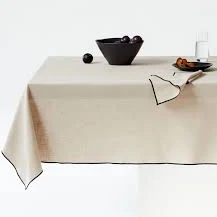
Crate and Barrel
Crate & Barrel Merrow Stitch Warm Natural Organic Cotton Tablecloth
PFAS grade
Overall grade
Verdict
Hazard flags
Material
Confidence
PossibleAzo dyes and synthetic colorants
PossiblePesticide residues from cotton cultivation
PossibleMicrobial growth and mold from retained moisture
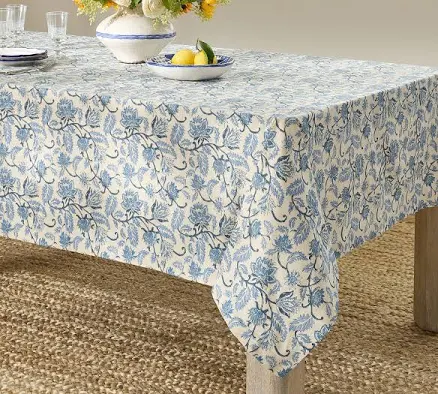
Pottery Barn
Briar Tablecloth
PFAS grade
Overall grade
Verdict
Hazard flags
Material
Confidence
Likelywater-repellent coating finish composition (PFAS suspected but unconfirmed)
PossibleFormaldehyde or formaldehyde releasers in fabric finish or dyes
PossibleAzo dyes (if the product is dyed)
Where these two actually differ
- We flag Azo dyes and synthetic colorants, Pesticide residues from cotton cultivation and Microbial growth and mold from retained moisture on the Crate and Barrel and not on the Pottery Barn.
- We flag DWR finish composition (PFAS suspected but unconfirmed), Formaldehyde or formaldehyde releasers in fabric finish or dyes, Azo dyes (if the product is dyed) and VOC off-gassing from finish or dyes during storage or use on the Pottery Barn and not on the Crate and Barrel.
- The Crate and Barrel is 100% organic cotton, no coating where the Pottery Barn is Cotton/linen blend with durable water-repellent (DWR) finish, which is most of the difference in these two grades.
- The gap is 45 points, wide enough that this is not a close call, and the Crate and Barrel is the one to buy.
- We are less certain about the Pottery Barn grade, at 45% confidence against 88%, because it discloses less.
Both products run through the same public rubric, which covers materials, coatings, brand disclosure, lab findings, and recalls, plus a beyond-PFAS hazard analysis. Grades are model-based estimates, not lab tests. How grades work →
More stain-resistant textiles, see the full ranking