Daily Sun Serum SPF 30 Mineral Sunscreen vs Skin All Over Sun Milk Face & Body SPF 50: which is safer?
Daily Sun Serum SPF 30 Mineral Sunscreen is our pick, better on PFAS and on the overall hazard picture.
Our pick
Derma E
Daily Sun Serum SPF 30 Mineral Sunscreen
PFAS grade
Overall grade
Verdict
Hazard flags
Material
Confidence
Possible1,4-dioxane (non-intentional contaminant from surfactants/emulsifiers)
PossibleFragrance allergens (if fragrance is present)
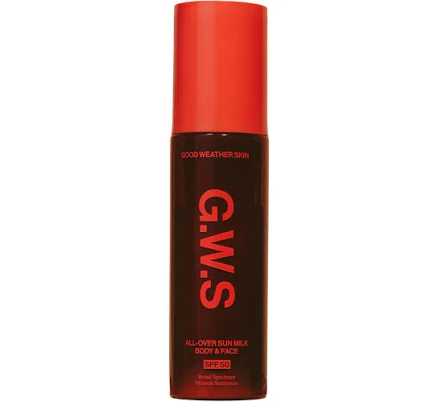
Good Weather
Skin All Over Sun Milk Face & Body SPF 50
PFAS grade
Overall grade
Verdict
Hazard flags
Material
Confidence
Possible1,4-dioxane (manufacturing byproduct in ethoxylated ingredients)
PossibleFragrance allergens and undisclosed fragrance components
PossibleHeavy metals in inorganic UV filters (titanium dioxide, zinc oxide) or mineral pigments
Where these two actually differ
- We flag 1,4-dioxane (non-intentional contaminant from surfactants/emulsifiers) and Fragrance allergens (if fragrance is present) on the Derma E and not on the Good Weather.
- We flag 1,4-dioxane (manufacturing byproduct in ethoxylated ingredients), Fragrance allergens and undisclosed fragrance components, Heavy metals in inorganic UV filters (titanium dioxide, zinc oxide) or mineral pigments and Preservative-related irritation or sensitization on the Good Weather and not on the Derma E.
- The Derma E is Mineral sunscreen, zinc oxide base where the Good Weather is Water-resistant cosmetic emulsion (oil-in-water base with silicones, UV filters, water-repellent additives), which is most of the difference in these two grades.
- The gap is 25 points, wide enough that this is not a close call, and the Derma E is the one to buy.
- We are less certain about the Good Weather grade, at 52% confidence against 88%, because it discloses less.
Both products run through the same public rubric, which covers materials, coatings, brand disclosure, lab findings, and recalls, plus a beyond-PFAS hazard analysis. Grades are model-based estimates, not lab tests. How grades work →
More sunscreen, see the full ranking