Hard-Anodized Induction Nonstick Frying Pan vs Stainless Clad Fry Pan: which is safer?
Made In Stainless Clad Fry Pan is the clear pick. KitchenAid Hard-Anodized Induction Nonstick Frying Pan carries a failing PFAS grade, and we never recommend buying a failing product.
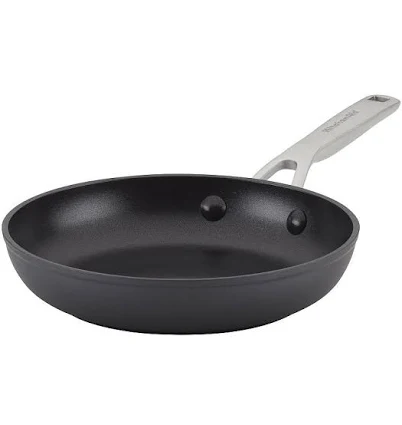
Kitchenaid
Hard-Anodized Induction Nonstick Frying Pan
PFAS grade
Overall grade
Verdict
Hazard flags
Material
Confidence
PossibleTeflon-type coating fume risk (conditional on unknown coating type)
ReportedCoating degradation and microparticle release
LikelyUnverified nonstick coating identity
Our pick
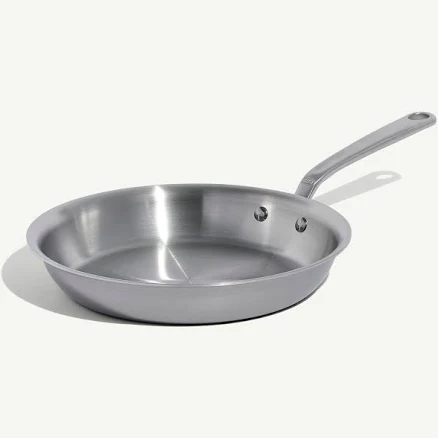
Made In
Stainless Clad Fry Pan
PFAS grade
Overall grade
Verdict
Hazard flags
Material
Confidence
PossibleClad separation or delamination over time
Where these two actually differ
- We flag PTFE fume risk (conditional on unknown coating type), Coating degradation and microparticle release and Unverified nonstick coating identity on the Kitchenaid and not on the Made In.
- We flag Clad separation or delamination over time on the Made In and not on the Kitchenaid.
- The Kitchenaid is Hard-anodized aluminum with nonstick coating where the Made In is Stainless steel clad construction, no nonstick coating, which is most of the difference in these two grades.
- The gap is 85 points, wide enough that this is not a close call, and the Made In is the one to buy.
- We are less certain about the Kitchenaid grade, at 45% confidence against 90%, because it discloses less.
Both products run through the same public rubric: materials, coatings, brand disclosure, lab findings, and recalls, plus a beyond-PFAS hazard analysis. Grades are model-based estimates, not lab tests. How grades work →
More cookware: see the full ranking