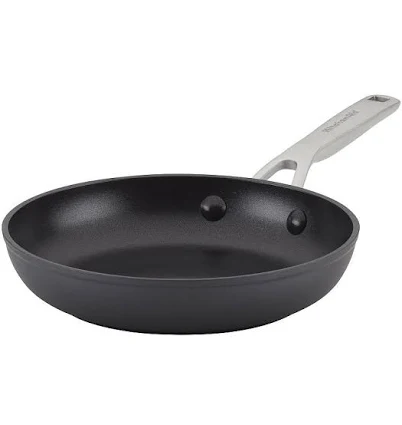
KitchenAid Hard-Anodized Induction Nonstick Frying Pan
Skip until brand confirms nonstick coating PFAS status.
KitchenAid does not publicly disclose nonstick coating composition or PFAS content for this pan. Hard-anodized cookware with unspecified nonstick raises concern without third-party testing or brand commitment.
The better-graded swap
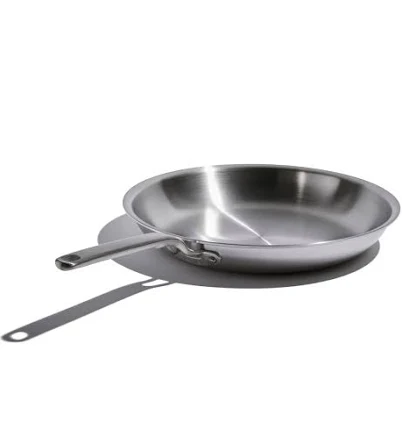
Heritage Steel
Heritage Steel Eater Fry Pan
100/100 safety
Same rubric that flunked this product. The swap earned Excellent.
Still want this one anyway? Check the price on Amazon. We’d swap it.
Material
Hard-anodized aluminum with nonstick coating
Lab data
No public lab test
Is KitchenAid Hard-Anodized Induction non-toxic? What it is made of
This pan uses hard-anodized aluminum as its base, a process that electrochemically thickens the naturally occurring oxide layer on aluminum to create a durable, corrosion-resistant surface. Hard anodization is significantly harder than bare or soft-anodized aluminum and resists scratching better. The nonstick coating sits on top of this anodized layer, but KitchenAid has not publicly disclosed whether that coating contains Teflon-type coating, PFOA, or other PFAS "forever chemicals" (PFAS), which is a material gap given widespread industry use of these compounds in nonstick formulations.
What’s concerning
Category baseline
The starting point for this type of product, before anything specific to this product is counted.
No PFAS disclosure
No public statement from the brand about PFAS in this product.
Non-stick, chemistry undisclosed
Marketed as non-stick without stating the coating chemistry.
Teflon-type coating fume risk (conditional on unknown coating type)
If the nonstick coating is Teflon-type coating-based, overheating above 300, 350°C can initiate polymer decomposition and release fumes. KitchenAid's silence on coating chemistry makes this risk unquantifiable; brands that disclose coating chemistry explicitly allow for better assessment.
Coating degradation and microparticle release
Nonstick coatings on hard-anodized cookware can flake or wear over time, especially with dishwasher use or metal utensils. Ingestion of small coating fragments is unlikely to be acutely toxic but represents a quality-of-life concern and potential microplastic accumulation.
Unverified nonstick coating identity
The specific nonstick formulation (Teflon-type coating, PFOA-free alternative, or entirely fluorine-free) is not disclosed publicly. Without this baseline information, proper risk assessment is impossible, and claims about safety cannot be independently verified.
What’s reassuring
Aluminum leaching (minor, due to anodization barrier)
Hard anodization creates a thick aluminum oxide barrier that dramatically reduces aluminum ion release compared to bare or soft-anodized aluminum. Standard cookware safety tests show negligible leaching under normal pH (neutral to slightly alkaline foods). Risk is only elevated in acidic conditions or with a compromised anodized layer.
Heat distribution and burn risk from metal base
Hard-anodized aluminum conducts heat efficiently, which is a feature rather than a hazard, but requires user awareness of faster hot-spot formation and increased burn risk if handles or edges contact high-heat sources. Not product-specific; standard cookware handling applies.
The full breakdown
The brand's record and disclosure
KitchenAid (owned by Whirlpool) does not maintain a public safety data sheet or transparency statement specifically addressing PFAS in its cookware nonstick coatings. The brand has not pursued PFAS-free certifications or third-party verification for this product line. Without direct communication from the company, consumers cannot confirm whether the nonstick coating is Teflon-type coating-based, PFOA-free, or entirely PFAS-free. This silence on a material health issue is a significant transparency shortfall for a premium-tier cookware brand.
How it compares in its category
Hard-anodized nonstick pans from KitchenAid are mid-to-premium priced and marketed for durability and heat conductivity. Competitors like Le Creuset, OXO, and Caraway have begun disclosing PFAS status or switching to PFAS-free coatings; KitchenAid has not followed. Hard anodization itself presents lower concern than bare aluminum (which can leach at low pH), but the nonstick coating opacity undermines this advantage. For the price point, the lack of transparency is a competitive weakness.
If you buy it
Use on medium heat or lower; avoid preheating empty, as polymer coatings degrade above 300, 350°C and can emit fumes if Teflon-type coating-based. Hand wash rather than dishwasher to extend coating life and reduce mechanical wear. Inspect the cooking surface regularly for scratches, peeling, or discoloration; replace if the coating shows significant damage. Do not use metal utensils; opt for silicone, wood, or plastic. Store without stacking to avoid pressure damage. Contact KitchenAid to request written confirmation of nonstick coating composition before relying on this pan long-term.
What we don’t know
- Basis
- Model estimate, 45% confidence, not a lab result
- Lab test
- None on record for this exact product
- Brand statement
- Kitchenaid has made a specific claim
Formulations change between production runs, so check the current label. How we grade.
Better-graded alternatives in Cookware
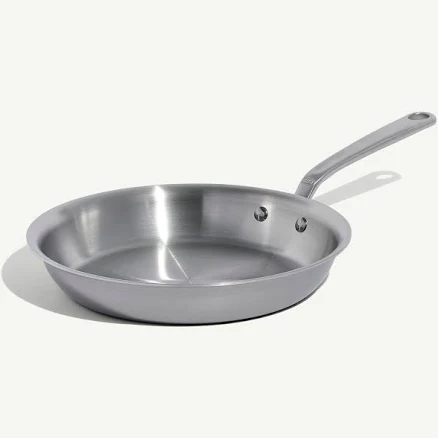
Made In
Stainless Clad Fry Pan
- Stainless steel clad construction, no nonstick coating
- The brand calls it PFAS-free, which we have not verified
- Clad separation or delamination over time
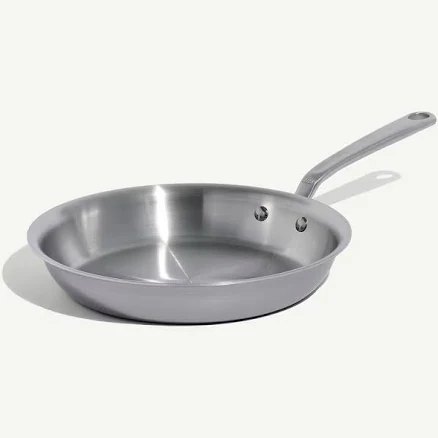
Made In
10' Stainless Clad Frying Pan
- stainless steel clad construction, no nonstick coating
- The brand calls it PFAS-free, which we have not verified
- Nickel leaching from stainless steel
3 hazards checked on this product. See all of them.
Heritage Steel
Eater Fry Pan
- Clad stainless steel, no coating
- The brand calls it PFAS-free, which we have not verified
- Metal ion release during cooking (iron, nickel, chromium)
More cookware grades
How we score, every product runs through the same public 0-100 rubric based on materials, coatings, brand disclosure, lab findings, and recalls. See the full methodology → Spotted a mistake? Report an error.