By PFAS Authority · Updated September 30, 2026
Top grades to buy
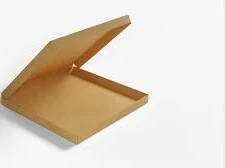
8" Kraft Paper Open Pizza Box
Who Gives A Crap
Krusty Krab Full Size Pizza Box Costume Prop
Model-based grades, not lab tests. We flunk more than we pass. How grading works
PFAS in Pizza Boxes, Which Brands Grade Best and Worst
Based on available materials and data, the clearest lower-concern option in our pizza box database is the Who Gives A Crap 8" Kraft Paper Open Pizza Box, which carries a model-based estimate of Good (70/100 safety). Every other pizza box we have graded from major national chains, including boxes from Pizza Hut, Domino's, and Papa John's, lands in the Poor (25/100 safety) range in our system. This guide compares all twelve graded products so you can see exactly where each one falls before your next order.
The short version, uncoated, undyed kraft paperboard from brands that publish clear fiber-sourcing claims tends to score better in our model than glossy, printed, grease-resistant boxes from large pizza chains, which often rely on fluorinated grease barriers to keep oil from soaking through. None of this is a laboratory certification of any single box. It is a model-based estimate built from disclosed materials, packaging category norms, and public data, not a chemistry lab result. Read on for the full comparison, the honest pros and cons of each product, and what to actively avoid if you are trying to reduce dietary PFAS exposure from food packaging.
Summary comparison
| Product | PFAS grade (model estimate) | Verdict |
|---|---|---|
| Who Gives A Crap 8" Kraft Paper Open Pizza Box | Good, 70/100 | Lower concern based on disclosed materials |
| Who Gives A Crap Krusty Krab Full Size Pizza Box Costume Prop | Good, 70/100 | Lower concern based on disclosed materials |
| Pizza Hut $10 Dinner Box | Poor, 25/100 | Higher concern, avoid if minimizing PFAS exposure |
| Pizza Hut Pizza Boxes (standard) | Poor, 25/100 | Higher concern, avoid if minimizing PFAS exposure |
| Pizza Hut Cardboard Pizza Boxes | Poor, 25/100 | Higher concern, avoid if minimizing PFAS exposure |
| Domino's Chicken Burger Pizza Boxes | Poor, 25/100 | Higher concern, avoid if minimizing PFAS exposure |
| Domino's 14 Inch Pizza Box | Poor, 25/100 | Higher concern, avoid if minimizing PFAS exposure |
| Pizza Hut x TMNT Big New Yorker Pizza Box 16" | Poor, 25/100 | Higher concern, avoid if minimizing PFAS exposure |
| Papa John's The Batman 2022 Limited Edition Pizza Box | Poor, 25/100 | Higher concern, avoid if minimizing PFAS exposure |
| Papa John's Taylor Swift Red Pizza Box | Poor, 25/100 | Higher concern, avoid if minimizing PFAS exposure |
| Papa John's X-Men Origins Wolverine Pizza Box | Poor, 25/100 | Higher concern, avoid if minimizing PFAS exposure |
| Pizza Hut White Pizza Boxes | Poor, 25/100 | Higher concern, avoid if minimizing PFAS exposure |
| MT Products White Pizza Boxes (Pizza Hut style) | Poor, 25/100 | Higher concern, avoid if minimizing PFAS exposure |
Why pizza boxes are a PFAS concern at all
Pizza boxes sit in an odd category. The outer board is often plain cardboard, but the inner surface that touches hot, oily cheese and toppings frequently gets a grease-resistant treatment. For decades, the cheapest and most effective way to make paperboard resist oil was a fluorinated coating, a PFAS chemical. Regulatory pressure and some voluntary phase-outs have pushed parts of the industry toward alternatives, but disclosure is inconsistent, and "grease-resistant" on a box does not tell you which chemistry was used. This is exactly the kind of packaging category covered in our broader pizza boxes category guide, and it overlaps with concerns we track for fast food wrappers and grease-resistant napkins and paper towels, which face the same grease-barrier problem.
The Good-grade boxes, Who Gives A Crap
Who Gives A Crap 8" Kraft Paper Open Pizza Box
Materials, Uncoated kraft paperboard, undyed, open-face design intended for smaller individual pizzas. Brand claims, Who Gives A Crap markets itself around simplified, minimally processed paper products and sustainability-forward sourcing; the brand has stated preferences for unbleached, uncoated materials across much of its paper product line, though this specific claim has not been independently lab-verified in the sources we reviewed. Model estimate, Good, 70/100, based on available materials and data, meaning our system found fewer indicators associated with fluorinated grease barriers than in comparable boxes, not a certified absence of PFAS.
- Pros, Simpler material composition than glossy printed alternatives; open-box design reduces the surface area that needs grease treatment; brand has a general sustainability positioning that extends across its paper goods line.
- Cons, Smaller format limits it to personal-size pizzas; no third-party lab certificate specific to this SKU was available in reviewed sources; a Good score is still not equivalent to a verified zero-PFAS result.
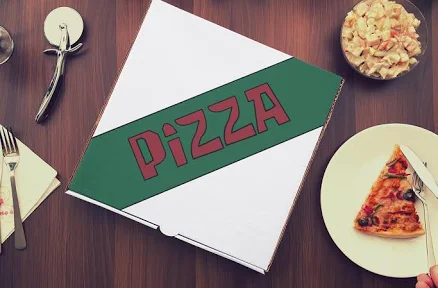
Who Gives A Crap Krusty Krab Full Size Pizza Box Costume Prop
Materials, Full-size kraft paperboard box structure, styled as a costume/novelty prop rather than a strict food-contact item. Brand claims, Same general brand-level sustainability and simplified-materials positioning as the rest of the Who Gives A Crap paper catalog; the novelty framing means it may not be marketed primarily as food packaging. Model estimate, Good, 70/100, our model-based estimate from materials and public disclosure, not a lab test.
- Pros, Larger format than the kraft open box; shares the same lower-indicator material profile; fun for costume or novelty use cases where food contact is secondary.
- Cons, Because it's positioned as a costume prop, buyers looking specifically for a daily-use food pizza box should not assume identical performance to a dedicated food-service product; no independent lab verification found in reviewed sources.
The Poor-grade boxes, major chain packaging
Every other product in our database, spanning Pizza Hut, Domino's, and Papa John's, lands at Poor with a 25/100 model-based safety estimate. These are grouped below by chain since the underlying packaging strategy, glossy printed board with grease-resistant inner coatings, tends to be consistent across a chain's SKUs even when the artwork differs.
Pizza Hut boxes
Materials, Printed corrugated or paperboard exterior with an inner grease-resistant treatment; exact coating chemistry is not disclosed on-pack in the sources reviewed. Brand claims, Pizza Hut has not published a specific PFAS-free claim for these box lines in the materials we reviewed. Model estimate, Poor, 25/100, based on available materials and data.
- Pizza Hut $10 Dinner Box, budget value-line box, same Poor rating.
- Pizza Hut Pizza Boxes (standard), the everyday delivery box most customers actually receive.
- Pizza Hut Cardboard Pizza Boxes, heavier corrugated variant, still Poor.
- Pizza Hut x TMNT Big New Yorker Pizza Box 16", licensed collector box, same underlying material profile.
- Pizza Hut White Pizza Boxes, plain white stock, still Poor in our model.
- MT Products White Pizza Boxes, third-party manufactured white box used in Pizza Hut style service, same rating band.
Pros, Widely available, structurally sturdy, familiar to most consumers. Cons, Consistently Poor across every SKU we have graded, no disclosed alternative-to-PFAS grease barrier found in reviewed sources, collector and novelty editions carry the same underlying packaging risk profile as standard delivery boxes.
Domino's boxes
Materials, Printed paperboard with grease-resistant interior lining; specific chemical composition not disclosed in sources reviewed. Brand claims, No specific PFAS-free statement was found for these SKUs in the materials we reviewed. Model estimate, Poor, 25/100, based on available materials and data.
- Domino's Chicken Burger Pizza Boxes, crossover menu packaging, same grease-barrier concern as standard pizza boxes.
- Domino's 14 Inch Pizza Box, the standard large delivery format most customers see.
Pros, Functional, familiar, fits standard delivery workflows. Cons, Both graded SKUs sit at Poor, no lab-verified PFAS-free claim found, chicken/burger crossover packaging suggests the grease-resistant treatment is applied broadly across Domino's non-pizza items too.
Papa John's boxes
Materials, Printed paperboard, often produced as limited-edition or licensed collector packaging with the same functional grease-resistant lining as standard boxes. Brand claims, No specific PFAS-free statement found in reviewed sources for these SKUs. Model estimate, Poor, 25/100, based on available materials and data.
- The Batman 2022 Movie Limited Edition Pizza Box (UK exclusive)
- Taylor Swift Red Papa John's Pizza Box
- X-Men Origins Wolverine Papa John's Pizza Box
Pros, Collectible, licensed artwork, appealing to fans and memorabilia collectors. Cons, Collector status does not change the underlying box construction; all three graded SKUs land at Poor; buyers seeking these as keepsakes should be aware they share the same material profile as everyday delivery boxes, not a specially formulated safer version.
What to avoid
- Glossy, heavily printed boxes with no material disclosure. Full-color chain branding and licensed collector art do not indicate anything about the grease barrier used inside the box, and in our dataset every printed chain box we reviewed scored Poor.
- Boxes marketed only on flavor or promotion, never on packaging. None of the Poor-rated boxes in this guide carry a stated PFAS-free claim, brand-level or third-party. Absence of a claim is not proof of PFAS presence, but it also means there is no public disclosure to rely on.
- Assuming "cardboard" means uncoated. The Pizza Hut Cardboard Pizza Boxes still land at Poor, 25/100, showing that fiber type alone does not determine the model's estimate; the interior treatment matters more.
- Reusing greasy pizza boxes for food storage or as cutting surfaces. Whatever grease barrier is present was designed for single-use contact, not repeated food handling.
Our pick
Based on available materials and data, the Who Gives A Crap 8" Kraft Paper Open Pizza Box is our pick among the twelve products graded in this category, carrying the highest model-based estimate at Good, 70/100. This is not a certification that the box is free of PFAS, and it is not a claim that it is "safe" in any legal or medical sense. It reflects a model-based estimate from disclosed materials and public data, and the brand's general sustainability positioning has not been independently lab-verified for this specific SKU in the sources we reviewed. The companion Krusty Krab Full Size Pizza Box Costume Prop shares the same Good rating and is worth considering if you need a larger format, keeping in mind its novelty framing. Every major chain box we graded, Pizza Hut, Domino's, and Papa John's alike, currently sits at Poor, 25/100, in our model. If reducing potential PFAS exposure from take-out packaging matters to you, that gap is the single most useful data point in this guide. For a broader look at how pizza box packaging compares across more SKUs as our database grows, visit the pizza boxes best-of page, and use our product finder to check specific items before you order.
FAQ
Does a Poor grade mean a pizza box definitely contains PFAS?
No. A Poor grade is a model-based estimate built from disclosed materials, packaging category norms, and public data, not a laboratory test of that specific box. It signals higher relative concern compared to other graded products, based on available materials and data, but it is not a confirmed lab detection of PFAS in every unit.
Is the Who Gives A Crap kraft box guaranteed to be PFAS-free?
No product in this guide is described as PFAS-free as a matter of fact. The kraft box's Good, 70/100 rating reflects a model-based estimate from materials and public disclosure. The brand's general sustainability claims are brand-stated, not independently lab-verified for this specific SKU in the sources we reviewed, so "lower concern" is the accurate framing, not "PFAS-free" or "safe."
Should I worry about health effects from occasional pizza box exposure?
Studies on PFAS and grease-resistant food packaging generally describe associations with potential health outcomes over long-term, repeated exposure, not proof of causation from any single meal or box. If you want to reduce broader dietary PFAS exposure, it's worth also reviewing our guides to fast food wrappers and grease-resistant napkins and paper towels, since packaging exposure tends to add up across categories rather than come from one product alone.
Now check your own stuff
See every product we’ve graded in this category, best-graded first.
Get the graded list, free.
The products we score each week, and the best-graded alternative in every category.
No spam. Unsubscribe anytime.