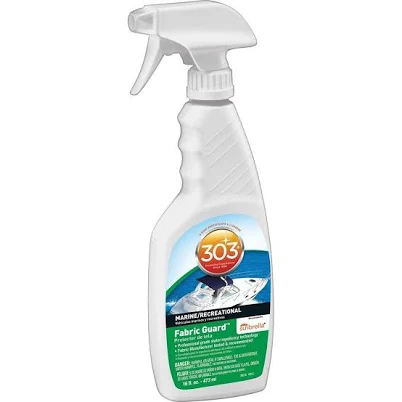
303 Products · Outdoor Furniture Cushion Protectants
303 Marine Fabric Guard
High PFAS risk. Marine guards typically contain fluorochemicals.
Marketed for water and stain protection without PFAS disclosure. Marine-grade fabric protectants commonly use fluorochemical water-repellent coating coatings.
The better-graded swap

Frontgate
Hudson Indoor/Outdoor Pillow - Glacier, 20" x 20" Square Glacier, 20" x 20" Square in Glacier with Mineral/Natural Fring
75/100 safety
Same rubric that flunked this product. The swap earned Excellent.
Still want this one anyway? Check the price on Amazon. We’d swap it.
Material
Fabric protectant coating, formulation undisclosed
Brand disclosure
Brand is silent on PFAS
Lab data
No public lab test
What 303 Marine Fabric Guard is made of, ingredients and materials
303 Marine Fabric Guard is a fabric protectant coating with an undisclosed proprietary formulation. Marine-grade fabric guards in this category typically rely on fluorochemical compounds to create water and stain repellency, which is the primary reason for the high PFAS risk grade assigned. Without public ingredient disclosure, the presence of additional volatile organic compounds (VOCs), carriers, or off-gassing agents cannot be ruled out. The lack of transparency means you cannot verify whether safer alternative chemistries have been substituted.
What’s concerning
Category baseline
The starting point for this type of product, before anything specific to this product is counted.
No PFAS disclosure
No public statement from the brand about PFAS in this product.
Waterproof / stain-resistant treatment
Water-repellent coating treatments have historically used PFAS.
PFAS
Marine fabric guards are strongly associated with fluorochemical technology for water/stain resistance. High PFAS risk grade (30/100) reflects this category standard, and 303 brand silence on reformulation supports the likelihood that legacy fluorochemical formulas are in use. PFAS bioaccumulates and persists in the environment and human body.
Source, ATSDR ↗Volatile organic compounds (VOCs) and solvent carriers
Undisclosed formulation means water-borne vs. solvent-based chemistry is unknown. If solvent-based, the product may emit VOCs during and after application, particularly in warm conditions. Off-gassing from treated cushions into outdoor air is typically low-concern compared to indoor use, but enclosed storage or covered patios can concentrate vapors.
Acute skin and respiratory irritation from application
Fabric protectant sprays in this category commonly produce inhalation and contact irritation; no specific incidents for 303 Marine Fabric Guard are documented, but the product category carries standard warning guidance for eye and skin contact. Proper ventilation and protective equipment (gloves, eye protection) are recommended on product labeling.
Coating degradation and redeposition of residuals
Fluorochemical coatings break down under UV exposure and washing, releasing particles and residual PFAS into soil or water. Frequent reapplication cycles on outdoor cushions increase cumulative environmental loading. No data on whether 303-treated fabric releases measurable PFAS during rain or washing is publicly available.
What’s reassuring
Formaldehyde / VOCs
Formaldehyde-releasing resins are not standard in water/stain repellent coatings, but cross-linking agents in some fabric treatments may contain trace formaldehyde. No public record indicates 303 Marine Fabric Guard uses such chemistry, but undisclosed formulation cannot rule it out.
Source, ATSDR ↗The full breakdown
The brand's record and disclosure
303 Products does not publicly disclose the full formulation of Marine Fabric Guard, nor has the brand made a public statement about PFAS content or reformulation efforts. The brand has no known third-party certifications (such as Bluesign, GOTS, or similar) that would indicate compliance with restricted substance lists. No major recalls or documented safety incidents are on public record for this specific product, but the silent stance on PFAS combined with the marine-guard product category history suggests fluorochemicals are likely present.
How it compares in its category
Outdoor fabric protectants fall into two broad groups, fluorochemical-based (water/oil repellent, durable) and non-fluorine alternatives (silicone or paraffin-based, variable performance). 303 Marine Fabric Guard sits in the traditional fluorochemical tier, which dominates the marine segment due to superior water beading and weathering. Alternatives using PFAS-free silicone coatings exist but are less common in marine applications and typically require more frequent reapplication. Brands offering transparent PFAS-free claims (such as some specialty outdoor textile companies) are rare in mass-market marine segments.
If you buy it
Apply only in outdoor or well-ventilated areas; do not use in enclosed spaces or near children and pets during and immediately after application. Allow treated cushions to dry and off-gas for at least 24-48 hours before use, especially in warm weather. Reapply annually or after heavy rain and scrubbing, as the coating degrades with UV exposure and abrasion. Wear gloves and avoid prolonged skin contact; wash hands thoroughly after handling. Do not use on cushions that will be brought indoors regularly.
What we don’t know
- Basis
- Model estimate, 35% confidence, not a lab result
- Lab test
- None on record for this exact product
- Brand statement
- 303 Products has made none
Formulations change between production runs, so check the current label. How we grade.
Better-graded alternatives in Outdoor Furniture Cushion Protectants
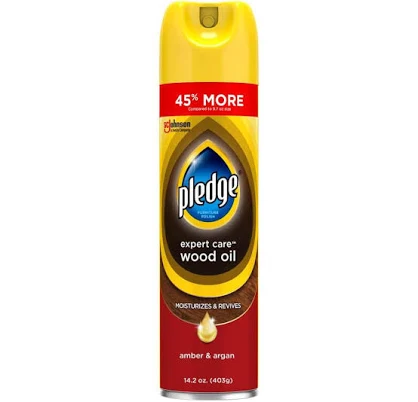
Pledge
14.2 oz. Amber and Argan Scent Furniture Moisturizing Oil
- mineral oil, argan oil blend
- We found no PFAS statement from the brand
- Fragrance allergens and undisclosed components
4 hazards checked on this product. See all of them.

West Elm
Cut Garden Flowers Pillow Cover
- 100% cotton canvas
- Azo dyes and dye contamination
3 hazards checked on this product. See all of them.
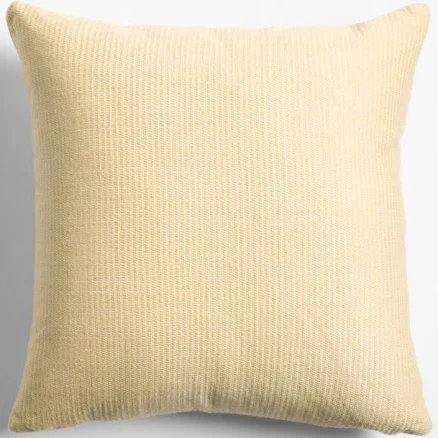
Crate and Barrel
Crate & Barrel Surya Yellow Throw Pillow
- Polyester, cotton, or cotton-blend fabric with standard dyes
- We found no PFAS statement from the brand
- Azo dyes and color migration
3 hazards checked on this product. See all of them.
More outdoor furniture cushion protectants grades
How we score, every product runs through the same public 0-100 rubric based on materials, coatings, brand disclosure, lab findings, and recalls. See the full methodology → Spotted a mistake? Report an error.