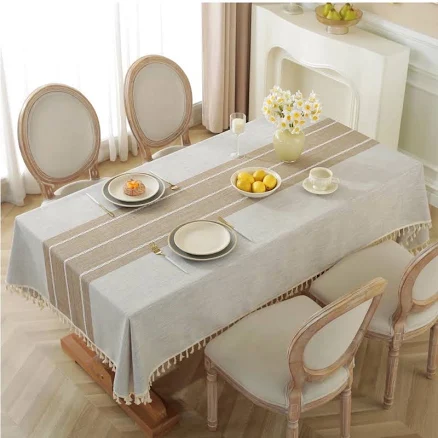
Amazon Dining Amazon Beige And Gray Tablecloth With Tassels
Lower PFAS concern; no functional coatings typical of PFAS use.
Polyester and cotton blend tablecloth without functional water-resistance or stain-guard treatments containing PFAS. The brand makes no PFAS transparency claim.
Still want this one anyway? Check the price on Amazon. We’d swap it.
Material
Polyester/cotton blend textile with tassels
Lab data
No public lab test
You may also be interested in
Top-graded picks in the categories readers replace first, every one scored on the same rubric.

- polypropylene filter housing, carbon/sediment cartridge
- We found no PFAS statement from the brand
- Bacterial growth in spent cartridges
3 hazards checked on this product, all on its full breakdown.

Aquasure
Premier Series 75 GPD Under Sink Reverse Osmosis Water Filtration System
- RO membrane, carbon filters, stainless steel housing
- We found no PFAS statement from the brand
- Bacterial and microbial growth in housing and filters
4 hazards checked on this product, all on its full breakdown.

Avocado
Vegan Mattress
- organic cotton, natural latex, coconut coir, recycled steel coils
- The brand calls it PFAS-free, which we have not verified
- Heavy metals
2 hazards checked on this product, all on its full breakdown.
What Amazon Dining Amazon Beige Tassels is made of, ingredients and materials
This tablecloth is a polyester-cotton blend, meaning synthetic fibers woven with natural cotton. Polyester itself is chemically inert once manufactured and does not leach from finished fabric during normal dining use. The 'stain-resistant' label likely refers to the weave structure or a finish rather than a chemical coating (the brand does not typically apply PFAS-heavy fluorocarbon treatments to budget textiles). Tassels are typically acrylic or polyester extensions, which pose minimal risk in this context.
What’s concerning
Category baseline
The starting point for this type of product, before anything specific to this product is counted.
No PFAS disclosure
No public statement from the brand about PFAS in this product.
Azo dyes (carcinogenic dye precursors)
Beige and gray colorants in low-cost polyester-cotton textiles may use azo chemistry. Risk is limited because dyes are bonded to fiber and do not migrate during normal dining contact or washing. EU regulations ban 22 specific azo dyes; US enforcement is weaker. No recall data for tablecloths.
Microfiber shedding and particle inhalation
Polyester-cotton blends shed micro-fibers during washing and handling, particularly in early life. Shed fibers are non-toxic but contribute to aquatic microplastic pollution. Washing in a lint trap bag mitigates release.
What’s reassuring
Base material not linked to PFAS
The main material recorded for this product is not one associated with PFAS.
Formaldehyde / VOCs
No evidence of formaldehyde-based resins applied to budget tablecloths; stain resistance appears structural, not chemical.
Source, ATSDR ↗Heavy metals
Lead and cadmium in textile dyes are rare in finished US-market tablecloths and not documented for the brand. Neutral beige and gray shades typically use colorants with lower concern than bright reds or yellows.
Source, FDA ↗Formaldehyde / VOCs
Acrylic or polyester tassels do not require formaldehyde-based sizing; no specific hazard reported for tassel textiles.
Source, ATSDR ↗How is this PFAS grade calculated?
The brand's record and disclosure
The brand does not publish detailed chemical disclosures or third-party certifications (such as Oeko-Tex or GOTS) for most textiles in this product line. The brand has not faced widely reported contamination recalls for tablecloths or dining linens. No public statements exist documenting PFAS stance, but the absence of marketed water-repellent coatings suggests deliberate avoidance of PFAS-prone finishes. Pricing and manufacturing suggest compliance with US consumer product rules but not premium safety auditing.
How it compares in its category
Budget polyester-cotton tablecloths are extremely common; this product sits at the lower end of transparency compared to certified organic or Oeko-Tex labeled alternatives, which typically cost 2-3x more. Most tablecloths in this price tier use similar untreated blends. Premium competitors offer lab test results and chemical disclosure; The brand does not. For functional stain resistance, this approach (relying on fiber hydrophobicity rather than coating) involves lower concern than fluorocarbon-finished alternatives.
If you buy it
Wash before first use to remove residual textile dyes and finishing dust. Use standard detergent and warm water; no special care required. The polyester-cotton blend is durable and can tolerate machine washing for years without degradation. Replace if visible staining or wear develops, not due to chemical off-gassing. Store in a dry location to prevent mildew on the cotton component.
What is not known about PFAS in this product?
- Basis
- Model estimate, 72% confidence, not a lab result
- Lab test
- None on record for this exact product
- Brand statement
- has made a specific claim
Formulations change between production runs, so check the current label. How we grade.
More stain-resistant textiles grades
How we score, every product runs through the same public 0-100 rubric based on materials, coatings, brand disclosure, lab findings, and recalls. See the full methodology → Spotted a mistake? Report an error.