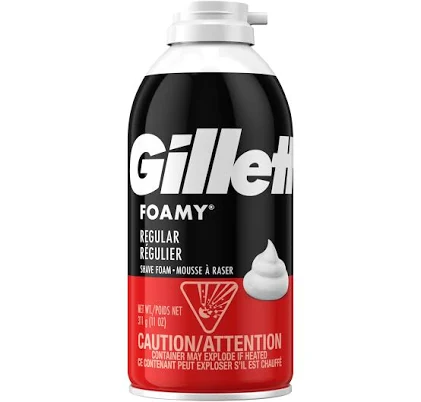
Gillette Foamy · Shaving Cream
Gillette Foamy Regular Shaving Cream
Low-medium risk; simple foam formula with no known triggers.
Gillette Foamy is a water-based aerosol with no disclosed water-repellent, nonstick, or stain-resistant coatings. The brand makes no PFAS claims and no public lab testing flags this product.
We flunk more products than we pass. This one earned its grade. How we grade
Material
Water-based aerosol foam; soap, water, propellant
Brand disclosure
Brand is silent on PFAS
Lab data
No public lab test
You may also be interested in
Top-graded picks in the categories readers replace first, every one scored on the same rubric.

- polypropylene filter housing, carbon/sediment cartridge
- We found no PFAS statement from the brand
- Bacterial growth in spent cartridges
3 hazards checked on this product, all on its full breakdown.

Aquasure
Premier Series 75 GPD Under Sink Reverse Osmosis Water Filtration System
- RO membrane, carbon filters, stainless steel housing
- We found no PFAS statement from the brand
- Bacterial and microbial growth in housing and filters
4 hazards checked on this product, all on its full breakdown.

Avocado
Vegan Mattress
- organic cotton, natural latex, coconut coir, recycled steel coils
- The brand calls it PFAS-free, which we have not verified
- Heavy metals
2 hazards checked on this product, all on its full breakdown.
What Gillette Foamy Regular Shaving Cream is made of, ingredients and materials
Gillette Foamy Regular is a water-based aerosol foam formulation relying on soap, water, and a hydrocarbon or hydrocarbon-derived propellant to generate lather. The simplicity of this formula, lacking silicones, dyes, or complex emulsifiers, reduces the chemical load compared to gel-based or cream shaving products. No heating, fragile coatings, or complex polymers are involved, so degradation and leaching pathways common in other personal-care categories do not apply here.
What’s concerning
Category baseline
The starting point for this type of product, before anything specific to this product is counted.
No PFAS disclosure
No public statement from the brand about PFAS in this product.
Fragrance allergens
Gillette Foamy Regular contains fragrance compounds listed as 'fragrance' on the label; specific allergen components (e.g., limonene, linalool) are not disclosed. Individuals with sensitive skin or fragrance allergies may experience contact dermatitis or irritation.
Aerosol propellant inhalation
Hydrocarbon propellants used in aerosol foams can be inhaled during or immediately after application. Accidental inhalation or intentional abuse carries CNS effects; routine use with adequate ventilation poses minimal risk but should avoid inhalation of mist.
Soap and surfactant irritation
Water-based soap formulations can dry or irritate sensitive facial skin, particularly if rinsing is incomplete or product is applied to pre-existing cuts or abrasions. Risk is typical for the aerosol shaving-foam category and not specific to Foamy.
What’s reassuring
Base material not linked to PFAS
The main material recorded for this product is not one associated with PFAS.
Microplastics
No microplastics, polyethylene beads, or exfoliating polymers are documented in Gillette Foamy Regular; the aerosol foam formula does not require polymeric thickeners or microbeads.
Source, EPA ↗Heavy metals
Foamy Regular contains minimal or no artificial dyes; formulation appears to rely on water and soap without pigmented additives, reducing heavy-metal contamination risk typical of pigmented cosmetics.
Source, FDA ↗How is this PFAS grade calculated?
The brand's record and disclosure
Gillette (Procter & Gamble subsidiary) does not prominently disclose ingredient sourcing or contaminant testing for Foamy on consumer-facing materials. The brand has faced scrutiny over PFAS in other product lines (e.g., certain antiperspirants) but has remained largely silent on shaving products specifically. No recalls or established safety violations have been recorded for Foamy Regular in the public domain. P&G does list basic ingredients on product labels and complies with FDA aerosol regulations.
How it compares in its category
Aerosol shaving foams like Foamy occupy the simplest end of the shaving-product spectrum, with fewer additives than premium creams, gels, or brushless formulations. Water-based aerosol foams carry lower chemical complexity than propane-only or butane-only propellants used in some competing brands. Compared to gel or brushless options, Foamy avoids polymer thickeners and silicone conditioning agents, reducing potential irritant or sensitization risk for routine users.
If you buy it
Use as directed on the label, shake well, apply to damp skin, and rinse thoroughly after shaving. Store in a cool, dry place away from direct heat or flame (aerosol safety standard). Discontinue if skin irritation or rash develops; patch-test on inner arm if you have known sensitivities to fragrances or soap. Replace when dispensing weakens or fails to deliver consistent foam, typically every 6-12 months with regular use.
What is not known about PFAS in this product?
- Basis
- Model estimate, 82% confidence, not a lab result
- Lab test
- None on record for this exact product
- Brand statement
- Gillette Foamy has made none
Formulations change between production runs, so check the current label. How we grade.
What are the PFAS-free alternatives to Gillette Foamy Regular Shaving Cream?
- water, stearic acid, potassium hydroxide, aloe extract
- We found no PFAS statement from the brand
- Fragrance allergens (undisclosed components)
3 hazards checked on this product, all on its full breakdown.
- Water, glycerin, emollients, fragrance
- We found no PFAS statement from the brand
- Fragrance allergens and sensitizers
3 hazards checked on this product, all on its full breakdown.
- water-based foaming gel with emulsifiers, glycerin, surfactants
- We found no PFAS statement from the brand
- Formaldehyde / VOCs
3 hazards checked on this product, all on its full breakdown.
More shaving cream grades
How we score, every product runs through the same public 0-100 rubric based on materials, coatings, brand disclosure, lab findings, and recalls. See the full methodology → Spotted a mistake? Report an error.