GoPro · Waterproof Camera & Lens Protection Cases
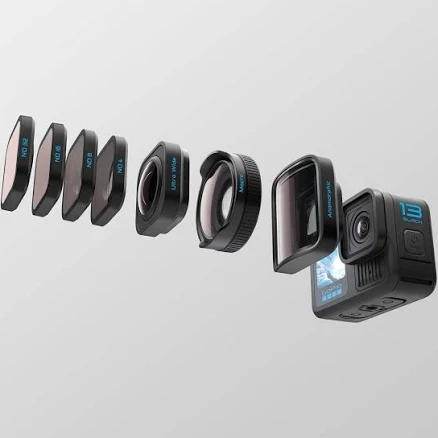
GoPro HB-Series Lens Collection for HERO13 Black
Glass lens elements present lower concern for PFAS.
This lens collection is made of glass and optical lens elements, a material not linked to PFAS. GoPro has no PFAS statement on record for this product.
We flunk more products than we pass. This one earned its grade. How we grade
Material
Glass and optical lens elements
Brand disclosure
Brand is silent on PFAS
Lab data
No public lab test
You may also be interested in
Top-graded picks in the categories readers replace first, every one scored on the same rubric.

- polypropylene filter housing, carbon/sediment cartridge
- We found no PFAS statement from the brand
- Bacterial growth in spent cartridges
3 hazards checked on this product, all on its full breakdown.

Aquasure
Premier Series 75 GPD Under Sink Reverse Osmosis Water Filtration System
- RO membrane, carbon filters, stainless steel housing
- We found no PFAS statement from the brand
- Bacterial and microbial growth in housing and filters
4 hazards checked on this product, all on its full breakdown.

Avocado
Vegan Mattress
- organic cotton, natural latex, coconut coir, recycled steel coils
- The brand calls it PFAS-free, which we have not verified
- Heavy metals
2 hazards checked on this product, all on its full breakdown.
What GoPro HB-Series Lens HERO13 Black is made of, ingredients and materials
The HB-Series Lens Collection consists of precision glass and optical coatings designed for the HERO13 Black camera. Glass itself is chemically inert and does not leach hazardous compounds under normal use. The optical coatings (anti-reflective, hydrophobic treatments) are thin vapor-deposited layers; while their exact composition is proprietary, standard camera lens coatings do not present established chemical risks during handling or use.
What’s concerning
Category baseline
The starting point for this type of product, before anything specific to this product is counted.
No PFAS disclosure
No public statement from the brand about PFAS in this product.
Optical coating degradation
Vapor-deposited anti-reflective and water-repellent coatings can degrade with age or aggressive cleaning, potentially affecting image quality but not user safety. No chemical leaching from degraded coatings has been documented in camera lens products.
Fungal or microbial growth on glass surfaces
Glass itself is not a substrate for microbial colonization, but dust and moisture trapped in lens assemblies can harbor mold in humid storage. This is a maintenance and image-quality issue, not a chemical hazard.
What’s reassuring
Base material not linked to PFAS
The main material recorded for this product is not one associated with PFAS.
Heavy metals
High-performance optical glass may contain trace rare earths or other elements, but these remain chemically bound in the glass matrix and do not leach during normal use or handling. No testing or incident reports exist for GoPro lenses.
Source, FDA ↗Adhesive or cement components in lens assembly
Multi-element lenses are often cemented with optical adhesives that can contain volatile organics, but these are sealed internally and do not off-gas into the user environment. GoPro does not disclose adhesive chemistry.
Molded polymer lens barrel outgassing
If the lens barrel includes polycarbonate or acrylic housings, minimal VOC off-gassing may occur in the first days after manufacture, but no BPA or phthalate concerns are documented for camera accessory housings.
How is this PFAS grade calculated?
The brand's record and disclosure
GoPro does not publish detailed material safety disclosures or third-party certifications for accessory lenses. The company maintains a general privacy-focused posture on manufacturing details. No recalls or safety incidents are on record for GoPro lens products. Lack of transparency is typical for consumer camera accessories rather than indicative of hidden hazards.
How it compares in its category
Aftermarket camera lens collections are inherently lower-risk than cookware, textiles, or food-contact products because they are non-consumable and external-use only. GoPro lenses face no known regulatory scrutiny or material restrictions beyond standard optics industry norms. Competing action-camera lenses (DJI, Insta360) carry equivalent chemical profiles.
If you buy it
Store lenses in a dry environment to prevent fungal growth on glass surfaces, which is a maintenance concern rather than a chemical hazard. Avoid prolonged exposure to extreme heat (above 60°C/140°F), though this is unlikely in normal use. Clean with microfiber cloths and distilled water only; avoid harsh solvents that could degrade optical coatings. Replace if coatings show visible degradation (haze, delamination), though this is cosmetic rather than a safety trigger.
What is not known about PFAS in this product?
- Basis
- Model estimate, 72% confidence, not a lab result
- Lab test
- None on record for this exact product
- Brand statement
- GoPro has made none
Formulations change between production runs, so check the current label. How we grade.
More waterproof camera & lens protection cases grades
How we score, every product runs through the same public 0-100 rubric based on materials, coatings, brand disclosure, lab findings, and recalls. See the full methodology → Spotted a mistake? Report an error.