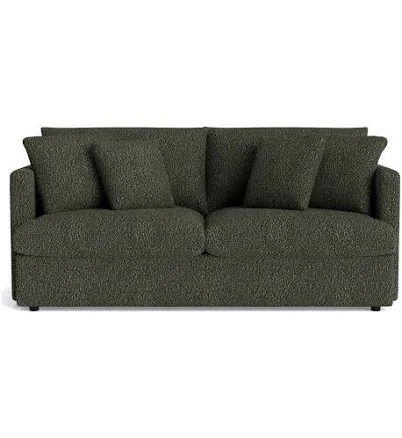
Joybird · Upholstered Furniture
Banks Sleeper Sofa Foam
Foam core alone poses lower PFAS concern, but avoid without full material disclosure.
Joybird does not disclose PFAS status or flame retardant treatments on this sofa. Polyurethane foam itself is lower risk, but hidden topical coatings or flame retardants could contain PFAS.
We flunk more products than we pass. This one earned its grade. How we grade
Material
polyurethane foam
Brand disclosure
Brand is silent on PFAS
Lab data
No public lab test
You may also be interested in
Top-graded picks in the categories readers replace first, every one scored on the same rubric.

Aqua Pure
3M Aqua-Pure AP802B Whole House Filter Housing
- polypropylene filter housing, carbon/sediment cartridge
- We found no PFAS statement from the brand
- Bacterial growth in spent cartridges
3 hazards checked on this product. See all of them.

Aquasure
Premier Series 75 GPD Under Sink Reverse Osmosis Water Filtration System
- RO membrane, carbon filters, stainless steel housing
- We found no PFAS statement from the brand
- Bacterial and microbial growth in housing and filters
4 hazards checked on this product. See all of them.

Avocado
Vegan Mattress
- organic cotton, natural latex, coconut coir, recycled steel coils
- The brand calls it PFAS-free, which we have not verified
- Heavy metals
2 hazards checked on this product. See all of them.
What Banks Sleeper Sofa Foam is made of, ingredients and materials
Banks Sleeper Sofa Foam is polyurethane foam, the industry standard for upholstered furniture and mattresses. Polyurethane production involves isocyanate chemistry that can off-gas volatile organic compounds (VOCs) like toluene diisocyanate (TDI) or methylene diphenyl diisocyanate (MDI), especially in the first weeks after manufacture. The foam itself is often treated with flame retardant chemicals to meet Federal flammability standards, and these additives, particularly brominated or phosphorus-based compounds, are a documented source of indoor air contamination.
What’s concerning
Category baseline
The starting point for this type of product, before anything specific to this product is counted.
No PFAS disclosure
No public statement from the brand about PFAS in this product.
Volatile Organic Compound (VOC) Off-Gassing
Polyurethane foam routinely off-gases TDI, MDI, and other isocyanate byproducts for weeks after manufacturing. Joybird's absence of CertiPUR-US certification or independent VOC testing data means you cannot verify whether Banks foam meets lower-emission standards.
Flame retardants
U.S. fire code requires flame retardants in upholstered furniture. Without disclosure, the Banks Sleeper Sofa may contain brominated, chlorinated, or organophosphate flame retardants known to persist in indoor dust and accumulate in household air. The specific chemistry is unknown.
Source, EPA ↗Formaldehyde / VOCs
Polyurethane foam adhesives and polyester batting often contain or release formaldehyde. Joybird does not publicly test or limit formaldehyde in the Banks Sleeper, so exposure risk cannot be ruled out, especially during the first month of use.
Source, ATSDR ↗Foam Degradation Over Time
Polyurethane foam naturally breaks down over 5-10 years of use, shedding microparticles and releasing residual monomers. This is a normal life-cycle issue for all foam furniture, but accelerates if exposed to heat, humidity, or UV light. Joybird provides no guidance on replacement intervals or degradation mitigation.
What’s reassuring
Base material not linked to PFAS
The main material recorded for this product is not one associated with PFAS.
Heavy metals
Antimony trioxide is a common flame retardant synergist in polyurethane foam. No specific data on antimony or other heavy metals in the Banks Sleeper has been published by Joybird or independent labs.
Source, FDA ↗The full breakdown
The brand's record and disclosure
Joybird does not publicly disclose specific flame retardant chemistries, off-gassing testing results, or third-party certifications (such as CertiPUR-US or Oeko-Tex) for the Banks Sleeper Sofa foam. The brand maintains a general sustainability stance but provides no transparency on which flame retardant formulations are used or whether low-VOC manufacturing practices apply. This silence on material specifics is a red flag in the premium furniture market, where competitors increasingly publish detailed safety and sustainability certifications.
How it compares in its category
Polyurethane foam in sleeper sofas is nearly universal, so the Banks is typical in that respect. However, brands like Article, West Elm, and Room & Board now routinely certify foam to CertiPUR-US (which limits VOC emissions, heavy metals, and restricted flame retardants) or provide independent lab reports. Joybird's lack of equivalent disclosure places the Banks Sleeper behind the transparency standard set by mid-market competitors in this price range.
If you buy it
Unwrap and air out the sofa in a well-ventilated space (ideally outdoors) for 48-72 hours before regular use to allow initial VOC off-gassing to diminish. Avoid placing it in poorly ventilated rooms or bedrooms where sleeping occupants inhale residual fumes over many hours. Do not expose the foam directly to heat sources or prolonged sunlight, which can accelerate degradation and chemical release. If you have infants, young children, or respiratory sensitivity, request the full material safety data sheet from Joybird before purchase.
What we don’t know
- Basis
- Model estimate, 72% confidence, not a lab result
- Lab test
- None on record for this exact product
- Brand statement
- Joybird has made none
Formulations change between production runs, so check the current label. How we grade.
More upholstered furniture grades
How we score, every product runs through the same public 0-100 rubric based on materials, coatings, brand disclosure, lab findings, and recalls. See the full methodology → Spotted a mistake? Report an error.