Klaussner · Upholstered Furniture
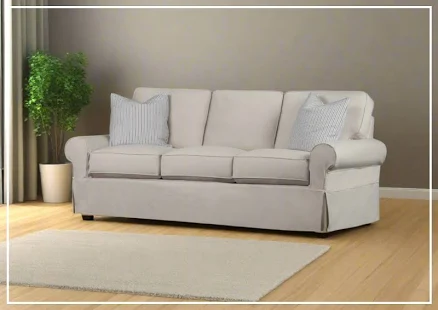
Klaussner Katelin Slipcover Sofa in John Linen Sepia | John Linen Sepia
Linen-blend slipcover with no known PFAS treatment; skip if PFAS assurance matters.
This slipcover sofa uses John Linen, a natural-blend textile with no disclosed stain or water treatment. Klaussner makes no PFAS claims; untreated or naturally treated linens carry lower PFAS concern than chemically coated fabrics.
We flunk more products than we pass. This one earned its grade. How we grade
Material
John Linen, polyester blend upholstery
Brand disclosure
Brand is silent on PFAS
Lab data
No public lab test
You may also be interested in
Top-graded picks in the categories readers replace first, every one scored on the same rubric.

Aqua Pure
3M Aqua-Pure AP802B Whole House Filter Housing
- polypropylene filter housing, carbon/sediment cartridge
- We found no PFAS statement from the brand
- Bacterial growth in spent cartridges
3 hazards checked on this product. See all of them.

Aquasure
Premier Series 75 GPD Under Sink Reverse Osmosis Water Filtration System
- RO membrane, carbon filters, stainless steel housing
- We found no PFAS statement from the brand
- Bacterial and microbial growth in housing and filters
4 hazards checked on this product. See all of them.

Avocado
Vegan Mattress
- organic cotton, natural latex, coconut coir, recycled steel coils
- The brand calls it PFAS-free, which we have not verified
- Heavy metals
2 hazards checked on this product. See all of them.
What Klaussner Katelin Slipcover Sofa in John is made of, ingredients and materials
The Katelin uses John Linen, a polyester-blend upholstery (exact ratio not disclosed by Klaussner). Polyester blends are durable and stain-resistant but may contain formaldehyde-based resins in the finish to improve wrinkle resistance and color fastness. Linen-polyester blends are less prone to off-gassing than 100% synthetic textiles but still warrant attention to volatile organic compound (VOC) emissions, especially in new furniture. The slipcover format allows for washing, which can reduce surface residues over time.
What’s concerning
Category baseline
The starting point for this type of product, before anything specific to this product is counted.
No PFAS disclosure
No public statement from the brand about PFAS in this product.
Formaldehyde / VOCs
Polyester-blend upholstery commonly uses formaldehyde-based resins for wrinkle resistance and dye stability. Klaussner does not disclose finish chemistry for John Linen; levels are not tested on record but are typical for this material class. Off-gassing decreases with ventilation and washing.
Source, ATSDR ↗Volatile organic compounds (VOC) off-gassing
Synthetic polyester-blend upholstery and adhesives used in cushion and frame construction may release VOCs, particularly in the first 48-72 hours. Magnitude and composition are not disclosed by the brand and will vary by dye lot and supplier.
Flame retardants
U.S. furniture regulations (16 CFR 1633) apply to seating; Klaussner does not publicly name the flame retardant used (if any) in this sofa. Treatment may include phosphorus-based or other compounds not standard industry disclosure. No health data on this specific product is available.
Source, EPA ↗Coating or treatment degradation over time
Synthetic resin finishes on polyester-linen upholstery can degrade with use, UV exposure, and washing, potentially releasing micro-fibers and residual finish particles. Slipcover design mitigates this risk by allowing periodic replacement and cleaning.
What’s reassuring
Base material not linked to PFAS
The main material recorded for this product is not one associated with PFAS.
Azo dye residue in John Linen fabric
Azo dyes are regulated in textiles but are not reported as a concern for Klaussner upholstery. No evidence of restricted azo compounds in this line is on record; color fastness and dyeing standards for sepia tone are typical for polyester blends.
The full breakdown
The brand's record and disclosure
Klaussner is a privately held U.S. upholstery manufacturer with no published PFAS statement or third-party certifications (such as Oeko-Tex or Cradle to Cradle) readily available for this line. The brand does not openly disclose formaldehyde content, flame-retardant chemistry, or restricted substance testing for John Linen. No recalls or safety controversies specific to Klaussner upholstery are on record, but transparency on chemical treatments is minimal, typical of many mid-market furniture brands.
How it compares in its category
Polyester-linen blends occupy the middle ground in upholstered furniture, more durable than 100% natural fibers but with lower chemical processing than fully synthetic fabrics. Many competitors in this price and quality segment offer no greater disclosure than Klaussner. Certified alternatives (e.g., Oeko-Tex Standard 100 or Global Organic Textile Standard) exist but command premium pricing. This product is typical, not an outlier, for chemical transparency or hazard profile.
If you buy it
Air out the sofa in a well-ventilated space for 48-72 hours before extended use to allow VOC off-gassing. Wash slipcovers according to care label instructions; this will remove surface finishes and reduce formaldehyde residue. Avoid exposing upholstery to direct heat sources (radiators, sunlight) for prolonged periods, as heat can accelerate off-gassing of synthetic resins. Replace slipcover if visible degradation, staining, or odor persists after cleaning, as breakdown of the textile finish may increase dust and particulate release.
What we don’t know
- Basis
- Model estimate, 72% confidence, not a lab result
- Lab test
- None on record for this exact product
- Brand statement
- Klaussner has made none
Formulations change between production runs, so check the current label. How we grade.
More upholstered furniture grades
How we score, every product runs through the same public 0-100 rubric based on materials, coatings, brand disclosure, lab findings, and recalls. See the full methodology → Spotted a mistake? Report an error.