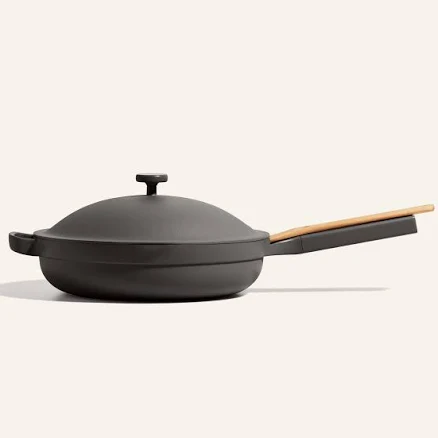
Our Place Large Always Pan, Is It Non-Toxic?
Named ceramic non-stick coating, with a brand PFAS statement we have not verified.
Our Place says its ceramic non-stick coating is made without PFAS, including Teflon-type coating and PFOA. We record that as an unverified brand claim. Its record describes a non-stick coating of unstated type, which is still counted.
Brand says: “Our Place says its ceramic non-stick coating is made without PFAS, including PTFE and PFOA.”
We flunk more products than we pass. This one earned its grade. How we grade
Material
Ceramic nonstick coating (composition unspecified)
Brand disclosure
Brand claims PFAS-free
Lab data
No public lab test
You may also be interested in
Top-graded picks in the categories readers replace first, every one scored on the same rubric.

- polypropylene filter housing, carbon/sediment cartridge
- We found no PFAS statement from the brand
- Bacterial growth in spent cartridges
3 hazards checked on this product, all on its full breakdown.

Aquasure
Premier Series 75 GPD Under Sink Reverse Osmosis Water Filtration System
- RO membrane, carbon filters, stainless steel housing
- We found no PFAS statement from the brand
- Bacterial and microbial growth in housing and filters
4 hazards checked on this product, all on its full breakdown.

Avocado
Vegan Mattress
- organic cotton, natural latex, coconut coir, recycled steel coils
- The brand calls it PFAS-free, which we have not verified
- Heavy metals
2 hazards checked on this product, all on its full breakdown.
Is Our Place Large Always Pan non-toxic? What it is made of
The Always Pan uses a ceramic nonstick coating applied to a hard-anodized aluminum body. Ceramic coatings are water-based and free of Teflon-type coating (Teflon), eliminating fume hazards from overheating that plague traditional nonstick cookware. The unspecified composition of Our Place's ceramic formulation means the exact binders and additives are proprietary, limiting independent assessment of minor ingredients.
What’s concerning
Disclosed non-fluorinated coating
Coating is named and the brand states it is made without PFAS.
Category baseline
The starting point for this type of product, before anything specific to this product is counted.
Ceramic coating degradation and aluminum leaching
Ceramic nonstick coatings are inherently less durable than Teflon-type coating and can chip or scratch with normal use. Once compromised, underlying aluminum may contact acidic foods (tomatoes, citrus, vinegar), potentially leaching small amounts of aluminum; long-term health significance of dietary aluminum remains debated but warrants caution in susceptible populations.
Coating adhesion and thermal stress
Hard-anodized aluminum expands and contracts with temperature cycling. Ceramic coatings can separate or blister if the underlying adhesive layer is weak or if the pan is subjected to rapid thermal changes (e.g., cold water on a hot pan). User reports of early coating failure are anecdotal but have appeared in online reviews.
Proprietary coating composition opacity
The ceramic coating formula is proprietary and unspecified, limiting ability to assess binders, surfactants, or minor additives. This lack of transparency makes independent verification of Our Place's PFAS-free claim difficult and prevents assessment of other synthetic components.
What’s reassuring
Brand-stated PFAS-free
The brand states this product is PFAS-free. We have not verified the claim.
Lead
No recalls or test results documenting lead or cadmium contamination in the Always Pan coating are on public record. Our Place has not published independent heavy metal assay results for the ceramic formulation, so residual risk cannot be ruled out entirely.
Source, ATSDR ↗Teflon-type coating fume inhalation (overheating risk)
Ceramic coatings do not emit Teflon-type coating or perfluorocarbon fumes at any practical cooking temperature, eliminating this hazard class entirely compared to traditional nonstick cookware.
How is this PFAS grade calculated?
The brand's record and disclosure
Our Place has made public claims about PFAS-free formulation but has not published third-party test results or full material safety data sheets for verification. No recalls or regulatory actions against the Always Pan for coating contamination, lead, or cadmium are on record. The brand markets sustainability and safety but does not provide the detailed transparency typical of cookware companies with rigorous testing programs.
How it compares in its category
Ceramic nonstick cookware occupies a middle ground, it avoids Teflon-type coating fume risk and performs better than uncoated aluminum, but ceramic coatings are generally less durable and more prone to chipping than traditional seasoned cast iron or stainless steel. The Always Pan's price point and design appeal to consumers seeking modern alternatives to Teflon, though long-term coating longevity data for this specific product is limited.
If you buy it
Hand wash only to protect the ceramic coating; avoid high heat and metal utensils. Most ceramic coatings begin to degrade after 1-3 years of regular use; discontinue use if the coating chips or flakes, as exposed aluminum can leach into acidic foods. Store dry to prevent mineral buildup on the surface. Do not preheat empty, as rapid temperature changes stress ceramic adhesion.
What is not known about PFAS in this product?
- Basis
- Model estimate, 45% confidence, not a lab result
- Lab test
- None on record for this exact product
- Brand statement
- Our Place has made a specific claim
Formulations change between production runs, so check the current label. How we grade.
What are the PFAS-free alternatives to Our Place Large Always Pan?
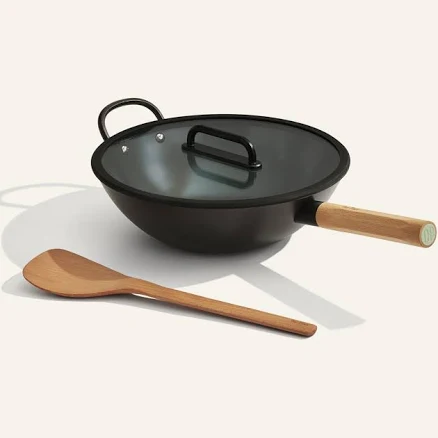
- carbon steel (bare metal, no coating)
- The brand calls it PFAS-free, which we have not verified
- Iron leaching from bare metal surface
2 hazards checked on this product, all on its full breakdown.
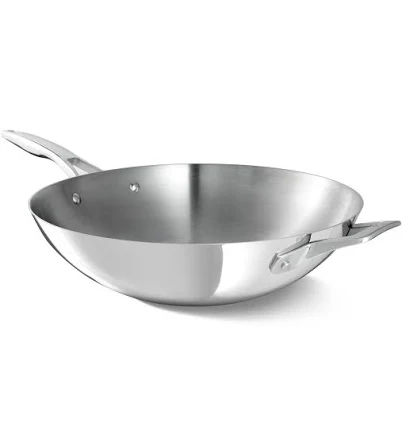
- Stainless steel with no nonstick coating
- Metal leaching (chromium, nickel, iron)
2 hazards checked on this product, all on its full breakdown.
Find an alternative on AmazonMore woks grades
How we score, every product runs through the same public 0-100 rubric based on materials, coatings, brand disclosure, lab findings, and recalls. See the full methodology → Spotted a mistake? Report an error.