WD-40 · Outdoor Furniture Cushion Protectants
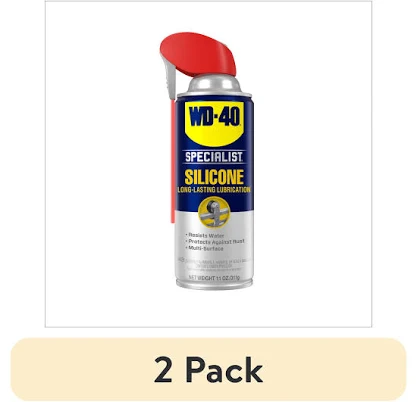
WD-40 Specialist Silicone Lubricant with Smart Straw Sprays 2 Ways Twin-Pack
Lower risk. Silicone lubricant typically avoids PFAS.
WD-40 Silicone Lubricant relies on silicone oil, which does not inherently contain PFAS. No public PFAS claims are made; furniture classification seems unusual for this lubricant.
We flunk more products than we pass. This one earned its grade. How we grade
Material
silicone-based lubricant
Lab data
No public lab test
What WD-40 Specialist Silicone Lubricant is made of, ingredients and materials
WD-40 Specialist Silicone Lubricant is a siloxane-based product designed to lubricate and protect surfaces without leaving oily residue. Silicone oils are synthetic polymers with high stability and low volatility compared to mineral oil or solvent-based lubricants. The formulation includes a propellant system (likely hydrocarbons or compressed gas) and a smart straw applicator. For furniture use, silicone lubricants can reduce friction on hinges, locks, and sliding mechanisms while repelling moisture.
What’s concerning
Category baseline
The starting point for this type of product, before anything specific to this product is counted.
No PFAS disclosure
No public statement from the brand about PFAS in this product.
Propellant inhalation / respiratory irritation
Aerosol propellants (typically hydrocarbons or compressed gases) can cause dizziness or mild respiratory irritation if sprayed in enclosed spaces without ventilation. WD-40 does not use CFCs, and modern propellants carry lower ozone risk, but acute exposure to mist remains a concern.
Slipping hazard from residue
If overapplied or used on floor hardware or hinges in high-traffic areas, silicone can create a slippery surface. This is a mechanical safety concern rather than a chemical hazard, but relevant to furniture application.
Off-gassing / volatile organic compounds (VOCs)
Silicone lubricant may emit low levels of volatile hydrocarbons or siloxane vapors during and shortly after application, particularly in warm or poorly ventilated rooms. WD-40 does not publish VOC content, so quantification is unavailable, but short-term ventilation is prudent.
What’s reassuring
Base material not linked to PFAS
The main material recorded for this product is not one associated with PFAS.
Silicone coating on skin / dermal contact
Silicone lubricants are generally recognized as non-toxic and non-irritating to skin at brief contact. No established hazard class for siloxane-based lubricants in this product; prolonged skin contact is unlikely with typical spray application.
Environmental persistence / aquatic toxicity
Silicone-based lubricants are not classified as bioaccumulative or acutely toxic to aquatic life under standard testing, though disposal should avoid drains. No specific data on this product's environmental impact is publicly available.
The full breakdown
The brand's record and disclosure
WD-40 Company publishes safety data sheets and has maintained a long operational history with no major recalls tied to this specific silicone lubricant product. The brand does not publicly disclose detailed ingredient breakdowns beyond material safety data sheets, and has not made explicit statements regarding PFAS content in silicone products. No established controversies or regulatory warnings exist for this product line. Transparency on manufacturing practices and third-party testing certifications is not prominent in public materials.
How it compares in its category
This product is not typically classified as furniture care; it functions as a multi-purpose lubricant for hinges, locks, and mechanical joints. Compared to furniture oils or waxes, silicone lubricant is faster-drying and leaves minimal residue, making it suitable for visible metal hardware but less ideal for wood surfaces where traditional furniture oils are preferred. Most furniture-specific competitors use mineral oils, plant-based waxes, or paste waxes rather than silicone. The twin-pack format and dual spray design (straw and standard nozzle) is a convenience feature not present in most alternatives.
If you buy it
Use only on metal hardware, hinges, and mechanical components; avoid contact with fabric, cushions, or finished wood surfaces, as silicone can leave spots and interfere with future finishes. Apply in thin coats in well-ventilated areas to avoid inhaling propellant mist. Do not use near heat sources, flames, or hot surfaces during application due to flammable propellant. Replace canister if spray mechanism fails or pressure drops; silicone products do not spoil, but applicator function degrades over time.
What we don’t know
- Basis
- Model estimate, 72% confidence, not a lab result
- Lab test
- None on record for this exact product
- Brand statement
- WD-40 has made a specific claim
Formulations change between production runs, so check the current label. How we grade.
More outdoor furniture cushion protectants grades
How we score, every product runs through the same public 0-100 rubric based on materials, coatings, brand disclosure, lab findings, and recalls. See the full methodology → Spotted a mistake? Report an error.