Double Wall Vacuum Insulated Stainless Steel Food Canister Container with Leak Proof Lid vs BergHOFF Leo Balance Smart Seal Food Container: which is safer?
Klean Kanteen Double Wall Vacuum Insulated Stainless Steel Food Canister Container with Leak Proof Lid is our pick: better on PFAS and on the overall hazard picture.
Our pick
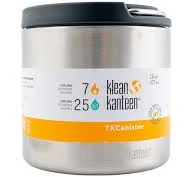
Klean Kanteen
Double Wall Vacuum Insulated Stainless Steel Food Canister Container with Leak Proof Lid
PFAS grade
Overall grade
Verdict
Hazard flags
Material
Confidence
PossibleSilicone gasket degradation
PossibleBacterial growth in vacuum seal
PossibleSurface corrosion under acidic conditions
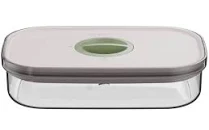
Smart Seal
BergHOFF Leo Balance Smart Seal Food Container
PFAS grade
Overall grade
Verdict
Hazard flags
Material
Confidence
PossibleBPA/BPS in polycarbonate or copolyester body or lid
PossiblePhthalates in plasticizer or seal elastomer
ReportedLid and seal material leaching
Where these two actually differ
- We flag Silicone gasket degradation, Bacterial growth in vacuum seal and Surface corrosion under acidic conditions on the Klean Kanteen and not on the Smart Seal.
- We flag BPA/BPS in polycarbonate or copolyester body or lid, Phthalates in plasticizer or seal elastomer and Lid and seal material leaching on the Smart Seal and not on the Klean Kanteen.
- The Klean Kanteen is Stainless steel body, silicone gasket lid seal where the Smart Seal is Plastic container, lid material unspecified, which is most of the difference in these two grades.
- The gap is 30 points, wide enough that this is not a close call, and the Klean Kanteen is the one to buy.
- We are less certain about the Smart Seal grade, at 35% confidence against 82%, because it discloses less.
Both products run through the same public rubric: materials, coatings, brand disclosure, lab findings, and recalls, plus a beyond-PFAS hazard analysis. Grades are model-based estimates, not lab tests. How grades work →
More lunch boxes: see the full ranking