By PFAS Authority · Updated October 4, 2026
Top grades to buy

Aisle
Super Hipster
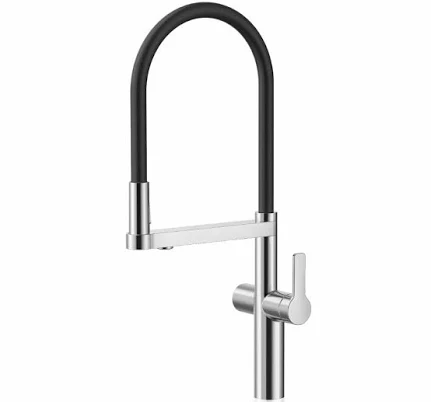
APEC Water Systems
APEC 2-in-1 Pull-Down Kitchen Faucet

Aquasure
Premier Series 75 GPD Under Sink Reverse Osmosis Water Filtration System
Model-based grades, not lab tests. We flunk more than we pass. How grading works
How Can You Get PFAS Out of Your Drinking Water in 2025?
PFAS, short for per- and polyfluoroalkyl substances, are a family of thousands of human-made chemicals prized for their resistance to heat, grease, and water. That same durability is why scientists call them "forever chemicals", they don't break down easily in the environment or in the human body. A recent EarthTalk column in The Bradenton Times revisited a question many households are now asking, how do you actually rid your drinking water of these chemicals? Here's what's going on, who it affects, and what you can realistically do about it.
What Happened?
The EarthTalk piece lays out the basics that have become increasingly familiar to consumers, PFAS are found in everything from nonstick cookware to firefighting foam to water-repellent fabrics, and they have been detected in drinking water supplies across the United States. The column points readers toward filtration options, activated carbon filters, reverse osmosis systems, and ion exchange units, as the main consumer-level tools for reducing PFAS exposure through tap water.
This isn't just a drinking-water story, though. PFAS also show up in the products people bring into their homes every day. PFAS Authority's own scoring of 11,218 products found that 41% fail its PFAS and toxin screen, a reminder that water filtration alone doesn't address every exposure pathway. That screen is built from publicly available ingredient lists, material disclosures, and third-party certifications, not laboratory testing of each item, so it reflects what brands have chosen to disclose (or not disclose) about what's in their products.
Who Is Affected?
Essentially everyone who drinks tap water or buys household goods made from water- or stain-resistant materials. But some categories carry outsized risk. According to PFAS Authority's scoring, 100% of the camping tents and tarps evaluated (316 products), 100% of rain jackets (74 products), 100% of cycling rain jackets (72 products), 100% of sleeping bags (15 products), and 100% of softshell jackets (15 products) failed the screen. These are categories where water-repellent coatings have historically relied on fluorinated chemistry, so the failure rate isn't surprising, but it does mean outdoor enthusiasts and campers are buying into a product category with almost no PFAS-free options currently identified by the screen.
Shoppers also face an information gap. Several major brands, Cuisinart, The North Face, MAC, Calphalon, T-fal, Nike, Columbia, and Estée Lauder, disclose nothing about PFAS in the products PFAS Authority has reviewed, according to its own data. Without disclosure, consumers can't easily tell whether a given cookware set, jacket, or cosmetic contains these chemicals.
Why Does It Matter?
Federal agencies have flagged potential health associations with PFAS exposure, though researchers are careful to describe these as associations rather than proven cause-and-effect relationships in every individual. The U.S. Environmental Protection Agency has linked certain PFAS compounds to effects on the immune system, cholesterol levels, and developmental outcomes in epidemiological studies, while the Agency for Toxic Substances and Disease Registry notes that some human studies have found associations between PFAS exposure and changes in liver function and other markers. The EPA finalized its first-ever national drinking water limits for several PFAS compounds in 2024, a sign of how seriously regulators are treating the issue.
Because PFAS persist in the body and the environment, exposure can come from multiple directions at once, water, food packaging, cookware, textiles, and cosmetics. That's why experts generally recommend a layered approach rather than relying on a single fix like a water filter.
What Should You Do?
Start with your water. The EarthTalk column and EPA guidance both point to activated carbon filters (certified to NSF/ANSI Standard 53 or 58) and reverse osmosis systems as effective reduction methods for many PFAS compounds in tap water. Check your local water utility's annual Consumer Confidence Report, which may include PFAS testing results, and consider having your water independently tested if you're on a private well.
Beyond water, look closely at what you buy. Before purchasing outdoor gear, cookware, or cosmetics, you can check how a product scores using PFAS Authority's product finder, which screens items against published ingredient and material disclosures. If you want to understand exactly how scores are calculated, including what counts as a "fail" and why lab testing isn't part of the process, the methodology page walks through it in detail.
When shopping in high-failure categories like rain jackets or tents, look for labels indicating PFAS-free (sometimes marketed as "PFC-free") treatments, and don't assume a premium price tag means fewer forever chemicals. For brands that disclose nothing, consider reaching out directly to ask about their use of PFAS, or treat the lack of disclosure itself as a data point when comparing options.
Bottom Line
There's no single device or purchase that eliminates PFAS exposure entirely. A combination of water filtration at home and more careful product selection, informed by brand disclosures where they exist, currently represents the most practical, lower-concern path available to consumers. Given that 41% of products PFAS Authority has scored fail its screen, checking before you buy is a reasonable habit, not an overreaction.
FAQ
Does boiling water remove PFAS?
No. The EPA and other water-quality experts note that boiling does not remove PFAS and may even slightly concentrate them as water evaporates. Filtration methods like activated carbon or reverse osmosis are the recommended approaches instead.
Are PFAS-free products automatically safe?
"PFAS-free" labeling addresses one chemical family but doesn't guarantee a product is free of all chemicals of concern. PFAS Authority's screen considers PFAS alongside other toxins, and products without PFAS can still carry a lower-concern, rather than a guaranteed-safe, rating depending on their full ingredient or material profile.
Why do some brands disclose nothing about PFAS?
Disclosure isn't currently mandated uniformly across product categories in the U.S., so companies vary widely in what they share publicly. The absence of disclosure, as seen with brands like Cuisinart, The North Face, and Nike in PFAS Authority's data, doesn't confirm a product contains PFAS, it simply means consumers lack the information to judge for themselves.
What else we were tracking around this
- Oct 5, 2026Could 2024 Be the Year Congress Finally Bans PFAS in Food Packaging?
- Oct 5, 2026Prostate Cancer and Military Service in 2026, What's the PFAS Connection?
- Oct 4, 2026How Can You Protect Your Water from PFAS in 2026, Why Treatment System Design Matters
- Oct 4, 2026Is Your Tap Water’s PFAS Protection at Risk in 2025?
The latest PFAS news is updated daily.
Now check your own stuff
Search anything you own and get its PFAS grade in seconds.
Get the graded list, free
The products we score each week, and the best-graded alternative in every category.
No spam. Unsubscribe anytime.