By PFAS Authority · Updated September 29, 2026
Top grades to buy

Aisle
Super Hipster
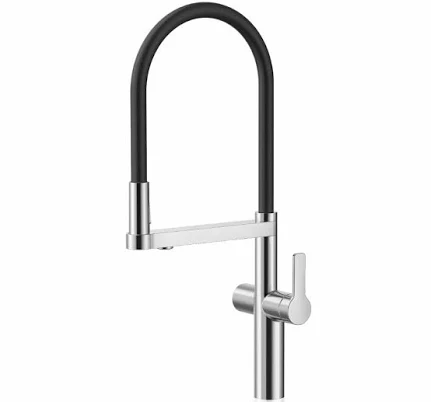
APEC Water Systems
APEC 2-in-1 Pull-Down Kitchen Faucet

Aquasure
Premier Series 75 GPD Under Sink Reverse Osmosis Water Filtration System
Model-based grades, not lab tests. We flunk more than we pass. How grading works
Can PFAS ‘Forever Chemicals’ Really Cut Your Fertility by 40%? What to Know in 2025
A study covered by TODAY.com in March 2023 found that women with higher levels of PFAS "forever chemicals" in their blood had a 40% reduced chance of becoming pregnant compared to women with lower levels. The chemicals behind this association are used in everything from nonstick pans to rain jackets, and researchers describe them as "found almost everywhere." Here's what the science actually shows, who's affected, and what you can do about it right now.
What did the study actually find?
According to TODAY.com's reporting, researchers measured PFAS levels in the blood of women trying to conceive and tracked their pregnancy outcomes over time. Women with higher combined levels of several PFAS compounds had, on average, a 40% lower chance of becoming pregnant in a given menstrual cycle than women with lower levels. This is described in the study as an association, not direct proof that PFAS caused the reduced fertility, other factors could play a role, and more research is needed to confirm the mechanism and the size of the effect.
Who is affected, and why is this happening?
PFAS (per- and polyfluoroalkyl substances) are a family of thousands of synthetic chemicals prized for repelling water, oil, and stains. That's exactly why they show up in so many everyday products, nonstick cookware, waterproof outdoor gear, food packaging, cosmetics, and more. Because they don't break down easily in the environment or the human body, they've earned the nickname "forever chemicals", and nearly everyone has measurable levels in their blood.
Anyone who uses treated cookware, wears water-resistant or stain-resistant clothing and gear, or eats food packaged in PFAS-treated wrappers has some exposure. People actively trying to conceive, pregnant individuals, and children may have particular reason to pay closer attention, since reproductive and developmental effects are a growing focus of PFAS research.
Why does this matter for consumers?
Fertility struggles are already stressful and often unexplained. A potential environmental contributor that's hiding in ordinary household products, rather than something exotic, is worth knowing about, even while science continues to sort out cause and effect. It also matters because exposure isn't limited to one product category. PFAS Authority's own scoring of 11,067 products found that 40% fail its PFAS and toxin screen overall, and the numbers get far worse in specific categories people use outdoors and in the kitchen. You can browse how individual products stack up using our product finder.
Some of the worst-performing categories in our scoring include camping tents and tarps (100% failing out of 316 products scored), rain jackets (100% failing out of 74 scored), cycling rain jackets (100% failing out of 72 scored), sleeping bags (100% failing out of 15 scored), and softshell jackets (100% failing out of 15 scored). These are products designed to repel water, the exact function PFAS chemicals are built for, which helps explain why the category is so saturated with them.
It's also worth knowing which brands currently disclose little to nothing about PFAS use in their products, making it hard for shoppers to make informed choices. Based on our review, Cuisinart, The North Face, MAC, Calphalon, T-fal, Nike, Columbia, and All-Clad fall into this group. A lack of disclosure doesn't automatically mean every product from these brands contains PFAS, but it does mean consumers currently have less information to go on.
How does PFAS Authority score these products?
It's important to understand what our scores do and don't measure. PFAS Authority scores products from publicly available ingredient lists, materials disclosures, and certifications, not laboratory testing of individual items. That means a "fail" reflects the presence of PFAS-related ingredients, materials, or a lack of disclosure that raises concern, based on published information. You can read the full details of how scoring works in our methodology.
What can you do to lower your exposure?
- Check before you buy outdoor gear. Tents, rain jackets, and sleeping bags are among the highest-risk categories in our data, so look for products that disclose PFAS-free materials or hold relevant certifications.
- Reconsider nonstick cookware. Stainless steel, cast iron, or ceramic-coated alternatives carry lower concern than traditional nonstick coatings that may use PFAS.
- Favor brands that disclose. Companies that publish clear PFAS information give you more to work with than those that stay silent.
- Use our finder before shopping. Our product finder lets you check specific items against our screening criteria before you buy.
- Talk to a healthcare provider if you're trying to conceive and have concerns about environmental exposures, this article isn't medical advice, but a provider can help you weigh your personal risk factors.
Bottom Line
A 2023 study reported by TODAY.com found an association between higher PFAS blood levels and a 40% reduced chance of pregnancy per cycle, a concerning signal, though not proof of direct cause and effect. What is clear is that PFAS remain widespread in consumer products, PFAS Authority's own scoring of 11,067 products found 40% fail our PFAS and toxin screen, with entire categories like tents, rain jackets, and sleeping bags scoring 100% failing. Until manufacturers disclose more, informed shopping, checking labels, certifications, and tools like our finder , is the most practical way to reduce your exposure.
FAQ
Does this study prove PFAS causes infertility?
No. The study found an association between higher PFAS blood levels and reduced pregnancy chances, as reported by TODAY.com. Researchers have not established direct causation, and other lifestyle or health factors could contribute. More research is needed to confirm and explain the link.
Which everyday products are most likely to contain PFAS?
Based on PFAS Authority's scoring, water-resistant outdoor gear, camping tents and tarps, rain jackets, cycling rain jackets, sleeping bags, and softshell jackets, showed the highest failure rates, all at 100% in the categories we've scored so far. Nonstick cookware and some cosmetics are also common sources.
How can I check if a specific product is a concern?
You can search PFAS Authority's product finder to see how specific items score based on published ingredients, materials, and certifications. Our methodology page explains exactly how we evaluate products and what "lower concern" versus "failing" means.
What else we were tracking around this
- Sep 30, 2026Are “Forever Chemicals” in Your Makeup a Real Concern in 2026?
- Sep 29, 2026Do ‘Forever Chemicals’ Cause Gut Problems in Kids? What the 2026 Study Means for Parents
- Sep 29, 2026Do ‘Forever Chemicals’ Affect Fertility in 2023? What the New PFAS Study Means for You
- Sep 28, 2026Is Your Drinking Water Still Protected From PFAS in 2026? What EPA's Guidance Withdrawal Means for You
The latest PFAS news is updated daily.
Now check your own stuff
Search anything you own and get its PFAS grade in seconds.
Get the graded list, free
The products we score each week, and the best-graded alternative in every category.
No spam. Unsubscribe anytime.