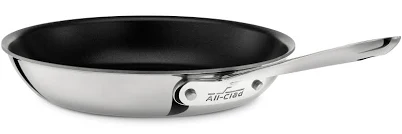
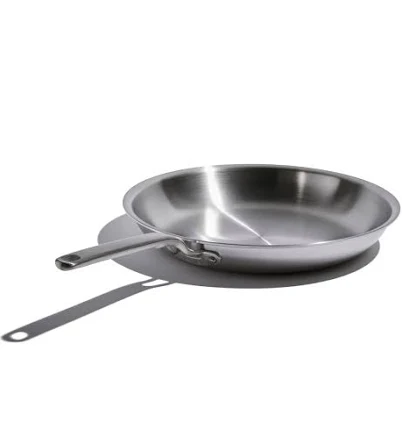
All-Clad 10" Stainless Steel Nonstick Fry Pan
Teflon-type coating non-stick coating, disclosed by the brand.
All-Clad says its nonstick contains Teflon-type coating, and lists its HA1, Essentials, NS1, D3 and D5 nonstick lines among its Teflon-type coating coated products. Teflon-type coating is a Teflon-family coating in the PFAS family.
The better-graded swap
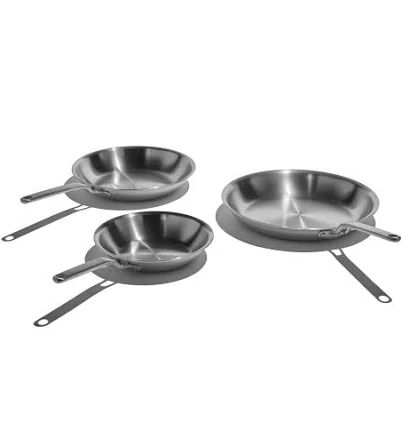
Heritage Steel
Eater x Heritage Steel 3 Piece Fry Pan Set
100/100 safety
Same rubric that flunked this product. The swap earned Excellent.
Still want this one anyway? Check the price on Amazon. We’d swap it.
Material
Teflon-type coating non-stick coating, as disclosed by All-Clad
Lab data
No public lab test
Is All-Clad 10" Stainless Steel Nonstick Fry non-toxic? What it is made of
This pan pairs a stainless steel body with a Teflon-type coating (polytetrafluoroethylene, brand name Teflon) non-stick coating. Teflon-type coating itself is chemically stable at normal cooking temperatures, but PFAS chemicals used to manufacture or process Teflon-type coating coatings can migrate into food, especially when the coating degrades or is overheated. The stainless steel substrate itself does not present documented leaching concerns at typical stovetop temperatures.
What’s concerning
No PFAS disclosure
No PFAS-free statement from the brand for this product.
PTFE / Teflon confirmed
The brand discloses a Teflon-type coating.
Category baseline
The starting point for this type of product, before anything specific to this product is counted.
PFAS
Overheating Teflon-type coating-coated cookware can release polymerization fumes, which cause acute respiratory symptoms (polymer fume fever) in humans and is acutely toxic to birds. This risk applies to all Teflon-type coating cookware if temperature control is not maintained.
Source, ATSDR ↗Coating degradation and peeling
Teflon-type coating coatings on stainless steel cookware can flake or peel with age, dishwasher use, or metal utensil contact. Ingested coating particles are not acutely toxic but are indigestible; visible coating loss is a trigger for replacement.
PFAS
Teflon-type coating coatings typically contain residual PFOA or other PFAS from manufacturing unless explicitly cleaned or sourced from processes documented to minimize PFAS content. All-Clad does not disclose their PFAS processing protocol, so presence of migration-capable residues cannot be ruled out and should be assumed plausible.
Source, ATSDR ↗What’s reassuring
Lead
This product uses Teflon-type coating non-stick, not ceramic or enamel glaze, so ceramic or glaze-based lead/cadmium contamination is not a relevant hazard pathway.
Source, ATSDR ↗Aluminum leaching
All-Clad uses stainless steel construction, not bare aluminum. Stainless steel does not leach aluminum under normal cooking conditions.
The full breakdown
The brand's record and disclosure
All-Clad discloses the Teflon-type coating in product specifications but does not publicly document which PFAS processing aids are or are not used in manufacturing, nor do they communicate a timeline for transitioning to PFAS-free non-stick alternatives. The brand has no published statement addressing consumer concerns about PFAS in cookware. All-Clad is owned by Groupe SEB, which manufactures cookware across multiple sub-brands with varying non-stick chemistries.
How it compares in its category
Most premium non-stick cookware still relies on Teflon-type coating or Teflon-type coating variants (ceramic-Teflon-type coating hybrids). All-Clad's stainless steel construction is durable and non-reactive; comparable brands like Le Creuset offer enameled cast iron (no PFAS in the cooking surface, but heavier), while others market ceramic or Teflon-type coating alternatives. All-Clad does not currently offer a non-stick option made with materials not linked to PFAS in their core product line.
If you buy it
Never exceed 500°F; Teflon-type coating begins degrading and releasing fumes above this point. Hand-wash only; dishwasher and metal utensils accelerate coating wear and peeling, which increases leaching and inhalation risk. Inspect the coating quarterly for scratches, discoloration, or peeling; discard the pan if the coating is visibly compromised. Replace every 3-5 years if used regularly, sooner if coating shows damage.
What we don’t know
- Basis
- Model estimate, 35% confidence, not a lab result
- Lab test
- None on record for this exact product
- Brand statement
- All-Clad has made a specific claim
Formulations change between production runs, so check the current label. How we grade.
Better-graded alternatives in Cookware
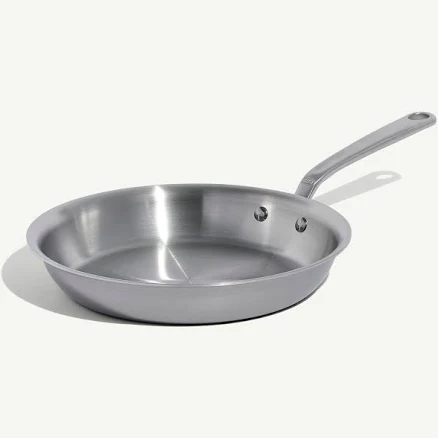
Made In
Stainless Clad Fry Pan
- Stainless steel clad construction, no nonstick coating
- The brand calls it PFAS-free, which we have not verified
- Clad separation or delamination over time
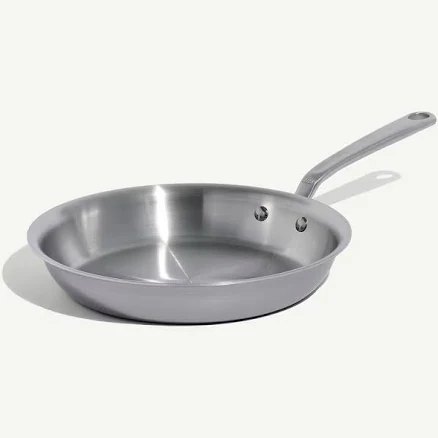
Made In
10' Stainless Clad Frying Pan
- stainless steel clad construction, no nonstick coating
- The brand calls it PFAS-free, which we have not verified
- Nickel leaching from stainless steel
3 hazards checked on this product. See all of them.
Heritage Steel
Eater Fry Pan
- Clad stainless steel, no coating
- The brand calls it PFAS-free, which we have not verified
- Metal ion release during cooking (iron, nickel, chromium)
More cookware grades
How we score, every product runs through the same public 0-100 rubric based on materials, coatings, brand disclosure, lab findings, and recalls. See the full methodology → Spotted a mistake? Report an error.