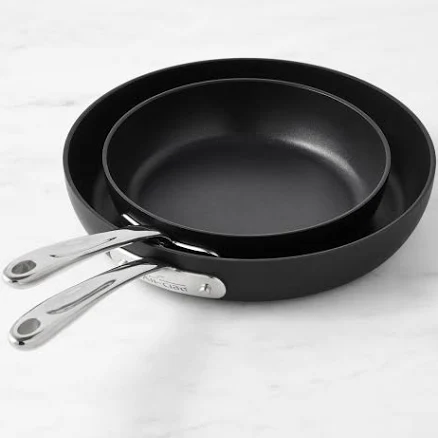
All-Clad HA1 Non-stick, Is It Non-Toxic?
High risk, avoid this cookware.
This high-end non-stick pan relies on PFAS chemistry for its coating, exposing you to persistent chemical contamination.
The better-graded swap
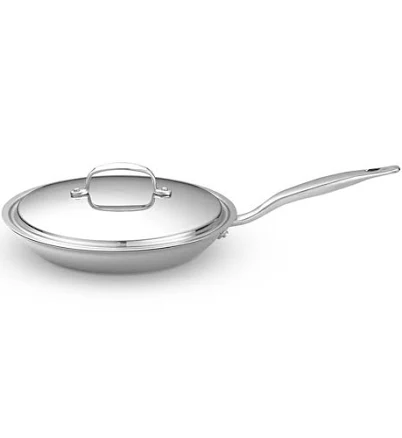
Heritage Steel
Heritage Steel 10.5" Fry Pan with Lid
100/100 safety
Same rubric that flunked this product. The swap earned Excellent.
Still want this one anyway? Check the price on Amazon. We’d swap it.
You may also be interested in
Top-graded picks in the categories readers replace first, every one scored on the same rubric.

- polypropylene filter housing, carbon/sediment cartridge
- We found no PFAS statement from the brand
- Bacterial growth in spent cartridges
3 hazards checked on this product, all on its full breakdown.

Aquasure
Premier Series 75 GPD Under Sink Reverse Osmosis Water Filtration System
- RO membrane, carbon filters, stainless steel housing
- We found no PFAS statement from the brand
- Bacterial and microbial growth in housing and filters
4 hazards checked on this product, all on its full breakdown.

Avocado
Vegan Mattress
- organic cotton, natural latex, coconut coir, recycled steel coils
- The brand calls it PFAS-free, which we have not verified
- Heavy metals
2 hazards checked on this product, all on its full breakdown.
Is All-Clad HA1 Non-stick non-toxic? What it is made of
All-Clad HA1 uses a hard-anodized aluminum core with a proprietary non-stick coating system. Hard-anodized aluminum undergoes an electrochemical process that creates a dense oxide layer, making it much more durable and corrosion-resistant than standard aluminum, which significantly reduces leaching risk. The non-stick layer is the primary exposure point; All-Clad does not publicly disclose whether this coating contains Teflon-type coating (Teflon) or a Teflon-type coating-free alternative, though the brand has historically used Teflon-type coating-based formulations.
What’s concerning
Category baseline
The starting point for this type of product, before anything specific to this product is counted.
No PFAS disclosure
No public statement from the brand about PFAS in this product.
PTFE / Teflon confirmed
Uses Teflon-type coating (Teflon), a Teflon-family coating in the PFAS family.
Non-stick coating degradation and fume risk
If the HA1 coating contains Teflon-type coating, overheating an empty or damaged pan can release fumes (Teflon-type coating-fume illness is rare but documented). All-Clad does not publicly confirm or deny Teflon-type coating presence in the HA1 line. Risk is low with proper use but rises substantially if the coating is scratched or if the pan is overheated.
Non-stick coating flaking and microingestion
Heavy use, metal utensil contact, or dishwasher cycling can cause the coating to chip or peel over 3-5 years. Ingestion of small flakes is unlikely to cause acute harm but is undesirable. Visual inspection for damage is the primary control.
What’s reassuring
Aluminum leaching
Hard-anodized aluminum dramatically reduces leaching compared to raw aluminum because the oxide layer acts as a barrier between the metal and food. No leaching has been documented or reported for All-Clad hard-anodized cookware. The anodized layer represents a design feature intended to reduce direct contact between food and the base metal.
Handles and hardware safety
All-Clad cookware typically uses stainless-steel or silicone-wrapped handles with stainless rivets. No lead, cadmium, or problematic hardware has been reported for this product line.
How is this PFAS grade calculated?
The brand's record and disclosure
All-Clad is a premium, American-owned cookware manufacturer with a strong reputation for quality control and transparency about materials. The company has not issued public statements distancing itself from Teflon-type coating, nor has it disclosed a transition to Teflon-type coating-free coatings for the HA1 line. All-Clad cookware carries no major product safety recalls related to non-stick coating failures or leaching in recent history, which suggests consistent manufacturing and quality assurance. No third-party certifications (NSF, Prop 65 warnings) are formally associated with this product.
How it compares in its category
The HA1 is positioned as a mid-premium non-stick option; hard-anodized construction is standard in this price segment, with the anodized layer functioning as a barrier between food and the underlying aluminum. Compared to budget non-stick cookware, All-Clad's manufacturing consistency and coating thickness are higher, reducing chipping and degradation risk. Some competing brands (GreenPan, Caraway) market Teflon-type coating-free coatings explicitly, while All-Clad does not, which may reflect either confidence in Teflon-type coating safety or lack of market differentiation in that direction.
If you buy it
Use only silicone, wood, or plastic utensils to avoid scratching the coating; metal utensils are a primary cause of non-stick layer failure. Do not exceed medium-high heat (the brand recommends not preheating empty or exceeding 400F-500F depending on cooking task) to minimize any risk of coating degradation fume release, particularly if the coating contains Teflon-type coating. Inspect the pan regularly for visible scratches, peeling, or white flaking; discontinue use if coating damage is visible. Hand-wash when possible rather than dishwasher to extend coating life, as repeated high-temperature washing accelerates wear.
What is not known about PFAS in this product?
- Basis
- Model estimate, 100% confidence, not a lab result
- Lab test
- None on record for this exact product
- Brand statement
- All-Clad has made a specific claim
Formulations change between production runs, so check the current label. How we grade.
What are the PFAS-free alternatives to All-Clad HA1 Non-stick?
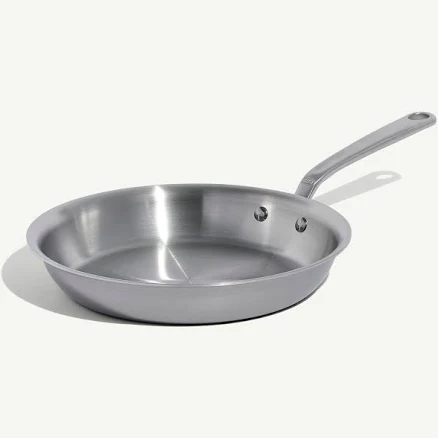
- Stainless steel clad construction, no nonstick coating
- The brand calls it PFAS-free, which we have not verified
- Clad separation or delamination over time
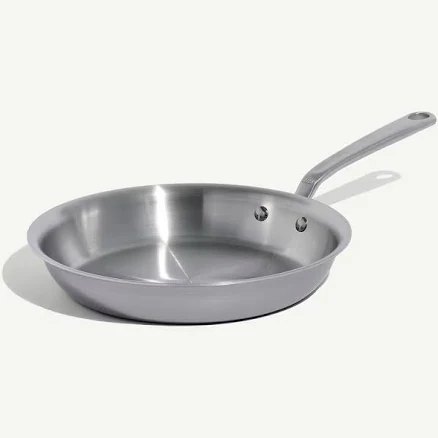
- stainless steel clad construction, no nonstick coating
- The brand calls it PFAS-free, which we have not verified
- Nickel leaching from stainless steel
3 hazards checked on this product, all on its full breakdown.
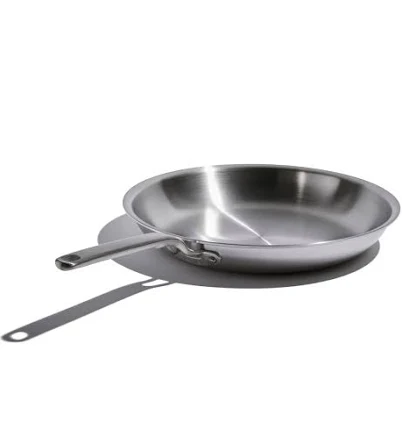
- Clad stainless steel, no coating
- The brand calls it PFAS-free, which we have not verified
- Metal ion release during cooking (iron, nickel, chromium)
More cookware grades
How we score, every product runs through the same public 0-100 rubric based on materials, coatings, brand disclosure, lab findings, and recalls. See the full methodology → Spotted a mistake? Report an error.