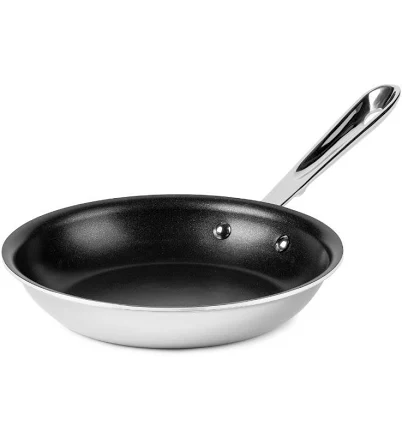
All-Clad D3 Pro Nonstick 3-Ply Bonded Cookware
Teflon-type coating non-stick coating, disclosed by the brand.
All-Clad says its nonstick contains Teflon-type coating, and lists its HA1, Essentials, NS1, D3 and D5 nonstick lines among its Teflon-type coating coated products. Teflon-type coating is a Teflon-family coating in the PFAS family.
The better-graded swap
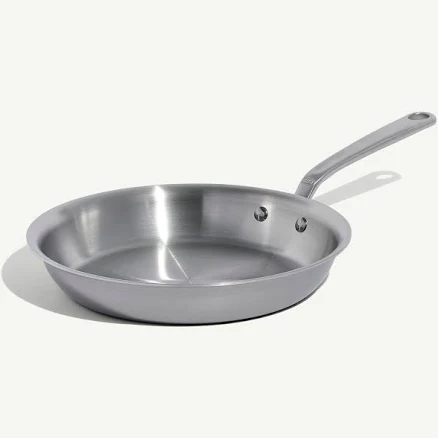
Made In
Made In Stainless Clad Fry Pan
100/100 safety
Same rubric that flunked this product. The swap earned Excellent.
Still want this one anyway? Check the price on Amazon. We’d swap it.
Material
Teflon-type coating non-stick coating, as disclosed by All-Clad
Lab data
No public lab test
Is All-Clad D3 Pro Nonstick 3-Ply Bonded non-toxic? What it is made of
All-Clad D3 Pro features a Teflon-type coating-based non-stick coating over a stainless steel cooking surface, bonded to an aluminum core with stainless steel exterior. Teflon-type coating itself is stable at normal cooking temperatures but begins to degrade at sustained heat above 500°F, releasing volatile organic compounds. The 3-ply construction means the aluminum core is fully encapsulated, reducing direct leaching risk compared to single-layer designs. The non-stick coating is the primary wear surface and degrades with use, scratching, and metal utensil contact.
What’s concerning
No PFAS disclosure
No PFAS-free statement from the brand for this product.
PTFE / Teflon confirmed
The brand discloses a Teflon-type coating.
Category baseline
The starting point for this type of product, before anything specific to this product is counted.
Teflon-type coating fume inhalation risk
Sustained heating of Teflon-type coating above 500°F generates fumes; Teflon-related illness (polymer fume fever) is documented in occupational and high-heat domestic contexts. All-Clad does not publish temperature safety data or fume-risk labeling for this line.
Coating degradation and flaking
Teflon-type coating non-stick coatings on cookware degrade with repeated use, thermal cycling, and mechanical wear. If coating flakes into food, ingested Teflon-type coating particles are not acutely toxic but long-term effects are poorly characterized.
PFAS
Teflon-type coating itself is fluorinated and part of the PFAS family; manufacturing Teflon-type coating typically involves PFOA or PFOA substitutes. All-Clad does not disclose specific PFAS chemicals or elimination roadmaps. This hazard is graded separately as 5/100 and is the primary chemical concern for this product.
Source, ATSDR ↗What’s reassuring
Aluminum leaching from core
The aluminum core is fully encapsulated by stainless steel and non-stick layers; direct contact with food is not a design feature. No recalls or reports of aluminum leaching from intact All-Clad D3 Pro cookware are on record.
Lead
All-Clad D3 Pro does not feature ceramic glaze, enamel, or hand-painted finishes; exterior and interior non-cooking surfaces are stainless steel and Teflon-type coating. No lead or cadmium hazard is documented for this construction.
Source, ATSDR ↗The full breakdown
The brand's record and disclosure
All-Clad explicitly discloses the Teflon-type coating in product specs but does not publicly address PFAS content, manufacturing methods, or alternatives testing. The brand has no published safety certifications specific to non-stick cookware (e.g., GOTS, Oeko-Tex equivalents). All-Clad has no documented recalls for coating failure or chemical leaching on this line as of public record. Their silence on PFAS stance contrasts with some competitors who have moved to or committed to alternative non-stick systems.
How it compares in its category
Most premium non-stick cookware in this price tier uses Teflon-type coating; ceramic, titanium-reinforced Teflon-type coating, and ceramic-polymer hybrids exist as lower-PFAS alternatives but trade durability and non-stick performance. All-Clad's 3-ply bonded construction is standard for premium brands (Le Creuset, Calphalon Contemporary); unencapsulated aluminum cores in budget non-stick carry higher leaching risk. Seasoned cast iron and stainless steel avoid Teflon-type coating entirely but require different cooking technique and maintenance.
If you buy it
Never exceed 500°F; use medium to medium-high heat and ensure adequate kitchen ventilation during cooking, especially when preheating empty. Replace the cookware if the non-stick coating visibly peels, flakes, or scratches deeply, as coating integrity degradation is irreversible. Use soft utensils, wooden spoons, and silicone or nylon implements to minimize scratching. Hand wash only; dishwasher use accelerates coating wear. If you regularly cook at high temperatures or need a long-term heirloom piece, consider alternatives outside the Teflon-type coating family.
What we don’t know
- Basis
- Model estimate, 45% confidence, not a lab result
- Lab test
- None on record for this exact product
- Brand statement
- All-Clad has made a specific claim
Formulations change between production runs, so check the current label. How we grade.
Better-graded alternatives in Cookware
Made In
Stainless Clad Fry Pan
- Stainless steel clad construction, no nonstick coating
- The brand calls it PFAS-free, which we have not verified
- Clad separation or delamination over time
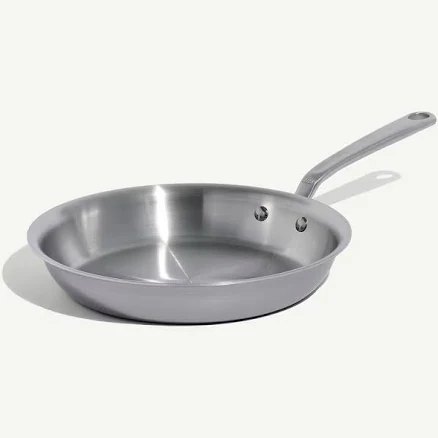
Made In
10' Stainless Clad Frying Pan
- stainless steel clad construction, no nonstick coating
- The brand calls it PFAS-free, which we have not verified
- Nickel leaching from stainless steel
3 hazards checked on this product. See all of them.
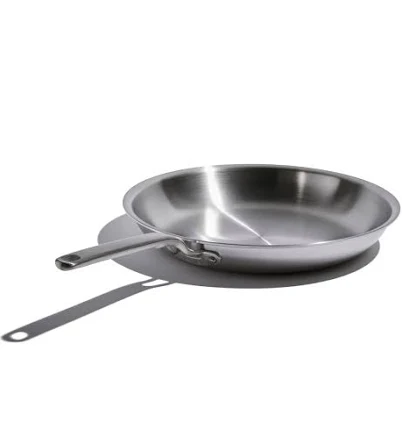
Heritage Steel
Eater Fry Pan
- Clad stainless steel, no coating
- The brand calls it PFAS-free, which we have not verified
- Metal ion release during cooking (iron, nickel, chromium)
More cookware grades
How we score, every product runs through the same public 0-100 rubric based on materials, coatings, brand disclosure, lab findings, and recalls. See the full methodology → Spotted a mistake? Report an error.