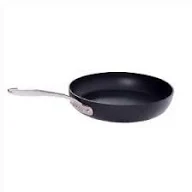
All-Clad HA1 Expert Hard Anodized Nonstick Fry Pan 10"
Teflon-type coating non-stick coating, disclosed by the brand.
All-Clad says its nonstick contains Teflon-type coating, and lists its HA1, Essentials, NS1, D3 and D5 nonstick lines among its Teflon-type coating coated products. Teflon-type coating is a Teflon-family coating in the PFAS family.
The better-graded swap
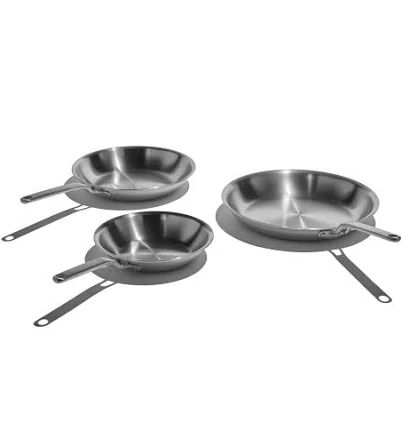
Heritage Steel
Eater x Heritage Steel 3 Piece Fry Pan Set
100/100 safety
Same rubric that flunked this product. The swap earned Excellent.
Still want this one anyway? Check the price on Amazon. We’d swap it.
Material
Teflon-type coating non-stick coating, as disclosed by All-Clad
Lab data
No public lab test
Is All-Clad HA1 Expert Hard Anodized non-toxic? What it is made of
The All-Clad HA1 has a hard-anodized aluminum body (a dense oxide layer that resists corrosion and wear) with a Teflon-type coating-based nonstick surface on the cooking side. Hard anodizing is electrochemically treated aluminum, not a removable coating, so it is more durable than soft anodize. The Teflon-type coating layer is the primary chemical concern in this product; it is not proprietary to All-Clad and is standard across most nonstick cookware. Aluminum itself, when anodized, has very low leaching potential because the oxide layer creates a barrier.
What’s concerning
No PFAS disclosure
No PFAS-free statement from the brand for this product.
PTFE / Teflon confirmed
The brand discloses a Teflon-type coating.
Category baseline
The starting point for this type of product, before anything specific to this product is counted.
Teflon-type coating fume risk (thermal decomposition)
Teflon-type coating nonstick coatings release fumes above 400-500F. All-Clad does not market temperature warnings on the product itself. Accidental overheating is a known user error with nonstick cookware; the risk is primarily acute (respiratory irritation) rather than chronic at normal cooking temperatures.
Coating degradation and particle ingestion
Hard-anodized nonstick coatings are more durable than soft-anodized, but mechanical damage (dishwasher, metal utensils, impact) can cause flaking. No recalls are on record for this specific product, but degraded Teflon-type coating coatings can shed particles into food. Frequency depends entirely on user care.
Aluminum leaching (post-coating failure)
The anodized layer protects underlying aluminum from leaching under normal use. Once the nonstick coating is compromised, acidic or alkaline foods may contact bare aluminum. Hard anodize reduces this risk compared to unanodized aluminum, but does not eliminate it if the protective oxide is breached.
What’s reassuring
Lead
The All-Clad HA1 does not use ceramic glaze, enamel coating, or decorative finishes on the cooking surface. The hard-anodized layer is an inorganic oxide process, not a paint or glaze. No record of lead or cadmium detection in hard-anodized cookware from reputable manufacturers.
Source, ATSDR ↗Handle or rivets (if metal or composite)
The HA1 Expert uses a stainless steel handle and all-metal construction. No reports of leaching or degradation of handles in this product line. Composite handles or coated handles are not used, so no formaldehyde resin or adhesive-related concerns are documented.
The full breakdown
The brand's record and disclosure
All-Clad discloses the Teflon-type coating nonstick coating in product specifications but has made no public statements about PFAS content, alternatives, or remediation. The brand has not pursued PFOA-free or Teflon-type coating-free nonstick lines marketed as such. All-Clad cookware is manufactured to consistent standards and does not have known recalls for coating failure or leaching in the hard-anodized line. The company markets the product on durability and heat performance, not on chemical safety or low-toxin positioning.
How it compares in its category
Hard-anodized nonstick cookware is mainstream and mid-to-premium in price; All-Clad positions at the premium end. Alternatives include ceramic nonstick (lower PFAS exposure but often less durable coating), cast iron (no coating but requires maintenance), stainless steel (no nonstick but no Teflon-type coating), and other Teflon-type coating-coated cookware at lower price points with similar chemical profiles. The hard-anodized substrate itself is a strength relative to thin aluminum or non-anodized bodies, which have higher aluminum leaching potential if the nonstick coating degrades.
If you buy it
Never exceed 400-500F on the stovetop; Teflon-type coating decomposition fumes increase sharply above this range, even if not visually obvious. Hand-wash only; dishwashers can degrade the nonstick layer and anodized surface over time. Replace the pan if the nonstick coating chips, flakes, or visibly wears; a compromised coating increases both ingestion of coating particles and potential aluminum contact with acidic foods. Avoid preheating an empty pan and do not use metal utensils or abrasive scrubbers. These practices extend the life of the coating and reduce exposure windows.
What we don’t know
- Basis
- Model estimate, 35% confidence, not a lab result
- Lab test
- None on record for this exact product
- Brand statement
- All-Clad has made a specific claim
Formulations change between production runs, so check the current label. How we grade.
Better-graded alternatives in Cookware
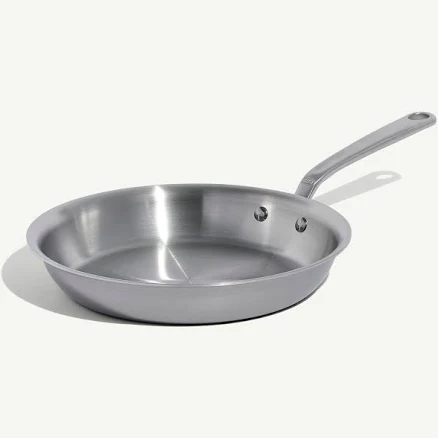
Made In
Stainless Clad Fry Pan
- Stainless steel clad construction, no nonstick coating
- The brand calls it PFAS-free, which we have not verified
- Clad separation or delamination over time
Made In
10' Stainless Clad Frying Pan
- stainless steel clad construction, no nonstick coating
- The brand calls it PFAS-free, which we have not verified
- Nickel leaching from stainless steel
3 hazards checked on this product. See all of them.
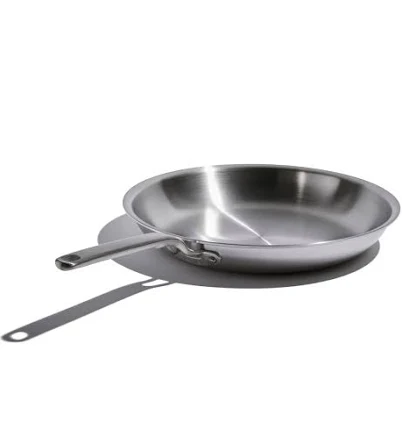
Heritage Steel
Eater Fry Pan
- Clad stainless steel, no coating
- The brand calls it PFAS-free, which we have not verified
- Metal ion release during cooking (iron, nickel, chromium)
More cookware grades
How we score, every product runs through the same public 0-100 rubric based on materials, coatings, brand disclosure, lab findings, and recalls. See the full methodology → Spotted a mistake? Report an error.