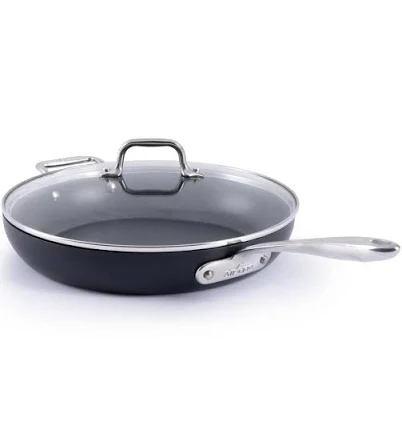
All-Clad HA1 Expert Nonstick Fry Pan with Lid
Teflon-type coating non-stick coating, disclosed by the brand.
All-Clad says its nonstick contains Teflon-type coating, and lists its HA1, Essentials, NS1, D3 and D5 nonstick lines among its Teflon-type coating coated products. Teflon-type coating is a Teflon-family coating in the PFAS family.
The better-graded swap
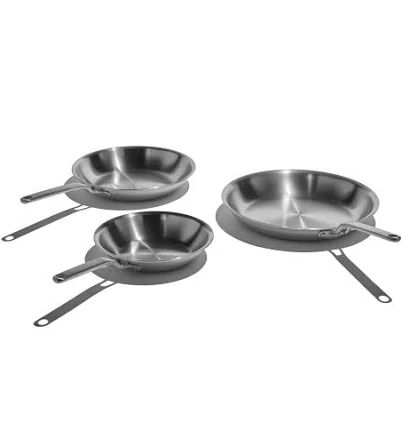
Heritage Steel
Eater x Heritage Steel 3 Piece Fry Pan Set
100/100 safety
Same rubric that flunked this product. The swap earned Excellent.
Still want this one anyway? Check the price on Amazon. We’d swap it.
Material
Teflon-type coating non-stick coating, as disclosed by All-Clad
Lab data
No public lab test
Is All-Clad HA1 Expert Nonstick Fry Pan non-toxic? What it is made of
The All-Clad HA1 uses a Teflon-type coating-based non-stick coating bonded to hard-anodized aluminum. Hard-anodized aluminum creates a dense oxide barrier that reduces direct aluminum contact with food under normal use. Teflon-type coating itself is stable below its decomposition threshold (around 500F/260C); above that, thermal breakdown releases fumes and byproducts. The lid appears to be glass, which presents no coating leaching concern.
What’s concerning
No PFAS disclosure
No PFAS-free statement from the brand for this product.
PTFE / Teflon confirmed
The brand discloses a Teflon-type coating.
Category baseline
The starting point for this type of product, before anything specific to this product is counted.
Teflon-type coating thermal decomposition and fume release
Overheating above 500F can trigger Teflon-type coating breakdown, releasing perfluorooctanoic acid (PFOA) precursors and other fluorinated compounds. Most home cooking stays below this, but broiler use, empty preheating, or high-heat searing pose genuine risk; birds in the kitchen are particularly vulnerable.
What’s reassuring
Coating degradation and flaking
No recalls or widespread reports of premature peeling or chipping in this model line. Hard-anodized aluminum substrate is durable, and All-Clad's manufacturing reputation is established, but any non-stick coating degrades with use and requires proper care to minimize ingestion of coating fragments.
Aluminum leaching
The hard-anodized aluminum exterior and Teflon-type coating interior coating both form barriers between aluminum and food. Under normal acidic or alkaline conditions and proper use, leaching is not on record for this product line; risk rises sharply if the non-stick coating is breached.
Lead
No documented testing or recalls indicate lead or cadmium in All-Clad Teflon-type coating coatings. Teflon-type coating formulations do not inherently contain these heavy metals, though historical non-stick products have occasionally been contaminated; this brand's premium positioning and US manufacturing make this a lower concern.
Source, ATSDR ↗Glass lid integrity
The glass lid itself presents no known chemical hazard. Thermal shock (cold water on hot glass) or impact can cause cracking; no coatings or treatments are disclosed on the lid surface that would add hazard.
The full breakdown
The brand's record and disclosure
All-Clad discloses the Teflon-type coating in product descriptions and marketing materials but does not publicly address PFAS content, manufacturing methods, or end-of-life disposal. The brand has no documented certifications (such as GOTS, Oeko-Tex, or third-party coating audits) specific to PFAS minimization or alternative non-stick chemistry. No major recalls of this line for coating degradation or contamination have been established in public records.
How it compares in its category
Teflon-type coating non-stick cookware is the established mainstream category standard; this pan is mid-range premium. Alternatives include ceramic non-stick (lower temperature stability, often less durable coating), stainless steel (requires more oil, no PFAS), and cast iron (no synthetic coatings). All-Clad does not offer a Teflon-type coating-free line in this model range, so buyers concerned about PFAS have limited in-brand alternatives.
If you buy it
Keep temperatures below 400F during cooking and never preheat empty to avoid exceeding Teflon-type coating decomposition temperature. Hand-wash only; dishwasher use accelerates coating wear. Replace the pan if the non-stick surface flakes, discolors, or visibly peels. Avoid metal utensils, abrasive scrubbers, and acidic foods left standing overnight, as these degrade the coating and increase leaching risk over time.
What we don’t know
- Basis
- Model estimate, 35% confidence, not a lab result
- Lab test
- None on record for this exact product
- Brand statement
- All-Clad has made a specific claim
Formulations change between production runs, so check the current label. How we grade.
Better-graded alternatives in Cookware
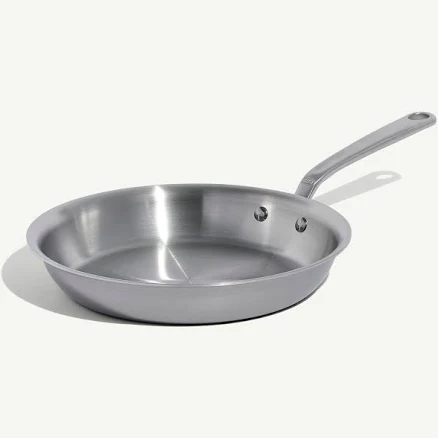
Made In
Stainless Clad Fry Pan
- Stainless steel clad construction, no nonstick coating
- The brand calls it PFAS-free, which we have not verified
- Clad separation or delamination over time
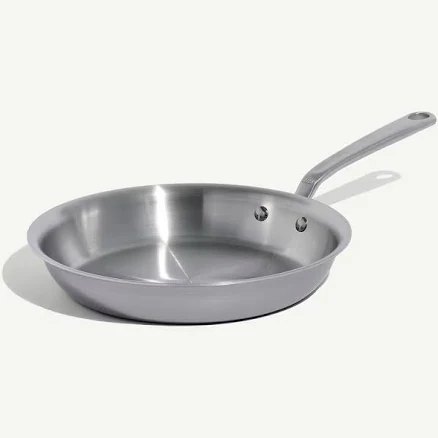
Made In
10' Stainless Clad Frying Pan
- stainless steel clad construction, no nonstick coating
- The brand calls it PFAS-free, which we have not verified
- Nickel leaching from stainless steel
3 hazards checked on this product. See all of them.
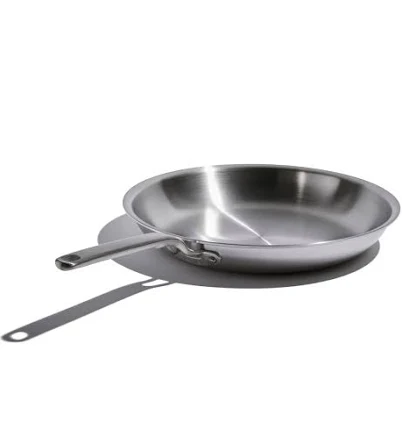
Heritage Steel
Eater Fry Pan
- Clad stainless steel, no coating
- The brand calls it PFAS-free, which we have not verified
- Metal ion release during cooking (iron, nickel, chromium)
More cookware grades
How we score, every product runs through the same public 0-100 rubric based on materials, coatings, brand disclosure, lab findings, and recalls. See the full methodology → Spotted a mistake? Report an error.