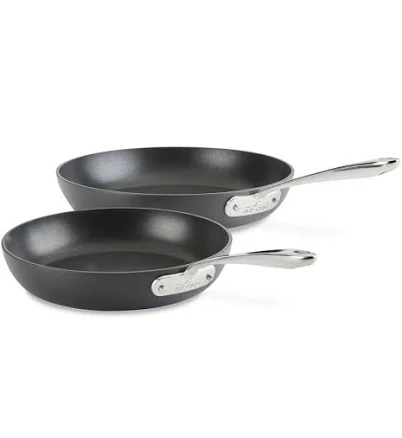
All-Clad Nonstick Hard-Anodized Fry Pan Set (2-Piece Set)
Teflon-type coating non-stick coating, disclosed by the brand.
All-Clad says its nonstick contains Teflon-type coating, and lists its HA1, Essentials, NS1, D3 and D5 nonstick lines among its Teflon-type coating coated products. Teflon-type coating is a Teflon-family coating in the PFAS family.
The better-graded swap
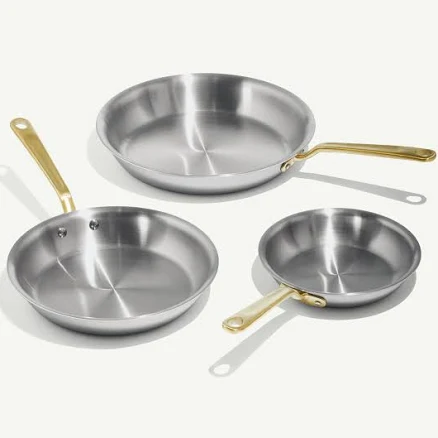
Made In
Made In Stainless Clad Frying Pan Set 3-Piece Professional-Grade 5-Layer Metal Construction
100/100 safety
Same rubric that flunked this product. The swap earned Excellent.
Still want this one anyway? Check the price on Amazon. We’d swap it.
Material
Teflon-type coating non-stick coating, as disclosed by All-Clad
Lab data
No public lab test
Is All-Clad Nonstick Hard-Anodized Fry Pan non-toxic? What it is made of
This set uses a hard-anodized aluminum body with a Teflon-type coating (polytetrafluoroethylene) non-stick coating on cooking surfaces. Hard anodizing creates a sealed oxide layer on aluminum that significantly reduces the risk of aluminum leaching into food compared to bare aluminum or soft-anodized cookware. Teflon-type coating itself is chemically stable at normal cooking temperatures (below 500°F), but the manufacturing process and degradation pathway of Teflon-type coating coatings involve PFAS chemistry, which is the primary chemical concern for this product type.
What’s concerning
No PFAS disclosure
No PFAS-free statement from the brand for this product.
PTFE / Teflon confirmed
The brand discloses a Teflon-type coating.
Category baseline
The starting point for this type of product, before anything specific to this product is counted.
Teflon-type coating degradation and fume inhalation risk
Teflon-type coating non-stick coatings are stable below 500°F but can degrade and release fumes at higher temperatures. Overheating, preheating empty on high heat, or damaged/flaking coating increase risk. No record of recalls for this specific All-Clad model, but Teflon-type coating fume risk is a known hazard class for all Teflon-type coating non-stick cookware.
Coating flaking and microparticle ingestion
Teflon-type coating coatings can chip or flake over time, especially if scratched, abrasively scrubbed, or washed in dishwashers. Ingestion of small Teflon-type coating particles is not believed to cause acute toxicity (Teflon-type coating is chemically inert in the digestive tract), but visible coating damage is a trigger to retire the cookware.
Coating degradation over time with normal use
All Teflon-type coating non-stick coatings gradually lose effectiveness with repeated heating, cooling, and friction. All-Clad hard-anodized cookware typically maintains function for 3 to 5 years of regular household use before coating performance noticeably declines. This is normal wear, not a defect, and replacement becomes cost-benefit decision based on cooking habits.
What’s reassuring
Aluminum leaching from the cookware base
Hard-anodized aluminum has a protective oxide layer that prevents contact between food and base aluminum. This product's hard-anodization process is specifically designed to prevent leaching. No reports of aluminum leaching from All-Clad hard-anodized cookware are on record.
Lead
This product uses Teflon-type coating non-stick coating on anodized aluminum, not ceramic, enamel, or glaze. No ceramic or enamel components are part of the design, so this hazard class does not apply.
Source, ATSDR ↗The full breakdown
The brand's record and disclosure
All-Clad openly discloses the use of Teflon-type coating non-stick coating on this product line, which is standard transparency for the category. The brand does not publish third-party certifications (e.g., GREENGUARD, OEKO-TEX) for non-stick cookware, nor have public statements been found addressing PFAS phaseout plans. All-Clad is owned by Groupe SEB and has a long-established reputation for manufacturing quality and durability in premium cookware, though durability does not eliminate chemical concerns inherent to Teflon-type coating coatings.
How it compares in its category
Hard-anodized Teflon-type coating non-stick cookware is a mid-to-premium category standard, and All-Clad is positioned at the high end of this market. Compared to bare stainless steel (no Teflon-type coating, not a material linked to PFAS but higher sticking risk), Teflon-type coating alternatives carry the same PFAS manufacturing concern. Ceramic and oil-seasoned cast iron options avoid Teflon-type coating entirely but lack non-stick convenience and have different maintenance demands. All-Clad's hard-anodization process is more robust than soft-anodized or non-anodized aluminum alternatives, reducing leaching risk from the base metal.
If you buy it
Do not heat this cookware above 500°F, as Teflon-type coating breaks down and may release fumes above that threshold; stick to medium to medium-high heat for routine cooking. Hand-wash only; dishwashers and abrasive scouring degrade the coating faster and increase flaking risk. Inspect the coating annually for chips, discoloration, or worn spots; replace the pan if the non-stick surface visibly deteriorates or if bare aluminum or metal shows through. Hard-anodized aluminum is durable, so the limiting factor is coating lifespan, typically 3 to 5 years with proper care; plan replacement accordingly.
What we don’t know
- Basis
- Model estimate, 35% confidence, not a lab result
- Lab test
- None on record for this exact product
- Brand statement
- All-Clad has made a specific claim
Formulations change between production runs, so check the current label. How we grade.
Better-graded alternatives in Cookware
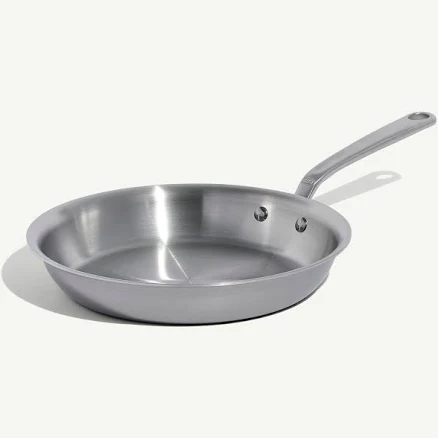
Made In
Stainless Clad Fry Pan
- Stainless steel clad construction, no nonstick coating
- The brand calls it PFAS-free, which we have not verified
- Clad separation or delamination over time
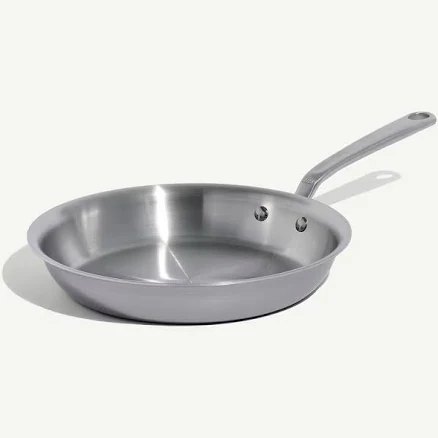
Made In
10' Stainless Clad Frying Pan
- stainless steel clad construction, no nonstick coating
- The brand calls it PFAS-free, which we have not verified
- Nickel leaching from stainless steel
3 hazards checked on this product. See all of them.
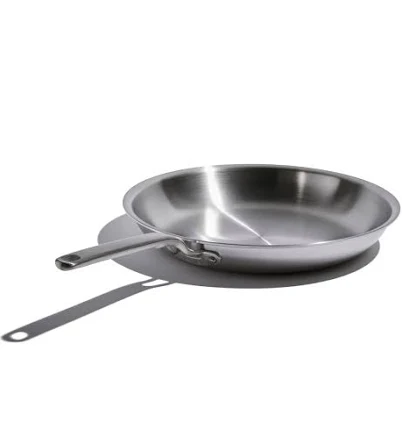
Heritage Steel
Eater Fry Pan
- Clad stainless steel, no coating
- The brand calls it PFAS-free, which we have not verified
- Metal ion release during cooking (iron, nickel, chromium)
More cookware grades
How we score, every product runs through the same public 0-100 rubric based on materials, coatings, brand disclosure, lab findings, and recalls. See the full methodology → Spotted a mistake? Report an error.