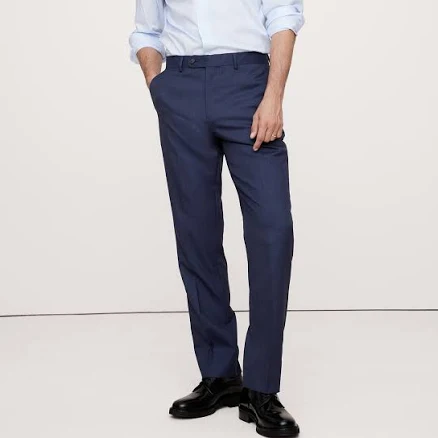
Banana Republic · Wrinkle-Free Professional Workwear
Banana Republic Men's Signature Italian Rustico Suit Pant
Lower concern; untreated wool pant with no water or stain treatment.
Untreated Italian wool naturally resists PFAS concerns more than chemically finished textiles. Banana Republic provides no PFAS disclosures or third-party verification.
Still want this one anyway? Check the price on Amazon. We’d swap it.
Material
Italian wool, untreated
Brand disclosure
Brand is silent on PFAS
Lab data
No public lab test
You may also be interested in
Top-graded picks in the categories readers replace first, every one scored on the same rubric.

- polypropylene filter housing, carbon/sediment cartridge
- We found no PFAS statement from the brand
- Bacterial growth in spent cartridges
3 hazards checked on this product, all on its full breakdown.

Aquasure
Premier Series 75 GPD Under Sink Reverse Osmosis Water Filtration System
- RO membrane, carbon filters, stainless steel housing
- We found no PFAS statement from the brand
- Bacterial and microbial growth in housing and filters
4 hazards checked on this product, all on its full breakdown.

Avocado
Vegan Mattress
- organic cotton, natural latex, coconut coir, recycled steel coils
- The brand calls it PFAS-free, which we have not verified
- Heavy metals
2 hazards checked on this product, all on its full breakdown.
What Banana Republic Men's Signature Suit Pant is made of, ingredients and materials
This pant is 100% Italian wool, a natural protein fiber. Untreated wool means no synthetic water-repellent coatings, dyes, or finishes have been applied post-weaving, which eliminates many chemical hazard vectors common in finished garments. Italian wool is typically sourced and processed under EU regulations that restrict azo dyes and heavy metal mordants more stringently than many other origins. The risk profile for untreated wool is among the lowest in menswear.
What’s concerning
Category baseline
The starting point for this type of product, before anything specific to this product is counted.
No PFAS disclosure
No public statement from the brand about PFAS in this product.
Heavy metals
Italian wool is subject to EU dye regulations, which ban most hazardous azo compounds. However, Banana Republic does not certify this pant to third-party color safety standards (e.g., Oeko-Tex), so low-level residual dye chemicals cannot be ruled out without testing.
Source, FDA ↗What’s reassuring
Base material not linked to PFAS
The main material recorded for this product is not one associated with PFAS.
Formaldehyde / VOCs
Untreated wool by definition has no synthetic resin finishes; formaldehyde-releasing treatments are not applied to this product.
Source, ATSDR ↗Formaldehyde / VOCs
Untreated wool typically contains minimal formaldehyde; industrial wool scouring and dyeing can leave traces, but EU processing rules and normal laundering reduce this to negligible levels.
Source, ATSDR ↗Flame retardants
Wool is naturally flame-resistant and does not require added flame-retardant chemicals. No flame retardants are expected in this product.
Source, EPA ↗Antimony in polyester
This pant is 100% wool, not polyester; antimony is not a concern for this material composition.
How is this PFAS grade calculated?
The brand's record and disclosure
Banana Republic (Gap Inc.) does not publicly disclose detailed material chemical testing or certifications for individual garments. The brand has not faced major chemical safety recalls on wool trousers. Gap Inc. has committed to phasing out certain hazardous chemicals in manufacturing but does not provide product-level transparency on this item. No independent testing data or controversy specific to this pant line is on record.
How it compares in its category
Untreated wool suit pants present lower concern than synthetic blends or heavily finished wool, which may contain formaldehyde resins for wrinkle resistance or azo dyes. This product avoids the flame-retardant chemical burden typical of many contemporary menswear fabrics. Compared to polyester or wool-synthetic blends, untreated wool carries minimal microplastic and off-gassing risk during normal wear and washing.
If you buy it
Wash in cool water with mild detergent; hot water can felt wool and degrade fibers, but poses no chemical release risk. Dry clean or air-dry flat to preserve shape; conventional dry cleaning solvents are a separate exposure, not a defect of the pant itself. Inspect seams and dye for color bleeding before first wash with other garments. Store in breathable garment bags to prevent moth damage, which requires no chemical treatment for this product.
What is not known about PFAS in this product?
- Basis
- Model estimate, 72% confidence, not a lab result
- Lab test
- None on record for this exact product
- Brand statement
- Banana Republic has made none
Formulations change between production runs, so check the current label. How we grade.
More wrinkle-free professional workwear grades
How we score, every product runs through the same public 0-100 rubric based on materials, coatings, brand disclosure, lab findings, and recalls. See the full methodology → Spotted a mistake? Report an error.