Bare Minerals · Foundation & Primer
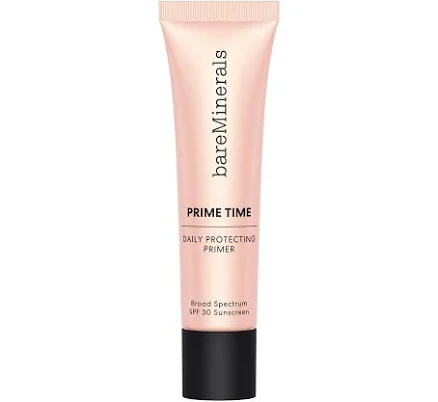
bareMinerals Prime Time Daily Protecting Primer SPF 30
Brand PFAS statement on record, which we have not verified.
bareMinerals says it no longer produces any products containing intentional PFAS ingredients, including Teflon-type coating. We record that as an unverified brand claim.
Brand says: “bareMinerals says it no longer produces any products containing intentional PFAS ingredients, including PTFE.”
We flunk more products than we pass. This one earned its grade. How we grade
Material
mineral powder, silica, mica, talc
Brand disclosure
Brand claims PFAS-free
Lab data
No public lab test
You may also be interested in
Top-graded picks in the categories readers replace first, every one scored on the same rubric.

- polypropylene filter housing, carbon/sediment cartridge
- We found no PFAS statement from the brand
- Bacterial growth in spent cartridges
3 hazards checked on this product, all on its full breakdown.

Aquasure
Premier Series 75 GPD Under Sink Reverse Osmosis Water Filtration System
- RO membrane, carbon filters, stainless steel housing
- We found no PFAS statement from the brand
- Bacterial and microbial growth in housing and filters
4 hazards checked on this product, all on its full breakdown.

Avocado
Vegan Mattress
- organic cotton, natural latex, coconut coir, recycled steel coils
- The brand calls it PFAS-free, which we have not verified
- Heavy metals
2 hazards checked on this product, all on its full breakdown.
What bareMinerals Prime Time Daily Primer SPF is made of, ingredients and materials
This is a mineral powder primer formulated with silica, mica, and talc as primary ingredients. Talc and silica are common in powder cosmetics and function as absorbents and texture agents. The powder matrix itself does not require synthetic binders, coatings, or chemical catalysts that might introduce secondary contaminants. SPF 30 is typically achieved via mineral UV filters (zinc oxide, titanium dioxide), not chemical absorbers, which is consistent with the bareMinerals brand positioning.
What’s concerning
Category baseline
The starting point for this type of product, before anything specific to this product is counted.
Talc inhalation
Talc is a confirmed ingredient and inhalation of fine powder particles poses respiratory risk if applied with heavy buffing or in poorly ventilated areas. No asbestos contamination is on record for bareMinerals products, but talc dust inhalation should be minimized through application technique.
Silica inhalation
Silica (silicon dioxide) is listed as an ingredient and crystalline silica is a respiratory irritant and lung hazard at high chronic exposure. Normal cosmetic use does not typically deliver chronic exposure levels, but inhalation during application should still be minimized.
What’s reassuring
Brand-stated PFAS-free
The brand states this product is PFAS-free. We have not verified the claim.
Base material not linked to PFAS
The main material recorded for this product is not one associated with PFAS.
Heavy metals
Mineral-based cosmetics can carry trace iron oxides, mica, and naturally occurring minerals; lead and cadmium contamination in mineral sources is possible but no contamination events or test results are on record for this brand or product line.
Source, FDA ↗Formaldehyde / VOCs
Powder formulations with minimal water phase and no stated synthetic preservative system are unlikely to contain formaldehyde-releasing agents or dioxane; no such contaminants have been reported in bareMinerals products.
Source, ATSDR ↗Fragrance allergens
Product is marketed as fragrance-free; no synthetic fragrance or essential oil allergens are on record, though individual sensitivities to mineral ingredients themselves (e.g., mica) remain possible but rare.
How is this PFAS grade calculated?
The brand's record and disclosure
Bare Minerals has made a public PFAS-free claim on record, though this statement has not been independently verified by third-party testing in publicly available sources. The brand is positioned as a clean-label mineral cosmetics line and has built its reputation on avoiding synthetic fillers and dyes. No recalls, enforcement actions, or substantiated safety controversies specific to this product are documented in public records.
How it compares in its category
Mineral powder primers are generally lower in concern than fluid or cream primers, which may contain preservative systems, emulsifiers, and solvent carriers. This product avoids synthetic fragrance, talc alternatives (such as modified corn starch or boron nitride), and liquid-phase chemistry that would introduce 1,4-dioxane or formaldehyde releaser risk. Compared to conventional silicone-based primers, it has no reported synthetic polymer degradation or microplastic generation.
If you buy it
Avoid inhaling powder particles during application; use light patting motions rather than vigorous buffing to minimize airborne dust. Do not apply to broken or irritated skin. Store in a cool, dry location away from humidity to prevent caking and bacterial growth in the container. Replace if the product becomes wet, discolored, or develops an off odor, which may indicate contamination or degradation of preservatives.
What is not known about PFAS in this product?
- Basis
- Model estimate, 72% confidence, not a lab result
- Lab test
- None on record for this exact product
- Brand statement
- Bare Minerals has made a specific claim
Formulations change between production runs, so check the current label. How we grade.
More foundation & primer grades
How we score, every product runs through the same public 0-100 rubric based on materials, coatings, brand disclosure, lab findings, and recalls. See the full methodology → Spotted a mistake? Report an error.