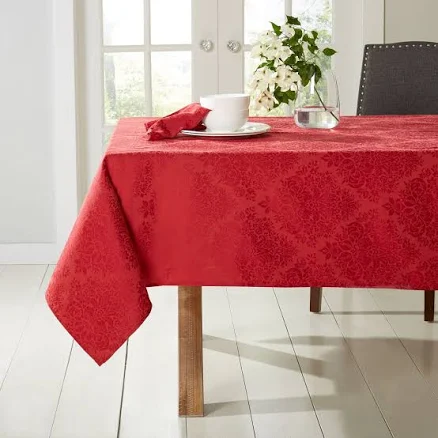
Town & Country Living · Stain-Resistant Textiles
Town & Country Living Town & Country Lexington Damask Tablecloth
Avoid or contact brand; tablecloth likely treated with PFAS.
Cotton damask tablecloth with stain and water-resistant finish, commonly applied using PFAS-based chemistry. Bed Bath and Beyond provides no PFAS disclosure.
Still want this one anyway? Check the price on Amazon. We’d swap it.
Material
cotton damask with stain/water-resistant finish
Brand disclosure
Brand is silent on PFAS
Lab data
No public lab test
You may also be interested in
Top-graded picks in the categories readers replace first, every one scored on the same rubric.

- polypropylene filter housing, carbon/sediment cartridge
- We found no PFAS statement from the brand
- Bacterial growth in spent cartridges
3 hazards checked on this product, all on its full breakdown.

Aquasure
Premier Series 75 GPD Under Sink Reverse Osmosis Water Filtration System
- RO membrane, carbon filters, stainless steel housing
- We found no PFAS statement from the brand
- Bacterial and microbial growth in housing and filters
4 hazards checked on this product, all on its full breakdown.

Avocado
Vegan Mattress
- organic cotton, natural latex, coconut coir, recycled steel coils
- The brand calls it PFAS-free, which we have not verified
- Heavy metals
2 hazards checked on this product, all on its full breakdown.
What Town & Country Living Town Tablecloth is made of, ingredients and materials
This tablecloth is cotton damask (a jacquard weave) treated with a stain and water-resistant finish. The finish is the concern, most durable stain treatments on tablecloths use PFAS-based compounds (perfluorinated chemicals) to repel liquids and oils. Cotton itself is relatively inert, but the applied coating is where chemical leaching risk concentrates, especially with heat, washing, or food contact.
What’s concerning
Category baseline
The starting point for this type of product, before anything specific to this product is counted.
No PFAS disclosure
No public statement from the brand about PFAS in this product.
Waterproof / stain-resistant treatment
Water-repellent coating treatments have historically used PFAS.
PFAS
Cotton damask tablecloths marketed with stain and water resistance are commonly treated with PFAS-based durable water repellents (water-repellent coating). Bed Bath & Beyond does not disclose treatment chemistry, and no public testing data exists for this specific SKU. PFAS can migrate into food or water when the cloth is washed or worn.
Source, ATSDR ↗Formaldehyde / VOCs
Cotton damask finishes sometimes use formaldehyde-based resins to lock in the weave and improve durable press properties. No independent test results are on record for this product. If present at low levels, formaldehyde may off-gas slightly during storage or first washings, especially in warm conditions.
Source, ATSDR ↗Coating degradation and microfiber shedding
Stain-resistant finishes can crack, flake, or wear unevenly with repeated washing and use. Degraded coating may shed microscopic particles of Teflon-family coating or resin into food or the washing machine; this risk increases after 3-5 years of normal use.
Skin irritation or allergic reactions to finish chemicals
Some consumers report contact dermatitis or respiratory sensitivity to new stain-resistant textiles, likely triggered by residual PFAS or formaldehyde. Risk is lower after thorough pre-washing but not eliminated if chemicals are chemically bound to fibers.
What’s reassuring
Heavy metals
No recalls or published concerns about colorant toxicity for this specific product exist. Damask textiles typically use reactive dyes (lower risk than older azo formulations), but Bed Bath & Beyond does not certify dye safety independently.
Source, FDA ↗How is this PFAS grade calculated?
The brand's record and disclosure
Bed Bath & Beyond has not published transparent information about PFAS use in their home textiles or stain-resistant finishes. The brand has faced criticism for lack of chemical disclosure in soft goods, similar to broader industry silence. No third-party certifications (Oeko-Tex, GOTS) are documented for this specific product, which would otherwise indicate independent testing for harmful finishes.
How it compares in its category
Stain-resistant tablecloths from mass retailers typically contain PFAS finishes; this product is standard in that regard and not an outlier. Premium alternatives (e.g., organic cotton damask without chemical finishes, or branded products with Oeko-Tex certification) exist but cost more. Untreated or naturally finished cotton damasks eliminate the stain-resistance but remove fluorochemical risk.
If you buy it
Wash the tablecloth thoroughly in cool water before first use to reduce loose surface chemicals. Avoid high heat; dry on low or air-dry to minimize potential off-gassing. Do not use near heat sources (candles, heating vents) during storage or display. Replace after 3-5 years or if the finish visibly degrades (cracking, peeling); degradation may increase shedding of treatment particles.
What is not known about PFAS in this product?
- Basis
- Model estimate, 42% confidence, not a lab result
- Lab test
- None on record for this exact product
- Brand statement
- Town & Country Living has made none
Formulations change between production runs, so check the current label. How we grade.
What are the PFAS-free alternatives to Town & Country Living Town & Country Lexington Damask Tablecloth?
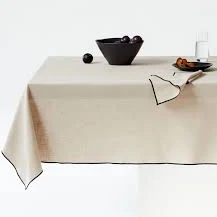
- 100% organic cotton, no coating
- We found no PFAS statement from the brand
- Azo dyes and synthetic colorants
3 hazards checked on this product, all on its full breakdown.
Find an alternative on Amazon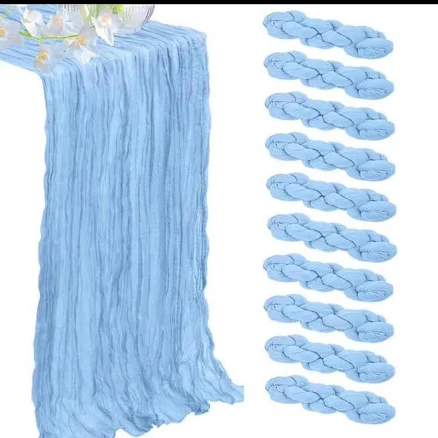
Amazon Essentials Light Blue Multicolor Cotton Tablecloth
- 100% cotton
- Formaldehyde / VOCs
4 hazards checked on this product, all on its full breakdown.
Find an alternative on Amazon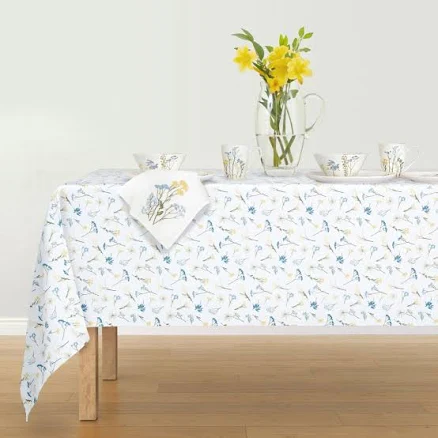
- 100% cotton woven tablecloth
- We found no PFAS statement from the brand
- Azo dyes in printed textiles
4 hazards checked on this product, all on its full breakdown.
Find an alternative on AmazonMore stain-resistant textiles grades
How we score, every product runs through the same public 0-100 rubric based on materials, coatings, brand disclosure, lab findings, and recalls. See the full methodology → Spotted a mistake? Report an error.