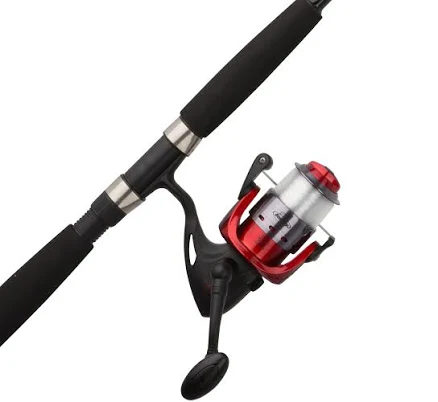
Berkley Big Game Spinning Combo
Fishing reel combo, lower concern for PFAS exposure risk.
Berkley Big Game uses standard fiberglass, aluminum, and plastic with no known PFAS-prone materials. Brand provides no explicit disclosure, though typical fishing gear poses minimal concern.
We flunk more products than we pass. This one earned its grade. How we grade
Material
Fiberglass rod, aluminum reel, plastic components
Brand disclosure
Brand is silent on PFAS
Lab data
No public lab test
What Berkley Big Game Spinning Combo is made of, ingredients and materials
The Berkley Big Game uses a fiberglass rod (inert, does not leach into water or food) and an aluminum reel body with plastic handle and drag components. Fiberglass is a thermoset composite (resin + glass strands) that does not break down or release monomers under normal use. Aluminum is also stable in aquatic environments and does not migrate into catch. Plastic components on the reel (handle, spool, drag washer) are secondary contact surfaces with no oral exposure pathway.
What’s concerning
Category baseline
The starting point for this type of product, before anything specific to this product is counted.
No PFAS disclosure
No public statement from the brand about PFAS in this product.
Fiberglass rod splintering or delamination
If the rod is cracked or damaged, small fiberglass strands may splinter. These are a mechanical injury risk (skin abrasion, eye irritation) rather than a chemical hazard, and are not toxic if ingested in trace amounts.
Plastic handle or drag component degradation
Prolonged UV exposure or heat (e.g., left in direct sun) may cause plastic components to become brittle or discolor, but no chemical leaching into food or water is expected under normal fishing conditions.
What’s reassuring
Base material not linked to PFAS
The main material recorded for this product is not one associated with PFAS.
Aluminum corrosion and salt buildup
Aluminum reel bodies can corrode in saltwater if not rinsed, but aluminum oxide (the corrosion product) is not a chemical hazard. This is a durability issue, not a safety issue.
Epoxy resin off-gassing in fiberglass composite
Modern fiberglass fishing rods use fully cured thermoset epoxy or polyester resins that do not off-gas meaningfully at room temperature. No documented respiratory or skin irritation from handling this product type.
The full breakdown
The brand's record and disclosure
Berkley (owned by Pure Fishing, a subsidiary of Jarden) does not publish specific material safety disclosures or third-party certifications for fishing tackle. No major recalls or chemical safety controversies are documented for this product line. The brand has not made public statements about PFAS mitigation in fishing gear, but fishing reels are not a known vector for PFAS bioaccumulation in the way some food-contact or apparel items are.
How it compares in its category
Fiberglass rods are industry standard and chemically inert; they do not pose the same stability concerns as early graphite-epoxy composites (which can off-gas under heat). Aluminum reels are typical and durable. This combo is mid-range for big-game freshwater or saltwater use and does not use uncommon or experimental materials that would elevate chemical risk relative to competing brands (Shimano, Penn, Abu Garcia).
If you buy it
Rinse the reel with fresh water after saltwater use to prevent corrosion and salt accumulation, which does not pose a chemical hazard but affects longevity. Store in a dry location to avoid mold or algae growth on the reel seat and guides. Fiberglass can crack if flexed sharply or dropped hard, but does not release hazardous particles; inspect the rod visually for splits before each outing. No special maintenance chemicals are needed; standard fishing reel oil or grease is compatible.
What we don’t know
- Basis
- Model estimate, 72% confidence, not a lab result
- Lab test
- None on record for this exact product
- Brand statement
- Berkley has made none
Formulations change between production runs, so check the current label. How we grade.
More fishing line grades
How we score, every product runs through the same public 0-100 rubric based on materials, coatings, brand disclosure, lab findings, and recalls. See the full methodology → Spotted a mistake? Report an error.