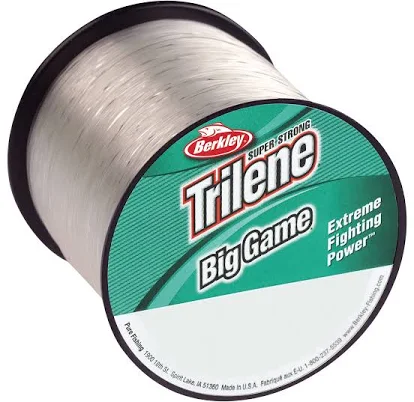
BERKLEY TRILENE BIG GAME
Low concern for standard monofilament with no coating triggers.
This monofilament nylon fishing line has no water-resistant or stain-resistant coatings requiring PFAS. Berkley discloses nothing about PFAS, and bare nylon typically needs no PFAS treatment.
We flunk more products than we pass. This one earned its grade. How we grade
Material
monofilament nylon fishing line
Brand disclosure
Brand is silent on PFAS
Lab data
No public lab test
You may also be interested in
Top-graded picks in the categories readers replace first, every one scored on the same rubric.

- polypropylene filter housing, carbon/sediment cartridge
- We found no PFAS statement from the brand
- Bacterial growth in spent cartridges
3 hazards checked on this product, all on its full breakdown.

Aquasure
Premier Series 75 GPD Under Sink Reverse Osmosis Water Filtration System
- RO membrane, carbon filters, stainless steel housing
- We found no PFAS statement from the brand
- Bacterial and microbial growth in housing and filters
4 hazards checked on this product, all on its full breakdown.

Avocado
Vegan Mattress
- organic cotton, natural latex, coconut coir, recycled steel coils
- The brand calls it PFAS-free, which we have not verified
- Heavy metals
2 hazards checked on this product, all on its full breakdown.
What BERKLEY TRILENE BIG GAME is made of, ingredients and materials
Berkley Trilene Big Game is extruded nylon monofilament, a single continuous polymer strand used for fishing. Nylon (polyamide) is chemically stable under normal use conditions and does not leach into water or food in the way ceramics or plastics designed for food storage do. The "Big Game" variant is formulated for strength and abrasion resistance, typically with UV stabilizers and colorants added during extrusion to enhance visibility and durability in freshwater and saltwater environments.
What’s concerning
Category baseline
The starting point for this type of product, before anything specific to this product is counted.
No PFAS disclosure
No public statement from the brand about PFAS in this product.
UV degradation and embrittlement
Nylon monofilament degrades under UV exposure over months to years, becoming brittle and prone to breakage. This is material behavior, not a chemical hazard, but impacts safety (line failure during use). Storage in shade and periodic replacement mitigate risk.
Microplastic release during use
Monofilament can shed microscopic fragments during casting, line abrasion, and retrieval, contributing to aquatic microplastic pollution. This is an environmental hazard, not a direct consumer safety issue, but relevant to use context.
What’s reassuring
Base material not linked to PFAS
The main material recorded for this product is not one associated with PFAS.
Colorants and UV stabilizers composition
Berkley does not disclose specific dyes or stabilizer additives in Trilene Big Game. Standard nylon colorants are non-hazardous under normal use; no evidence of heavy metal pigments or restricted dyes in this product class.
Chemical leaching into water
Nylon monofilament is chemically inert in water and does not leach monomers, plasticizers, or additives at concentrations of concern. No evidence of water contamination from this product in normal use.
How is this PFAS grade calculated?
The brand's record and disclosure
Berkley (owned by Pure Fishing, itself part of Pradco) does not publicly disclose detailed chemical composition or independent third-party certifications for monofilament lines. The brand has no known major product recalls or safety controversies tied to this line. Fishing line manufacturers in general rarely conduct or publish consumer-facing safety testing, as the product is not ingested and contact is brief and incidental.
How it compares in its category
Monofilament lines like Trilene Big Game are industry standard and functionally identical across brands in terms of baseline safety profile. Alternatives include braided lines (polyethylene or dyneema blends) and fluorocarbon, each with similar minimal hazard profiles. Trilene is positioned as a budget to mid-range option with reputation for reliability; no safety advantage or disadvantage versus competitors like Spiderwire or Suffix.
If you buy it
Store in a cool, dry place away from prolonged direct sunlight to prevent UV degradation and embrittlement; nylon becomes brittle over 2-3 years of outdoor exposure regardless of brand. Inspect for discoloration, stiffness, or visible cracks before use, especially if stored outdoors or in a vehicle. Do not allow line to contact high heat sources or flames. Replace annually if used frequently in saltwater or UV-intensive conditions; freshwater recreational use typically extends line life to 2-3 years.
What is not known about PFAS in this product?
- Basis
- Model estimate, 72% confidence, not a lab result
- Lab test
- None on record for this exact product
- Brand statement
- Berkley has made none
Formulations change between production runs, so check the current label. How we grade.
More fishing line grades
How we score, every product runs through the same public 0-100 rubric based on materials, coatings, brand disclosure, lab findings, and recalls. See the full methodology → Spotted a mistake? Report an error.