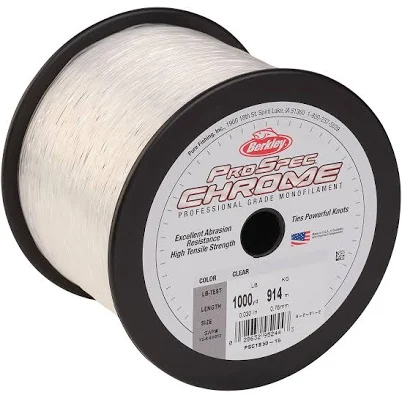
Berkley ProSpec Chrome Monofilament
Nylon monofilament carries lower PFAS concern than coated materials.
Berkley ProSpec Chrome is plain nylon monofilament fishing line without known water-repellent coating or non-stick coatings. No brand PFAS disclosure exists.
We flunk more products than we pass. This one earned its grade. How we grade
Material
Nylon monofilament fishing line
Brand disclosure
Brand is silent on PFAS
Lab data
No public lab test
What Berkley ProSpec Chrome Monofilament is made of, ingredients and materials
Berkley ProSpec Chrome is extruded nylon monofilament, a single continuous polymer strand used for fishing line. Nylon (polyamide) is a thermoplastic that does not require surface coatings, glazes, or dyes in the way cookware or textiles do, which eliminates several common hazard pathways. The material is chemically stable under normal freshwater and saltwater exposure and does not leach heavy metals or BPA-type compounds into water. Monofilament fishing line is not designed for food contact or oral exposure, further reducing relevant safety concern vectors.
What’s concerning
Category baseline
The starting point for this type of product, before anything specific to this product is counted.
No PFAS disclosure
No public statement from the brand about PFAS in this product.
UV degradation and microfiber shedding
Nylon monofilament loses tensile strength over months of sun exposure and may shed microfibers during use or storage. No established health impact from incidental hand contact, but environmental persistence in water is a concern.
Entanglement and wildlife ingestion risk
Monofilament fishing line is a well-documented hazard to aquatic and terrestrial wildlife when discarded. This is an environmental rather than consumer-toxicity concern, but responsible disposal is mandatory.
What’s reassuring
Base material not linked to PFAS
The main material recorded for this product is not one associated with PFAS.
Heavy metals
Berkley ProSpec Chrome uses chromatic dyes or pigments; no published testing or recalls document lead, cadmium, or antimony in this product. Standard nylon colorants are azo-based, which are regulated but not inherently toxic at product-use distances.
Source, FDA ↗Plasticizer or processing-aid leachates
Nylon extrusion may use minor thermal stabilizers or mold-release agents; these are not food-contact regulated and are unlikely to leach into water at measurable levels during fishing use. No incidents reported for this product.
The full breakdown
The brand's record and disclosure
Berkley (owned by Pure Fishing, a subsidiary of Newell Brands) has not published specific material safety data sheets or third-party certifications for monofilament products. The brand maintains no public stance on PFAS use in fishing lines and does not disclose processing additives. No major product recalls or toxicity incidents have been documented for Berkley monofilament in consumer databases. This is typical for the fishing-tackle industry, where safety oversight is lighter than in food-contact or apparel categories.
How it compares in its category
Monofilament fishing line (nylon, fluorocarbon, polyethylene) is a low-regulation commodity product with minimal third-party testing published. Berkley ProSpec is a mid-tier branded option; competitor lines (Trilene, Stren, store brands) follow similar material profiles and disclosure practices. Fluorocarbon alternatives carry slightly higher PFAS risk due to fluorine incorporation, while braided polyethylene lines introduce microplastic shedding concerns. Nylon monofilament sits in the middle of this spectrum regarding chemical hazard profile.
If you buy it
Store on a spool or reel in a cool, dry location away from direct sunlight to slow UV degradation and preserve tensile strength. Nylon monofilament is not food-safe and should never be ingested or used in food-preparation contexts. Replace line annually or after heavy use, as UV and mechanical stress degrade the polymer, increasing breakage risk during fishing. Dispose of spent line responsibly in solid waste; do not release into waterways, as monofilament poses entanglement hazard to wildlife.
What we don’t know
- Basis
- Model estimate, 72% confidence, not a lab result
- Lab test
- None on record for this exact product
- Brand statement
- Berkley has made none
Formulations change between production runs, so check the current label. How we grade.
More fishing line grades
How we score, every product runs through the same public 0-100 rubric based on materials, coatings, brand disclosure, lab findings, and recalls. See the full methodology → Spotted a mistake? Report an error.