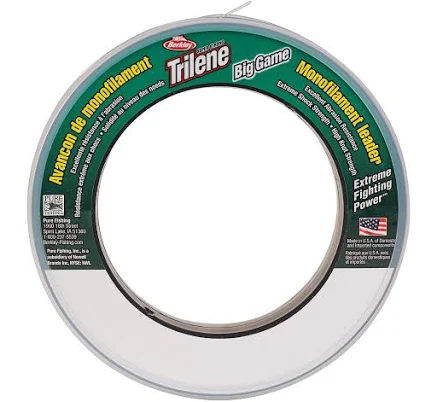
Berkley Trilene Big Game Mono Leader Coil
Monofilament nylon fishing line with no coating on record and no PFAS disclosure from brand.
Berkley Trilene Big Game is monofilament nylon fishing line. No Teflon-family coating or water-repellent finish appears on record. Berkley has no PFAS statement on record for this product.
We flunk more products than we pass. This one earned its grade. How we grade
Material
Monofilament nylon fishing line
Brand disclosure
Brand is silent on PFAS
Lab data
No public lab test
What Berkley Trilene Big Game Mono Leader Coil is made of, ingredients and materials
Berkley Trilene Big Game Mono is extruded nylon monofilament, a single-strand polymer without coating or layering. Nylon as a base resin is chemically stable and does not leach monomers into water under normal conditions. The material is not heated during use and presents minimal chemical release risk in its intended application as a fishing leader.
What’s concerning
Category baseline
The starting point for this type of product, before anything specific to this product is counted.
No PFAS disclosure
No public statement from the brand about PFAS in this product.
PFAS
Nylon monofilament may not contain intentional PFAS additives, though fluorinated additives for water repellency or slip are not ruled out. Berkley provides no formulation disclosure; status remains unverified.
Source, ATSDR ↗Microplastic shedding or fragmentation
Over time, UV exposure and mechanical stress cause nylon lines to degrade and shed microplastics into water. This is an inherent material-class concern, not brand-specific.
What’s reassuring
Base material not linked to PFAS
The main material recorded for this product is not one associated with PFAS.
Heavy metals
No public testing or recalls document lead, cadmium, or antimony in monofilament. Risk is low for a simple polymer resin with minimal additives.
Source, FDA ↗Leaching into water during use
Nylon monofilament is chemically inert in water at ambient temperature. No monomers or plasticizers are known to leach under normal fishing conditions.
The full breakdown
The brand's record and disclosure
Berkley (owned by Pure Fishing) does not publicly disclose PFAS testing or formulation details for monofilament products. The brand has no documented recalls or safety controversies specific to monofilament lines. No independent testing of this product line for heavy metals, colorants, or additives appears on public record.
How it compares in its category
Monofilament leaders are lower-risk fishing tackle compared to fluorocarbon lines (which sometimes contain or are coated with fluorinated compounds) or braided lines with unknown resin binders. Nylon monofilament is a conventional, mature material class with no category-wide safety scandals. Performance differences among brands relate to strength and visibility, not safety.
If you buy it
Inspect the line regularly for UV degradation and brittleness, particularly if stored in direct sunlight; replace if fraying or strength loss is visible. Nylon monofilament is used in fresh and saltwater applications without requiring special handling procedures. Dispose of spent line responsibly in trash (not water); monofilament does not biodegrade and poses entanglement risk to wildlife.
What we don’t know
- Basis
- Model estimate, 72% confidence, not a lab result
- Lab test
- None on record for this exact product
- Brand statement
- Berkley has made none
Formulations change between production runs, so check the current label. How we grade.
More fishing line grades
How we score, every product runs through the same public 0-100 rubric based on materials, coatings, brand disclosure, lab findings, and recalls. See the full methodology → Spotted a mistake? Report an error.