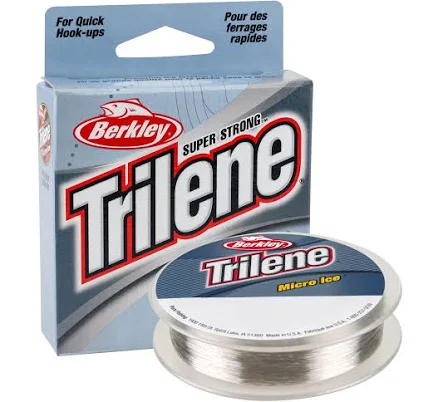
Berkley Trilene Micro Ice Fishing Line
Low concern; standard nylon line without known treatment.
Berkley's monofilament nylon fishing line shows no disclosed surface treatments or coatings typical of PFAS products. Standard nylon itself does not inherently contain PFAS.
We flunk more products than we pass. This one earned its grade. How we grade
Material
Monofilament nylon fishing line
Brand disclosure
Brand is silent on PFAS
Lab data
No public lab test
What Berkley Trilene Micro Ice Fishing Line is made of, ingredients and materials
Berkley Trilene Micro is extruded monofilament nylon, a single-strand polymer widely used in fishing for its strength and low visibility underwater. Nylon monofilament does not leach into water or food because it is an inert thermoplastic polymer not designed to contact skin or ingestion routes for extended periods. The 'Micro' designation refers to line diameter, not chemical composition; this is standard recreational fishing line with no known additives beyond standard UV stabilizers and colorants typical to the category.
What’s concerning
Category baseline
The starting point for this type of product, before anything specific to this product is counted.
No PFAS disclosure
No public statement from the brand about PFAS in this product.
Microplastic shedding in water
All monofilament lines shed fine particles over time from mechanical abrasion and UV breakdown. This is a documented environmental concern for aquatic ecosystems but not a direct consumer health hazard during normal handling or use.
Ingestion risk (child or pet)
Monofilament fishing line can cause intestinal blockage if swallowed; this is a choking and mechanical injury risk, not a chemical toxicity risk. Proper storage away from children and pets is standard practice for all fishing tackle.
What’s reassuring
Base material not linked to PFAS
The main material recorded for this product is not one associated with PFAS.
Heavy metals
Monofilament fishing lines are dyed for visibility, but no published testing or recalls document harmful dye leaching into freshwater or contact toxicity. Standard azo dyes used are not absorbed through skin during normal fishing use.
Source, FDA ↗Skin irritation from line abrasion
Nylon monofilament does not contain known skin sensitizers or irritants. Abrasion or line burns from friction are mechanical injuries, not chemical reactions; rare in normal ice fishing use.
The full breakdown
The brand's record and disclosure
Berkley (Pure Fishing subsidiary) is a major fishing tackle manufacturer with no public safety recalls or substantiated health controversies tied to monofilament line products. The brand does not publish detailed material safety or PFAS treatment disclosures for fishing line, which is standard industry-wide silence rather than a Berkley-specific red flag. No third-party testing has identified hazardous heavy metals or carcinogens in their monofilament products.
How it compares in its category
Monofilament nylon is the industry baseline for ice fishing line; Berkley Trilene is a mid-market competitor with similar safety profiles to Spiderwire, Suffix, and store-brand alternatives. Fluorocarbon and braided alternatives exist but offer no known toxicological advantage, only different handling and visibility trade-offs. All monofilament fishing lines in this price range share the same material safety profile.
If you buy it
Store spools in cool, dry conditions away from direct sunlight to prevent UV degradation and brittleness, which can weaken knots rather than create a safety hazard. Inspect line visually for fraying or cloudiness before use; degraded line is a functional failure, not a health risk. Dispose of spent line in trash or proper fishing waste programs rather than discarding in water. Wash hands after handling if you have sensitive skin, though nylon contact dermatitis is rare.
What we don’t know
- Basis
- Model estimate, 72% confidence, not a lab result
- Lab test
- None on record for this exact product
- Brand statement
- Berkley has made none
Formulations change between production runs, so check the current label. How we grade.
More fishing line grades
How we score, every product runs through the same public 0-100 rubric based on materials, coatings, brand disclosure, lab findings, and recalls. See the full methodology → Spotted a mistake? Report an error.