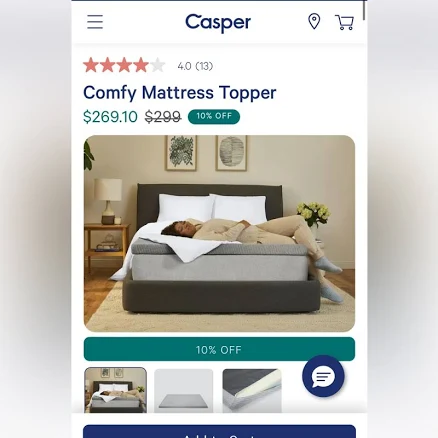
Casper Sleep Comfy Mattress Topper, Is It Non-Toxic?
Lower PFAS concern for standard foam topper with no known water-repellent coating or stain treatment, unless you need verified PFAS-free assurance.
This polyurethane foam topper uses a cotton/polyester blend cover without disclosed water-resistant or stain-resistant coatings requiring PFAS. Casper makes no public PFAS claims, though material composition suggests lower concern without absolute verification.
The better-graded swap
Avocado Green Mattress
Organic Cotton Mattress Cover and Pad Protector
85/100 safety
Same rubric that flunked this product. The swap earned Excellent.
Still want this one anyway? Check the price on Amazon. We’d swap it.
Material
Polyurethane foam, cotton/polyester blend cover
Brand disclosure
Brand is silent on PFAS
Lab data
No public lab test
You may also be interested in
Top-graded picks in the categories readers replace first, every one scored on the same rubric.

- polypropylene filter housing, carbon/sediment cartridge
- We found no PFAS statement from the brand
- Bacterial growth in spent cartridges
3 hazards checked on this product, all on its full breakdown.

Aquasure
Premier Series 75 GPD Under Sink Reverse Osmosis Water Filtration System
- RO membrane, carbon filters, stainless steel housing
- We found no PFAS statement from the brand
- Bacterial and microbial growth in housing and filters
4 hazards checked on this product, all on its full breakdown.

Avocado
Vegan Mattress
- organic cotton, natural latex, coconut coir, recycled steel coils
- The brand calls it PFAS-free, which we have not verified
- Heavy metals
2 hazards checked on this product, all on its full breakdown.
Is Casper Sleep Comfy Mattress Topper non-toxic? What it is made of
The Casper Comfy Topper is polyurethane foam with a cotton-polyester blend fabric cover. Polyurethane foam can off-gas volatile organic compounds (VOCs) during initial use, though this typically subsides within days to weeks. The cotton-polyester blend cover may contain residual formaldehyde resins from fabric finishing, though modern topper covers are generally lower-risk than apparel. Neither material class presents acute chemical hazards at normal use conditions.
What’s concerning
Category baseline
The starting point for this type of product, before anything specific to this product is counted.
No PFAS disclosure
No public statement from the brand about PFAS in this product.
Volatile Organic Compound (VOC) off-gassing
Polyurethane foam commonly releases VOCs upon unpacking, particularly in the first 48 hours. Casper does not publicly specify off-gassing test results or low-VOC certifications for this topper, so the intensity is unknown but typical for this material class.
Polyurethane foam degradation and particle shedding
Over time, polyurethane foam can break down and shed small particles, particularly at seams or under pressure. This is a normal aging process but not a documented acute hazard; it increases gradually after 3-5 years of use.
Dust mite and mold colonization
Foam toppers can retain moisture and harbor dust mites or mold if not kept clean and dry, especially in humid environments. This is a hygiene concern rather than a chemical hazard but is relevant to long-term safety and product lifespan.
What’s reassuring
Base material not linked to PFAS
The main material recorded for this product is not one associated with PFAS.
Formaldehyde / VOCs
Cotton-polyester blend covers may contain formaldehyde-releasing dyes or durable-press finishes, but no recalls or health complaints are on record for Casper toppers. Modern fabric finishing practices have largely phased out high-formaldehyde processes in consumer mattress products.
Source, ATSDR ↗Flame retardants
Casper does not state whether this topper contains added flame retardants; U.S. foam toppers may include them to meet flammability standards, but no specific chemical analysis is public for this product.
Source, EPA ↗How is this PFAS grade calculated?
The brand's record and disclosure
Casper does not publish detailed material safety data sheets or third-party certifications (CertiPUR-US, GOLS, OEKO-TEX) on their website for this product. The brand has not faced major product recalls or chemical contamination lawsuits affecting this topper model. Casper's stance on PFAS and flame retardants remains largely undisclosed, which is typical for the mattress topper category but limits transparency.
How it compares in its category
Mattress toppers as a category carry lower chemical risk than full mattresses because they are thinner, use less total material, and do not require flame barriers (reducing flame retardant exposure). The Casper Comfy Topper sits in the mid-range; budget toppers may use lower-grade foam with higher off-gassing, while premium alternatives often carry third-party certifications that this product lacks. Latex or certified polyurethane alternatives offer more documented safety profiles if chemical transparency is a priority.
If you buy it
Unpack and air out the topper in a well-ventilated space for 24-48 hours to allow initial VOC off-gassing to dissipate. Avoid exposing the foam core to direct heat or prolonged sunlight, which can accelerate degradation and off-gassing. Use a mattress protector or fitted sheet to minimize dust accumulation and extend topper lifespan. Replace every 3-5 years or when foam loses loft, flattens noticeably, or develops odor that airing does not resolve.
What is not known about PFAS in this product?
- Basis
- Model estimate, 72% confidence, not a lab result
- Lab test
- None on record for this exact product
- Brand statement
- Casper has made none
Formulations change between production runs, so check the current label. How we grade.
What are the PFAS-free alternatives to Casper Sleep Comfy Mattress Topper?
- organic cotton
- We found no PFAS statement from the brand
- No PFAS statement found from the brand
- Organic cotton
- We found no PFAS statement from the brand
- Waterproofing chemical exposure
2 hazards checked on this product, all on its full breakdown.
More mattress protectors grades
How we score, every product runs through the same public 0-100 rubric based on materials, coatings, brand disclosure, lab findings, and recalls. See the full methodology → Spotted a mistake? Report an error.