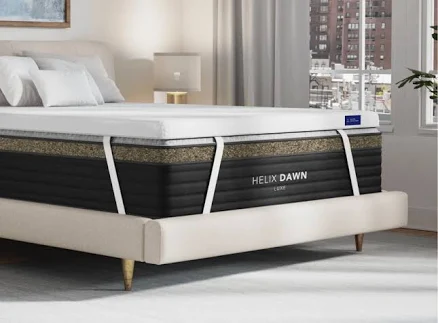
Helix Premium Mattress Topper, Is It Non-Toxic?
Lower PFAS risk, though contact Helix directly for water-resistant coating details they don't disclose.
Helix toppers use polyurethane foam and polyester fabric with low inherent PFAS risk. The brand does not publicly state whether water-resistant or stain-resistant treatments were applied to the cover or base, and no third-party testing is evident.
The better-graded swap
Avocado Green Mattress
Organic Cotton Mattress Pad Protector
85/100 safety
Same rubric that flunked this product. The swap earned Excellent.
Still want this one anyway? Check the price on Amazon. We’d swap it.
Material
polyurethane foam, polyester cover
Brand disclosure
Brand is silent on PFAS
Lab data
No public lab test
You may also be interested in
Top-graded picks in the categories readers replace first, every one scored on the same rubric.

- polypropylene filter housing, carbon/sediment cartridge
- We found no PFAS statement from the brand
- Bacterial growth in spent cartridges
3 hazards checked on this product, all on its full breakdown.

Aquasure
Premier Series 75 GPD Under Sink Reverse Osmosis Water Filtration System
- RO membrane, carbon filters, stainless steel housing
- We found no PFAS statement from the brand
- Bacterial and microbial growth in housing and filters
4 hazards checked on this product, all on its full breakdown.

Avocado
Vegan Mattress
- organic cotton, natural latex, coconut coir, recycled steel coils
- The brand calls it PFAS-free, which we have not verified
- Heavy metals
2 hazards checked on this product, all on its full breakdown.
Is Helix Premium Mattress Topper non-toxic? What it is made of
The Helix Premium Mattress Topper is constructed from polyurethane foam (the comfort layer) wrapped in a polyester cover. Polyurethane foam can off-gas volatile organic compounds (VOCs) during manufacturing and initial use, though this typically diminishes within days to weeks. The polyester cover may contain residual catalysts or processing agents but does not inherently present high chemical risk when used as a sleeping surface rather than food contact.
What’s concerning
No PFAS disclosure
No public statement from the brand about PFAS in this product.
Category baseline
The starting point for this type of product, before anything specific to this product is counted.
Volatile Organic Compounds (VOC) off-gassing from polyurethane foam
New polyurethane foam toppers typically release low to moderate levels of VOCs (including toluene and methylene chloride residues) during the first 1-2 weeks. Off-gassing is not acutely dangerous in bedrooms with normal ventilation but can cause temporary odor and minor respiratory irritation in sensitive individuals if the room is poorly ventilated.
Polyester cover degradation and microfiber shedding
The polyester cover may shed microfibers over time, especially if washed frequently in hot water or rubbed vigorously. While microfiber inhalation risk during normal mattress use is minimal, washing in cool water and avoiding high heat reduces potential fiber release.
Polyurethane foam degradation and chemical leaching with age
Polyurethane foam can break down over 5-7 years of use, especially in humid environments or with heat exposure. Degradation may release residual uncrosslinked oligomers, though systemic health impact from skin contact with a mattress topper is not established in public literature. Replacement before significant compression helps avoid prolonged exposure to aged material.
Water-resistant coating composition (undisclosed)
If the topper includes a water-resistant treatment (not confirmed in public specifications), it may contain PFAS or other legacy repellent chemistries. Helix does not disclose this detail, so direct inquiry is necessary to confirm whether such coatings are present and their formulation.
What’s reassuring
Base material not linked to PFAS
The main material recorded for this product is not one associated with PFAS.
Flame retardants
Helix does not publicly state which flame retardant additives (if any) are used in the topper. US bedding regulations require flame barriers, but without disclosure, the specific chemical class (halogenated, phosphorus-based, or other) cannot be assessed. No hazard is documented, but transparency is absent.
Source, EPA ↗How is this PFAS grade calculated?
The brand's record and disclosure
Helix does not publicly disclose detailed material sourcing, certifications (such as CertiPUR-US foam testing), or manufacturing process information on their website. The brand has not published specific statements about flame retardant chemistry, antimicrobial treatments, or water-resistant coating composition. No major safety recalls or controversies are documented for Helix mattress toppers in public records. This silence on details means verification requires direct contact with the company.
How it compares in its category
Mattress toppers made from polyurethane foam are common and generally pose lower chemical risk than gel-infused or chemically treated variants. Some competitors (e.g., those with CertiPUR-US certification or organic latex alternatives) provide third-party testing transparency that Helix does not advertise. Helix's lower PFAS grade (65/100) suggests moderate performance relative to peers, though the absence of disclosed water-resistant treatments keeps PFAS exposure potential lower than heavily marketed 'stain-resistant' toppers.
If you buy it
Unpack and air out the topper in a well-ventilated space (ideally outdoors or near an open window) for 24-48 hours before use to allow initial off-gassing to diminish. Avoid direct heat (heated mattress pads or extreme room temperatures above 77°F) as this can accelerate VOC release and potentially degrade the polyurethane over time. Wash the polyester cover separately in cool water per care instructions to avoid heat damage and chemical leaching. Replace the topper every 3-5 years or if you notice compression, indentations, or odor that persists after airing.
What is not known about PFAS in this product?
- Basis
- Model estimate, 72% confidence, not a lab result
- Lab test
- None on record for this exact product
- Brand statement
- Helix has made none
Formulations change between production runs, so check the current label. How we grade.
What are the PFAS-free alternatives to Helix Premium Mattress Topper?
- organic cotton
- We found no PFAS statement from the brand
- No PFAS statement found from the brand
- Organic cotton
- We found no PFAS statement from the brand
- Waterproofing chemical exposure
2 hazards checked on this product, all on its full breakdown.
More mattress protectors grades
How we score, every product runs through the same public 0-100 rubric based on materials, coatings, brand disclosure, lab findings, and recalls. See the full methodology → Spotted a mistake? Report an error.