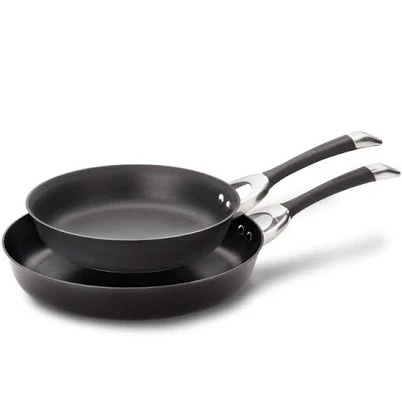
Circulon Symmetry Hard-Anodized Frying Pan Set
Skip until Circulon reveals nonstick coating chemistry or obtains PFAS verification.
Circulon does not disclose whether the nonstick coating contains Teflon-type coating, Teflon-family coating, or PFAS. Without public ingredient disclosure or independent lab verification, PFAS risk is unknowable. Request documentation or buy alternatives with verified Teflon-type coating-free credentials.
The better-graded swap
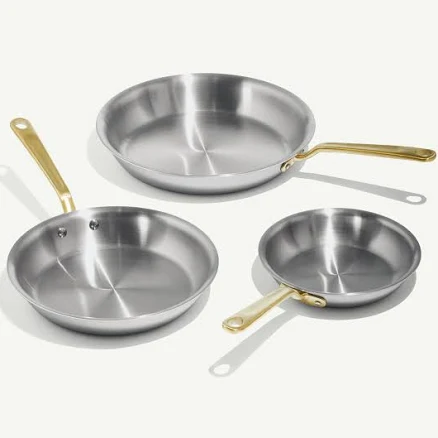
Made In
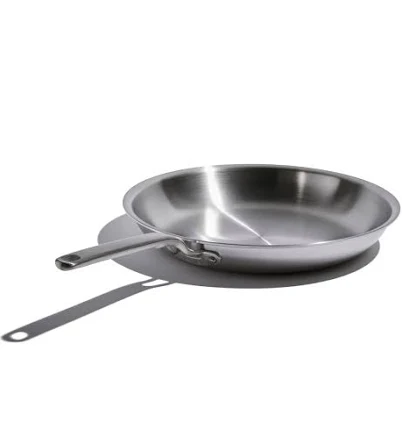
Made In Stainless Clad Frying Pan Set 3-Piece Professional-Grade 5-Layer Metal Construction
100/100 safety
Same rubric that flunked this product. The swap earned Excellent.
Still want this one anyway? Check the price on Amazon. We’d swap it.
Material
Hard-anodized aluminum with nonstick coating (unspecified chemistry)
Lab data
No public lab test
Is Circulon Symmetry Hard-Anodized Frying non-toxic? What it is made of
Circulon Symmetry uses hard-anodized aluminum as its base, a process that densifies the aluminum oxide layer to create a durable, naturally nonstick-resistant surface. The product adds a proprietary nonstick coating on top, but Circulon has not publicly specified whether this is Teflon-type coating-based (traditional Teflon-type), ceramic, or another chemistry. Hard-anodized aluminum itself does not leach problematically at normal cooking temperatures, but the nonstick topcoat is the variable that determines safety profile under heat stress.
What’s concerning
Category baseline
The starting point for this type of product, before anything specific to this product is counted.
No PFAS disclosure
No public statement from the brand about PFAS in this product.
Non-stick, chemistry undisclosed
Marketed as non-stick without stating the coating chemistry.
Teflon-type coating thermal degradation and fume inhalation
If this product uses traditional Teflon-type coating (unconfirmed due to Circulon's silence), heating above 500°F can release polymer fumes; at 680°F+ (rare in home cooking but possible with preheating or stovetop neglect), Teflon-type coating can decompose into fluoride compounds. Normal cooking at moderate heat rarely triggers this, but overheating risk exists.
Coating degradation and microflake ingestion
Hard-anodized nonstick coatings can chip or peel with age, particularly with dishwasher use or metal utensils. Ingestion of small coating flakes is generally considered low-toxicity by regulators, but continuous exposure is not ideal. Monitor pan condition closely and discard if flaking appears.
What’s reassuring
Aluminum leaching
Hard-anodized aluminum cookware has a sealed oxide barrier that prevents significant aluminum migration into food at normal cooking temperatures and pH levels. This is well-established for hard-anodized cookware in general; Circulon's anodization process follows standard industry methods.
Lead
Hard-anodized aluminum cookware does not use ceramic glazes, enamel, or paint finishes where lead or cadmium contamination historically occurred. The nonstick topcoat is not a ceramic glaze and is not known to contain these heavy metals based on available product data.
Source, ATSDR ↗Heavy metals
Circulon sourcing and aluminum purity standards are consistent with FDA food-contact material guidelines. No recalls or test reports documenting heavy metal contamination in Circulon hard-anodized cookware are on public record.
Source, FDA ↗The full breakdown
The brand's record and disclosure
Circulon (owned by Groupe SEB) has not made public commitments to disclose nonstick coating chemistry or transition away from Teflon-type coating-based formulations. The brand does not carry third-party safety certifications (such as GreenGuard or similar) specific to PFAS avoidance. This silence is notably different from competitors like Our Place or Caraway, which explicitly market PFAS-free formulations. No major recalls or documented health incidents tied to Circulon nonstick cookware are on public record, but absence of disclosure limits independent verification.
How it compares in its category
Hard-anodized aluminum cookware is mid-range in durability and safety profile. Circulon's hard-anodized construction is more durable than standard non-anodized aluminum but less inert than stainless steel or cast iron alternatives. Many competitors in the same price bracket (All-Clad, Calphalon Signature) also use similar hard-anodized + nonstick combinations without full PFAS transparency. Ceramic-coated or Teflon-type coating-free alternatives exist but often cost more or have trade-offs in nonstick performance longevity.
If you buy it
Keep cooking temperatures below 400-425°F to avoid stress on the nonstick coating and potential fume release. Hand-wash only; dishwashers and abrasive scrubbers degrade the coating faster. Inspect the nonstick surface regularly for scratches, peeling, or flaking; if damage is visible, replace the pan rather than continue use. Hard-anodized aluminum can last 5-10 years with proper care, but the nonstick topcoat typically needs replacement sooner (3-5 years of regular use).
What we don’t know
- Basis
- Model estimate, 42% confidence, not a lab result
- Lab test
- None on record for this exact product
- Brand statement
- Circulon has made a specific claim
Formulations change between production runs, so check the current label. How we grade.
Better-graded alternatives in Cookware
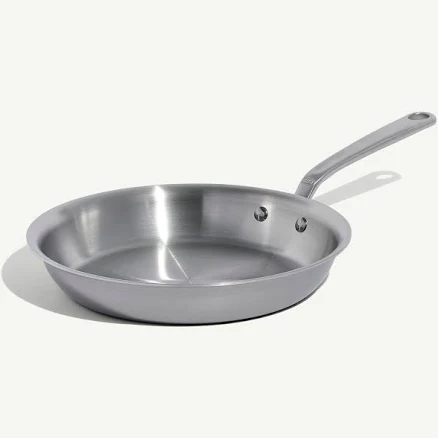
Made In
Stainless Clad Fry Pan
- Stainless steel clad construction, no nonstick coating
- The brand calls it PFAS-free, which we have not verified
- Clad separation or delamination over time
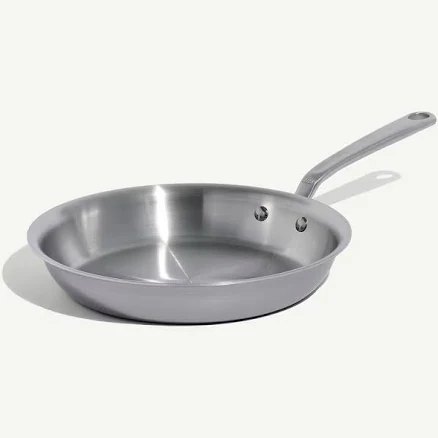
Made In
10' Stainless Clad Frying Pan
- stainless steel clad construction, no nonstick coating
- The brand calls it PFAS-free, which we have not verified
- Nickel leaching from stainless steel
3 hazards checked on this product. See all of them.
Heritage Steel
Eater Fry Pan
- Clad stainless steel, no coating
- The brand calls it PFAS-free, which we have not verified
- Metal ion release during cooking (iron, nickel, chromium)
More cookware grades
How we score, every product runs through the same public 0-100 rubric based on materials, coatings, brand disclosure, lab findings, and recalls. See the full methodology → Spotted a mistake? Report an error.