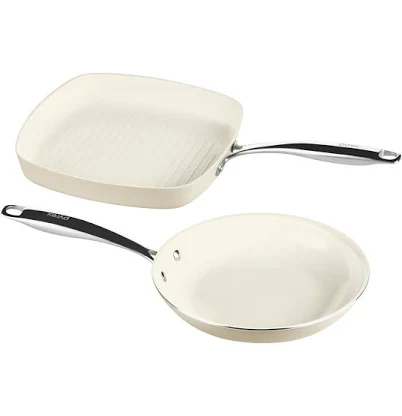
Pyrex Ceramic Cookware Set, Is It Non-Toxic?
Ceramic non-stick coating of unstated chemistry, and no PFAS statement from the brand.
Pyrex chose ceramic over Teflon-type coating or Teflon-family coating coatings on this set, reducing PFAS exposure risk. Ceramic formulations naturally avoid legacy PFAS, so brand disclosure isn't needed.
The better-graded swap
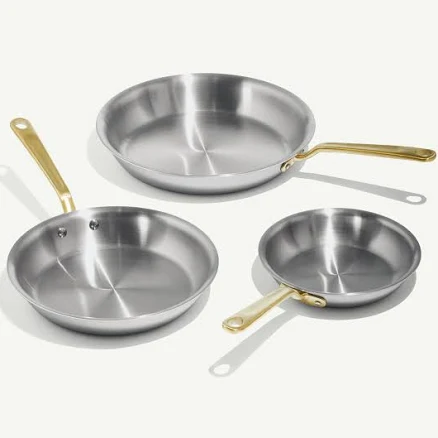
Made In
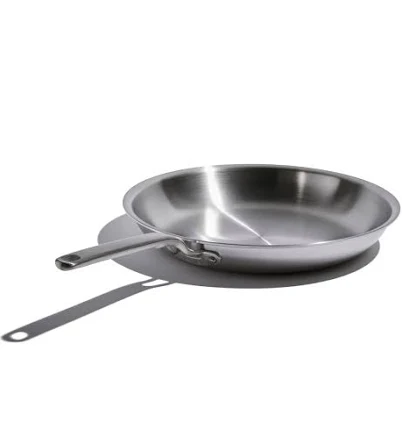
Made In Stainless Clad Frying Pan Set 3-Piece Professional-Grade 5-Layer Metal Construction
100/100 safety
Same rubric that flunked this product. The swap earned Excellent.
Still want this one anyway? Check the price on Amazon. We’d swap it.
Material
Ceramic non-stick coating
Lab data
No public lab test
You may also be interested in
Top-graded picks in the categories readers replace first, every one scored on the same rubric.

- polypropylene filter housing, carbon/sediment cartridge
- We found no PFAS statement from the brand
- Bacterial growth in spent cartridges
3 hazards checked on this product, all on its full breakdown.

Aquasure
Premier Series 75 GPD Under Sink Reverse Osmosis Water Filtration System
- RO membrane, carbon filters, stainless steel housing
- We found no PFAS statement from the brand
- Bacterial and microbial growth in housing and filters
4 hazards checked on this product, all on its full breakdown.

Avocado
Vegan Mattress
- organic cotton, natural latex, coconut coir, recycled steel coils
- The brand calls it PFAS-free, which we have not verified
- Heavy metals
2 hazards checked on this product, all on its full breakdown.
Is Pyrex Ceramic Cookware Set non-toxic? What it is made of
This set uses a ceramic non-stick coating applied over a ceramic base body. Pyrex has not publicly disclosed the chemical composition of this coating, which is the primary concern, ceramic coatings can be formulated with various binders and additives, some potentially including PFAS-based compounds to achieve durability and water repellency. Without transparency, the actual safety profile of the non-stick layer cannot be independently verified.
What’s concerning
No PFAS disclosure
No public statement from the brand about PFAS in this product.
Non-stick, chemistry undisclosed
Marketed as non-stick without stating the coating chemistry.
Category baseline
The starting point for this type of product, before anything specific to this product is counted.
Coating degradation over time
Ceramic non-stick coatings are prone to wear from repeated use, thermal cycling, and abrasion. Once the surface is compromised, adhesion loss and flaking become risks; long-term durability data for Pyrex ceramic cookware is not widely published.
Undisclosed coating chemistry
Pyrex has not disclosed the binder resins, hardeners, or other additives used in this ceramic non-stick formulation, making it impossible to rule out synthetic compounds (including potential fluorochemicals) without independent testing.
Thermal decomposition of coating binders
At high temperatures, the resinous or polymeric binders in ceramic coatings may emit volatile organic compounds or decomposition products. Pyrex does not publish recommended temperature limits specific to this cookware, though ceramic non-stick typically shows lower concern for coating degradation below 400-450F.
Microplastic or coating particle ingestion
If the non-stick layer flakes or peels due to damage or age, small particles may be ingested with food. Risk is low if the cookware is properly maintained and retired when visibly worn.
What’s reassuring
Lead
Pyrex ceramic cookware bodies are subject to FDA food contact material regulations. No recall or public record of lead or cadmium contamination in this specific product line has been identified, and modern ceramic tableware and cookware in the US market are regularly tested for heavy metals.
Source, ATSDR ↗How is this PFAS grade calculated?
The brand's record and disclosure
Pyrex has maintained silence on PFAS use in its ceramic cookware line and has not published a formal PFAS disclosure policy or third-party safety certifications for this product. The brand has a long history in cookware but has not differentiated itself through proactive chemical transparency in recent years. No major recalls specific to ceramic coating composition have been publicly recorded for this line, though the lack of disclosure itself is a gap in consumer trust.
How it compares in its category
Ceramic non-stick cookware is often marketed as a PFOA-free alternative to traditional Teflon-type coating (Teflon), but this claim alone does not guarantee the ceramic coating is free of all fluorochemicals or other synthetic additives. Many competitors (e.g., GreenPan, Our Place) explicitly state PFAS-free formulation or list third-party certifications; Pyrex's ceramic line does not. Uncoated cast iron or stainless steel carry no coating risk, though they require different cooking techniques.
If you buy it
Keep cookware below 400F (the typical range for ceramic non-stick performance) to minimize risk of coating degradation or volatilization of binders. Hand wash only; avoid abrasive scrubbers and dishwashers, which accelerate coating wear. If the surface becomes visibly scratched, peeling, or discolored after extended use, retire the piece to prevent ingestion of coating particles. Store with paper towel separators to avoid chipping.
What is not known about PFAS in this product?
- Basis
- Model estimate, 78% confidence, not a lab result
- Lab test
- None on record for this exact product
- Brand statement
- Pyrex has made a specific claim
Formulations change between production runs, so check the current label. How we grade.
What are the PFAS-free alternatives to Pyrex Ceramic Cookware Set?
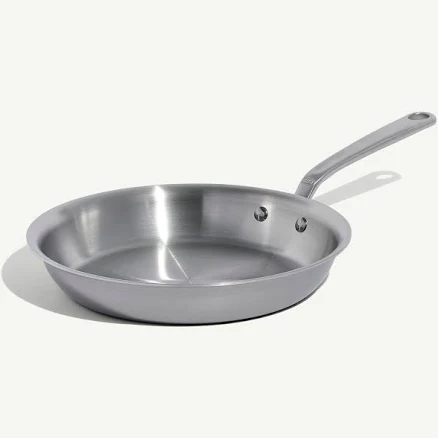
- Stainless steel clad construction, no nonstick coating
- The brand calls it PFAS-free, which we have not verified
- Clad separation or delamination over time
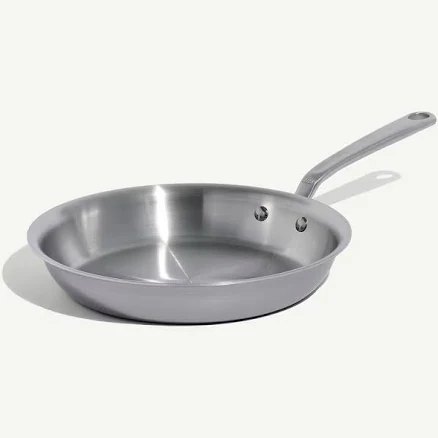
- stainless steel clad construction, no nonstick coating
- The brand calls it PFAS-free, which we have not verified
- Nickel leaching from stainless steel
3 hazards checked on this product, all on its full breakdown.
- Clad stainless steel, no coating
- The brand calls it PFAS-free, which we have not verified
- Metal ion release during cooking (iron, nickel, chromium)
More cookware grades
How we score, every product runs through the same public 0-100 rubric based on materials, coatings, brand disclosure, lab findings, and recalls. See the full methodology → Spotted a mistake? Report an error.