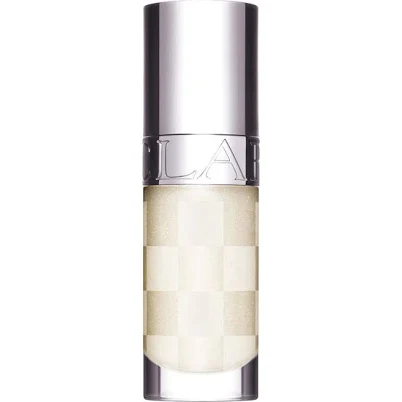
Clarins · Lip Balm & Long-Wear Lipstick
Clarins Lip Comfort Oil Shimmer
Lower concern; oil-based lip product with no water-resistance claims or known PFAS-risk ingredients.
Clarins Lip Comfort Oil Shimmer contains mineral oil and mica shimmer without waterproofing treatment. Standard cosmetic oils and micas carry lower PFAS risk than water-resistant formulas.
We flunk more products than we pass. This one earned its grade. How we grade
Material
mineral oil and shimmer mica, no waterproofing treatment
Brand disclosure
Brand is silent on PFAS
Lab data
No public lab test
What Clarins Lip Comfort Oil Shimmer is made of, ingredients and materials
Clarins Lip Comfort Oil Shimmer is formulated around mineral oil as the base, a highly refined petroleum derivative that is chemically inert and widely used in cosmetics because it is non-irritating and stable. The shimmer effect comes from mica, a naturally occurring silicate mineral that reflects light and has a long safety history in color cosmetics. The absence of waterproofing or long-wear polymers means fewer synthetic film-forming agents that could introduce unwanted additives. This simple ingredient structure reduces the number of potential chemical stressors on delicate lip tissue.
What’s concerning
Category baseline
The starting point for this type of product, before anything specific to this product is counted.
No PFAS disclosure
No public statement from the brand about PFAS in this product.
Fragrance allergens
Clarins Lip Comfort Oil Shimmer contains fragrance compounds typical of this brand's scented cosmetics; individuals with fragrance sensitivity or atopic dermatitis may experience contact dermatitis, though the brief contact time and occlusive nature of lip oils reduce risk compared to leave-on products.
Lip product ingestion risk
Lip oils are inherently prone to incidental ingestion during eating and drinking; mineral oil and mica are non-toxic in small amounts, but repeated ingestion of mineral oil can theoretically reduce fat-soluble vitamin absorption if consumed in large quantities. For typical lip product use, this poses negligible risk, but children should be supervised.
What’s reassuring
Base material not linked to PFAS
The main material recorded for this product is not one associated with PFAS.
Heavy metals
Mica itself does not bioaccumulate heavy metals, and cosmetic-grade mica suppliers are regulated in most developed markets; no reports of contamination in Clarins products exist in public databases, though mica from some geographic sources can carry trace iron oxide. Standard cosmetics testing regimes do not typically reveal this as a concern for lip use.
Source, FDA ↗Mineral oil purity and contaminant history
Pharmaceutical and cosmetic-grade mineral oils undergo rigorous refining to remove aromatic hydrocarbons and polycyclic compounds; Clarins sources from major refined oil suppliers. No documented incidents of contaminated mineral oil in Clarins formulations are on record, and the brand's scale and EU/US market presence means routine compliance audits apply.
Packaging and cap contamination
No reports of leachables from Clarins lip product packaging exist in public safety databases. Standard cosmetics bottle plastics used by major brands are screened for migration; however, keeping the cap clean and avoiding prolonged heat exposure minimizes any theoretical risk from packaging contact.
The full breakdown
The brand's record and disclosure
Clarins does not publicly disclose PFAS testing or avoidance policies, placing it in the middle of the cosmetics transparency spectrum. The brand has no major recalls or documented contamination incidents linked to this product line. Clarins is owned by L'Oreal, a signatory to voluntary cosmetics safety frameworks in some regions, though this does not guarantee exhaustive independent testing or public disclosure of all ingredient screening. No third-party certifications (organic, cruelty-free standards) are associated with this specific product, limiting external audit coverage.
How it compares in its category
Lip oils with mineral oil and mica are among the least chemically complex products in the lip category, sitting well below tinted lip balms (which often contain synthetic dyes and preservative systems) and waterproof lip glosses (which rely on water-resistant polymers and silicones). Many competing brands use similar mineral oil bases, making this a conventional choice rather than an outlier. The lack of added preservatives or stabilizers is a practical advantage for short-use, closed-package products like lip oils, as they are less prone to microbial growth than water-based formulas.
If you buy it
Store at room temperature away from direct heat; mineral oil can soften or separate if overheated, though this does not create a safety hazard, only a texture change. Replace every 12-18 months to minimize any risk of minor oxidation or contamination from repeated hand contact at the cap. Discontinue use if redness, swelling, or irritation develops, though this is rare with mineral oil and mica. If you have known sensitivities to fragrance or botanical extracts, review the full ingredient list, as shimmer formulas sometimes include additional botanicals beyond the base oil.
What we don’t know
- Basis
- Model estimate, 78% confidence, not a lab result
- Lab test
- None on record for this exact product
- Brand statement
- Clarins has made none
Formulations change between production runs, so check the current label. How we grade.
More lip balm & long-wear lipstick grades
How we score, every product runs through the same public 0-100 rubric based on materials, coatings, brand disclosure, lab findings, and recalls. See the full methodology → Spotted a mistake? Report an error.