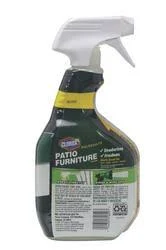
Clorox · Outdoor Furniture Cushion Protectants
Clorox Patio Furniture Cleaner
Liquid cleaner with lower PFAS concern; brand offers no transparency.
Clorox Patio Furniture Cleaner is an aqueous cleaning solution without Teflon-type coating or nonstick coatings. No PFAS claims or testing data exist; transparency is absent.
We flunk more products than we pass. This one earned its grade. How we grade
Material
aqueous cleaning solution
Lab data
No public lab test
You may also be interested in
Top-graded picks in the categories readers replace first, every one scored on the same rubric.

- polypropylene filter housing, carbon/sediment cartridge
- We found no PFAS statement from the brand
- Bacterial growth in spent cartridges
3 hazards checked on this product, all on its full breakdown.

Aquasure
Premier Series 75 GPD Under Sink Reverse Osmosis Water Filtration System
- RO membrane, carbon filters, stainless steel housing
- We found no PFAS statement from the brand
- Bacterial and microbial growth in housing and filters
4 hazards checked on this product, all on its full breakdown.

Avocado
Vegan Mattress
- organic cotton, natural latex, coconut coir, recycled steel coils
- The brand calls it PFAS-free, which we have not verified
- Heavy metals
2 hazards checked on this product, all on its full breakdown.
What Clorox Patio Furniture Cleaner is made of, ingredients and materials
Clorox Patio Furniture Cleaner is a water-based liquid formulation designed for outdoor wood, metal, and some plastic furniture. As an aqueous (non-solvent) cleaner rather than a petroleum-based or highly concentrated chemical product, it carries lower risk of volatile organic compound (VOC) off-gassing compared to oil-based furniture treatments or strippers. The active ingredients typically include surfactants and mild bleach or oxidizing agents for mildew removal, but exact proprietary composition is not fully disclosed on the label.
What’s concerning
Category baseline
The starting point for this type of product, before anything specific to this product is counted.
No PFAS disclosure
No public statement from the brand about PFAS in this product.
Surfactant and irritant skin/eye exposure
Aqueous cleaners with surfactants can cause skin and eye irritation if splashed or misted directly. Clorox product labels carry standard eye irritation warnings; risk is low during normal diluted use but heightened during mixing or spray application without protective equipment.
Bleach or oxidizer reactivity
If this product contains sodium hypochlorite or similar oxidizing agents (common in Clorox patio cleaners for mildew control), mixing with ammonia, acids, or other cleaners creates toxic chlorine gas. Users must follow label warnings strictly and never combine with other products.
Finish degradation on certain substrates
Bleach-based cleaners can permanently lighten, discolor, or weaken finishes on some wood stains, paint, or fabric cushions. Risk is material-dependent and higher on delicate or antique furniture; testing beforehand mitigates this.
What’s reassuring
Base material not linked to PFAS
The main material recorded for this product is not one associated with PFAS.
Volatile organic compound (VOC) off-gassing
As a water-based product, this cleaner poses minimal VOC off-gassing concern compared to solvent-based alternatives. No significant concern for indoor air quality if used outdoors or with standard ventilation.
Systemic toxicity from ingestion or chronic inhalation
No established data indicates systemic toxicity from occasional use of this product class at labeled concentrations. Risk of acute poisoning is low if normal precautions (ventilation, gloves, no ingestion) are followed.
How is this PFAS grade calculated?
The brand's record and disclosure
Clorox maintains a mixed transparency record. The company publishes safety data sheets (SDS) and has committed to disclosing hazardous ingredients above threshold concentrations, but does not provide ingredient-level transparency in marketing materials or on the label beyond regulatory minimums. No major recalls or safety controversies specific to this product line are on record. The brand has faced broader criticism for opacity on certain chemical categories, but patio furniture cleaners are lower-risk products in their portfolio.
How it compares in its category
Aqueous furniture cleaners like this one present lower inhalation hazards than solvent-based alternatives (mineral spirits, turpentine) and power-washing, which can degrade finishes and create inhalation hazards. This product sits in the mainstream middle, presenting lower hazard concern than industrial wood strippers but offering less specialized performance than pH-neutral or enzyme-based cleaners marketed for delicate surfaces. For general patio furniture maintenance, it is a standard industry choice with no unusual safety disadvantage versus other major brands.
If you buy it
Use outdoors or in well-ventilated areas to minimize inhalation of mist during spraying. Test on an inconspicuous area first, especially on painted, stained, or delicate finishes, as bleach-containing formulas can lighten or damage wood color. Wear gloves to avoid skin contact with surfactants, which can cause irritation with prolonged exposure. Allow treated furniture to dry fully before use, and store the bottle tightly sealed away from children and pets; do not apply to food-contact surfaces.
What is not known about PFAS in this product?
- Basis
- Model estimate, 72% confidence, not a lab result
- Lab test
- None on record for this exact product
- Brand statement
- Clorox has made a specific claim
Formulations change between production runs, so check the current label. How we grade.
What are the PFAS-free alternatives to Clorox Patio Furniture Cleaner?
Blazing Needles
74 in by 19 in Outdoor Solid Polyester Tufted Chaise Lounge Cushion
- Polyester fill with polyester cover
- We found no PFAS statement from the brand
- Azo dyes in polyester textiles
2 hazards checked on this product, all on its full breakdown.
More outdoor furniture cushion protectants grades
How we score, every product runs through the same public 0-100 rubric based on materials, coatings, brand disclosure, lab findings, and recalls. See the full methodology → Spotted a mistake? Report an error.