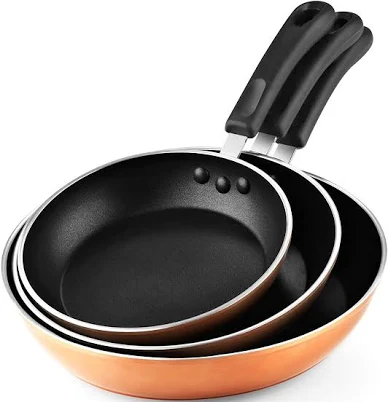
Cook N Home Nonstick Saute Omelet Skillet Fry Pan Set
Avoid without disclosure of the nonstick coating type.
Cook N Home keeps the nonstick coating formula private on this aluminum skillet set. Aluminum nonstick cookware frequently uses Teflon-family coating without public verification here.
The better-graded swap
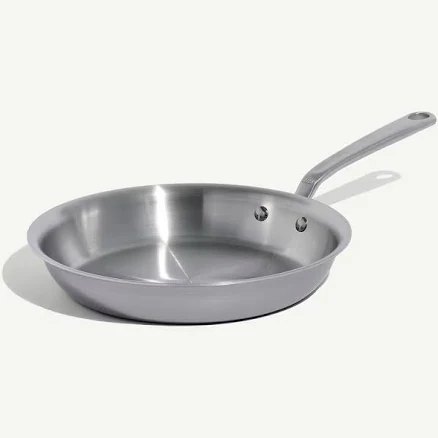
Made In
MADE IN 10' Stainless Clad Frying Pan
100/100 safety
Same rubric that flunked this product. The swap earned Excellent.
Still want this one anyway? Check the price on Amazon. We’d swap it.
Material
Aluminum with unspecified nonstick coating
Brand disclosure
Brand is silent on PFAS
Lab data
No public lab test
Is Cook N Home Nonstick Saute Omelet Skillet non-toxic? What it is made of
Cook N Home's saute pan is aluminum with an unspecified nonstick coating. Aluminum conducts heat efficiently but can leach into acidic foods if the protective nonstick layer degrades. The brand does not disclose whether the coating is Teflon-type coating-based (traditional Teflon), ceramic, or hybrid, which is the critical safety gap here. Without this information, you cannot assess PFAS exposure risk or long-term coating durability.
What’s concerning
Category baseline
The starting point for this type of product, before anything specific to this product is counted.
No PFAS disclosure
No public statement from the brand about PFAS in this product.
Non-stick, chemistry undisclosed
Marketed as non-stick without stating the coating chemistry.
Aluminum leaching
Aluminum substrate can leach into food if the nonstick coating chips, cracks, or wears away. Risk increases with acidic foods (tomato sauces, vinegar, citrus) and prolonged contact. This is a long-term concern if the pan is used beyond 2-3 years or with high-heat cooking.
Teflon-type coating fume risk (thermal degradation)
If the coating is Teflon-type coating-based, temperatures above 500-600°F can release toxic fumes (perfluorooctanoic acid precursors). Cook N Home does not confirm the coating type, so the risk cannot be ruled out. Preheating empty pans or high-heat searing pose the highest risk.
Coating degradation over time
User reviews and reports indicate that budget nonstick cookware in this price range typically shows visible wear (dullness, minor peeling) after 1-3 years of regular use. Once degradation begins, both aluminum leaching and coating particle ingestion become concerns.
Microplastic or coating particle shedding
Scratched or aged nonstick coatings can shed microscopic particles into food. While Teflon-type coating particles are considered inert if ingested, the unknown composition of this brand's coating and lack of durability guarantees create ambiguity around long-term particle accumulation risk.
What’s reassuring
Lead
No recalls or testing results on record for Cook N Home cookware related to heavy metals in coatings. Standard aluminum nonstick cookware does not typically use lead-containing glazes, but the opacity of the brand's material sourcing prevents full assurance.
Source, ATSDR ↗The full breakdown
The brand's record and disclosure
Cook N Home is a private-label cookware brand with minimal public safety documentation or third-party certifications visible in standard sources. The company does not publish coating formulations, material safety data sheets, or heat-tolerance specifications on product listings. No significant recalls or safety controversies are on record for this specific product line. The silent stance on nonstick chemistry is typical of budget cookware brands and limits independent verification of safety claims.
How it compares in its category
Budget aluminum nonstick pans like this one occupy the middle ground between high-end ceramic-coated cookware (fewer PFAS concerns, higher cost) and vintage Teflon-type coating pans (well-documented but aging). Cook N Home products lack the certification or transparency of brands like GreenPan or the longevity reputation of established names like Calphalon or Tramontina. For the price point, this product is typical in its omission of detailed coating disclosure, a widespread industry practice that disadvantages safety-conscious buyers.
If you buy it
Never exceed 400-500°F (the standard temperature range for most nonstick coatings); preheating above this risks coating breakdown and potential fume release. Hand-wash only; dishwasher use accelerates coating wear. Inspect the surface monthly for scratches, peeling, or discoloration; replace the pan if coating integrity is visibly compromised. Avoid acidic or high-salt foods in prolonged contact, as they accelerate aluminum exposure through a degraded coating. Store away from high heat and metal utensils.
What we don’t know
- Basis
- Model estimate, 35% confidence, not a lab result
- Lab test
- None on record for this exact product
- Brand statement
- Cook N Home has made none
Formulations change between production runs, so check the current label. How we grade.
Better-graded alternatives in Cookware
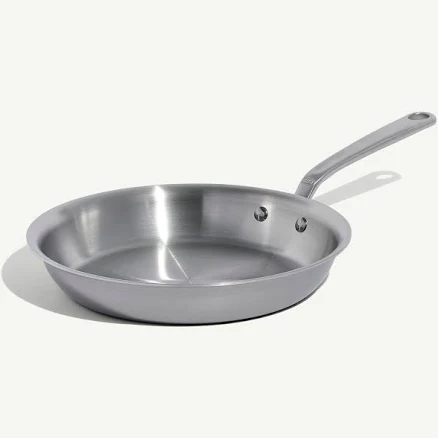
Made In
Stainless Clad Fry Pan
- Stainless steel clad construction, no nonstick coating
- The brand calls it PFAS-free, which we have not verified
- Clad separation or delamination over time
Made In
10' Stainless Clad Frying Pan
- stainless steel clad construction, no nonstick coating
- The brand calls it PFAS-free, which we have not verified
- Nickel leaching from stainless steel
3 hazards checked on this product. See all of them.
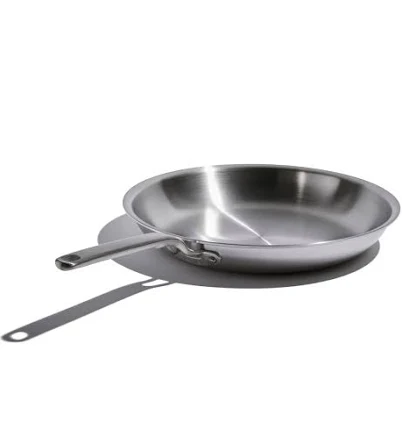
Heritage Steel
Eater Fry Pan
- Clad stainless steel, no coating
- The brand calls it PFAS-free, which we have not verified
- Metal ion release during cooking (iron, nickel, chromium)
More cookware grades
How we score, every product runs through the same public 0-100 rubric based on materials, coatings, brand disclosure, lab findings, and recalls. See the full methodology → Spotted a mistake? Report an error.