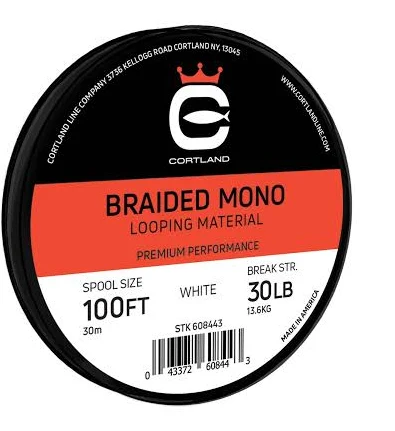
Cortland Braided Mono Looping Material
Braided fishing material with low PFAS risk, but brand offers no transparency.
Cortland braided mono looping is likely nylon or polyester with minimal surface treatment and no known PFAS hazard. Brand provides no PFAS disclosure.
We flunk more products than we pass. This one earned its grade. How we grade
Material
Braided monofilament, likely nylon or polyester
Brand disclosure
Brand is silent on PFAS
Lab data
No public lab test
What Cortland Braided Mono Looping Material is made of, ingredients and materials
Cortland Braided Mono Looping Material is a braided monofilament, almost certainly nylon or polyester core with a braided outer jacket. This construction is chosen for fishing leaders and loop knots because it combines strength with abrasion resistance. Unlike solid monofilament, the braided structure provides flexibility and shock absorption during casting and fighting fish, reducing line breakage. The material does not contact food or skin for extended periods, which eliminates most consumer chemical exposure pathways.
What’s concerning
Category baseline
The starting point for this type of product, before anything specific to this product is counted.
No PFAS disclosure
No public statement from the brand about PFAS in this product.
Microplastic shedding from degradation
Braided nylon and polyester shed microfibers when abraded against rocks, guides, or fish teeth. No quantified data exists for this specific product, but material loss is inevitable during normal use and eventually enters aquatic ecosystems.
UV degradation and polymer breakdown
Synthetic monofilament degrades under sunlight, becoming brittle and releasing oligomers and additives into the environment. This is a known property of nylon and polyester exposed to outdoor conditions over time.
What’s reassuring
Base material not linked to PFAS
The main material recorded for this product is not one associated with PFAS.
Skin sensitization from synthetic fibers
No allergic contact dermatitis cases are documented for Cortland braided mono or comparable nylon/polyester fishing materials. Risk is low for typical handling, though individuals with sensitive skin should rinse hands after extended contact.
Leachables from dyes or colorants
Cortland does not publish colorant chemistry or dye composition. Nylon and polyester braided lines are typically dyed with acid or disperse dyes; no health hazards are established for the small quantities present in this product during fishing use.
Flame retardants
Fishing monofilament does not require flame-retardant treatment and no regulatory compliance would mandate it. No evidence exists that Cortland adds antimony or halogenated flame retardants to this product line.
Source, EPA ↗The full breakdown
The brand's record and disclosure
Cortland is a legacy fishing-line manufacturer (founded 1915) with no documented public safety controversies or product recalls related to chemical leaching or toxin contamination. The brand does not publish transparency reports on PFAS use or chemical sourcing, typical of the fishing-tackle industry. No third-party certifications (e.g., Bluesign, Oeko-Tex) are on record for this product line. The company's silence on PFAS reflects industry-wide lack of disclosure rather than a known problem.
How it compares in its category
Braided mono looping material is a niche subcategory within fishing leaders and tippets. Cortland is a respected name in this space, competing against brands like Umpqua, RIO, and Orvis. Most braided mono alternatives use identical or very similar nylon or polyester chemistry with no disclosed safety advantages. Fluorocarbon alternatives exist but carry their own environmental concerns; braided nylon/polyester presents lower concern for certain chemical risks in aquatic use.
If you buy it
Store in a cool, dry place away from direct sunlight to prevent UV degradation and potential release of synthetic polymers. Do not expose to temperatures above 150°C (302°F), as nylon and polyester can begin to soften and degrade. Replace the material if it becomes visibly frayed, discolored, or brittle, as degradation may affect both performance and chemical stability. Wash hands after prolonged handling, especially if you have sensitive skin, though allergic reactions are rare with these materials.
What we don’t know
- Basis
- Model estimate, 72% confidence, not a lab result
- Lab test
- None on record for this exact product
- Brand statement
- Cortland has made none
Formulations change between production runs, so check the current label. How we grade.
More fishing line grades
How we score, every product runs through the same public 0-100 rubric based on materials, coatings, brand disclosure, lab findings, and recalls. See the full methodology → Spotted a mistake? Report an error.