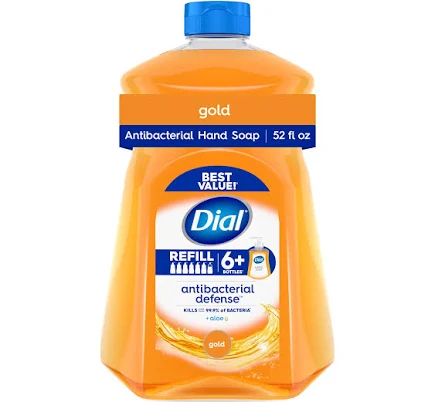
Dial Antibacterial Liquid Hand Soap Refill
Low concern; typical liquid soap formulation carries minimal PFAS risk, but brand provides no transparency.
This water-based cleanser contains no known PFAS-prone features like water-repellency or nonstick coatings. Dial has not publicly disclosed PFAS-related information or pursued third-party verification.
We flunk more products than we pass. This one earned its grade. How we grade
Material
aqueous liquid soap formulation
Brand disclosure
Brand is silent on PFAS
Lab data
No public lab test
You may also be interested in
Top-graded picks in the categories readers replace first, every one scored on the same rubric.

- polypropylene filter housing, carbon/sediment cartridge
- We found no PFAS statement from the brand
- Bacterial growth in spent cartridges
3 hazards checked on this product, all on its full breakdown.

Aquasure
Premier Series 75 GPD Under Sink Reverse Osmosis Water Filtration System
- RO membrane, carbon filters, stainless steel housing
- We found no PFAS statement from the brand
- Bacterial and microbial growth in housing and filters
4 hazards checked on this product, all on its full breakdown.

Avocado
Vegan Mattress
- organic cotton, natural latex, coconut coir, recycled steel coils
- The brand calls it PFAS-free, which we have not verified
- Heavy metals
2 hazards checked on this product, all on its full breakdown.
What Dial Antibacterial Liquid Hand Soap Refill is made of, ingredients and materials
Dial Antibacterial Liquid Hand Soap is an aqueous formulation built on anionic surfactants (primarily sodium lauryl sulfate or similar), water, and preservatives, with added fragrance and colorants. Liquid soap chemistry differs sharply from bar soap or solid products, the water-based matrix resists accumulation of problematic coatings, enamels, or polymers that plague cookware or textiles. The active antibacterial agent in most Dial formulations is triclosan (now largely phased out in the U.S., though still present in some older SKUs) or triclosan alternatives; neither poses acute toxicity at hand-washing exposure levels, but regulatory scrutiny on antimicrobial efficacy and consumer safety remains ongoing.
What’s concerning
Category baseline
The starting point for this type of product, before anything specific to this product is counted.
No PFAS disclosure
No public statement from the brand about PFAS in this product.
Fragrance allergens and skin sensitizers
Dial Antibacterial Liquid Hand Soap contains fragrance blends not fully disclosed on label; common fragrance constituents (limonene, linalool, etc.) are known contact allergens in susceptible individuals. Risk is low for the general population but significant for those with fragrance sensitivity or eczema-prone skin.
Antimicrobial efficacy claims and regulatory oversight
FDA has restricted triclosan and triclocarban in consumer hand soaps since 2016; Dial reformulated accordingly. No evidence that current Dial formulations contain banned antimicrobials, but efficacy of alternative agents remains modest and regulatory debate is ongoing regarding whether antimicrobial claims in hand soap are justified.
Sodium lauryl sulfate (SLS) irritation potential
If present in the formulation, SLS is a known skin irritant at high concentrations and can strip the skin barrier with repeated or prolonged exposure. Hand soap use typically avoids this risk, but individuals with very sensitive or compromised skin may experience mild irritation.
What’s reassuring
Base material not linked to PFAS
The main material recorded for this product is not one associated with PFAS.
Parabens
Dial formulations typically use methylchloroisothiazolinone (MCIT) or phenoxyethanol as preservatives; no established acute toxicity at hand-washing exposure levels. Long-term dermal accumulation is not documented as a hazard from normal hand soap use.
Source, FDA ↗Microplastics
No evidence of intentional microbeads in modern Dial hand soap; FDA microbeads ban (2015) applies to rinse-off products. Liquid soap format does not accumulate solid polymeric particles as hazards.
Source, EPA ↗How is this PFAS grade calculated?
The brand's record and disclosure
Dial (owned by Henkel) does not publish detailed ingredient transparency or third-party safety certifications on this product line. The brand has faced no major recalls or regulatory enforcement actions specific to hand soap formulations. Dial has been slower than competitors (e.g., Seventh Generation, Dr. Bronner's) to adopt eco-labeling, fragrance disclosure, or PFAS commitment statements, though this reflects industry norm rather than a unique safety red flag. No established controversies regarding formulation hazards in the public record for this product category.
How it compares in its category
Dial Antibacterial Liquid Hand Soap occupies the mainstream, budget-friendly tier alongside store brands and other mass-market alternatives. It lacks the transparency and third-party certifications of premium or eco-conscious competitors (e.g., EWG-verified, USDA Organic Certified options). Regarding chemical composition, it is comparable to most conventional liquid hand soaps, surfactant-based, preservative-dependent, fragrance-heavy. The antibacterial positioning is marketing-driven; CDC guidance and studies show plain soap and water work equally well for most hand-hygiene purposes, making the antimicrobial claim functionally irrelevant for risk assessment.
If you buy it
Store the refill in a cool, dry place away from direct sunlight to preserve preservative efficacy and prevent microbial growth in the bottle. Use as directed (no special precautions required for hand washing; standard soap use poses no hazard to skin with normal application). Dispose of empty bottles per local plastic recycling guidelines; the refill format reduces packaging waste compared to pump bottles. If skin irritation occurs, discontinue use; hand soaps rarely trigger serious reactions, but fragrance sensitivity is common in susceptible individuals.
What is not known about PFAS in this product?
- Basis
- Model estimate, 78% confidence, not a lab result
- Lab test
- None on record for this exact product
- Brand statement
- Dial has made none
Formulations change between production runs, so check the current label. How we grade.
What are the PFAS-free alternatives to Dial Antibacterial Liquid Hand Soap Refill?
- soluble tablet, plant-based surfactants
- A third party reports verifying it as PFAS-free
- Fragrance allergens and sensitizers
2 hazards checked on this product, all on its full breakdown.
- water, plant oils, potassium hydroxide
- We found no PFAS statement from the brand
- Fragrance allergens (peppermint essential oil)
- Glycerin, water, plant oils, lavender fragrance
- We found no PFAS statement from the brand
- Fragrance allergens (lavender fragrance)
2 hazards checked on this product, all on its full breakdown.
More hand soap grades
How we score, every product runs through the same public 0-100 rubric based on materials, coatings, brand disclosure, lab findings, and recalls. See the full methodology → Spotted a mistake? Report an error.