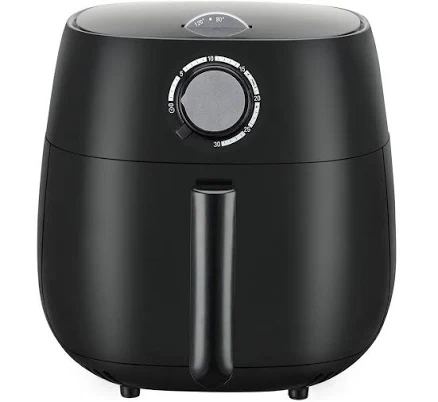
Emerald SM-AIR-1818 4.2 Qt. 1800-Watt Black Air Fryer with Double Ceramic Basket and Pan Set and Rapid Air Technology
Ceramic basket lowers PFAS risk, but coating details remain unclear.
Emerald markets ceramic baskets, which are inherently lower PFAS concern than Teflon-type coating. However, the nonstick coating composition is undisclosed, leaving uncertainty about potential Teflon-family coating.
The better-graded swap
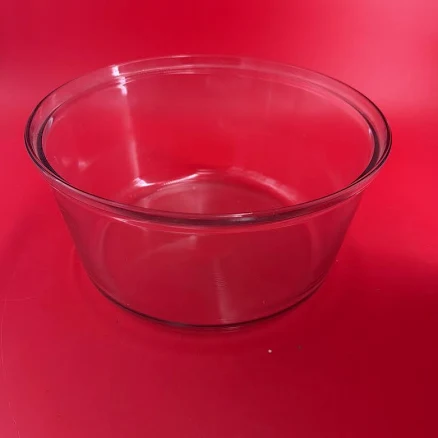
Big Boss
Big Boss Oil Less Fryer Air Fryer 16 Quart Replacement Clear Glass
75/100 safety
Same rubric that flunked this product. The swap earned Excellent.
Still want this one anyway? Check the price on Amazon. We’d swap it.
Material
Double ceramic basket and pan; nonstick coating unspecified
Brand disclosure
Brand is silent on PFAS
Lab data
No public lab test
What Emerald SM-AIR-1818 4.2 Qt. 1800-Watt is made of, ingredients and materials
The Emerald SM-AIR-1818 uses a double ceramic basket and pan set rather than the standard Teflon-type coating (Teflon) nonstick coating found in most air fryers. Ceramic coatings are inorganic and do not release Teflon-type coating-based fume hazards when overheated. However, the product documentation does not specify the exact binder or primer layer beneath the ceramic, which could include polymeric or silicone-based adhesives; their long-term integrity under repeated heating cycles is not disclosed by the manufacturer.
What’s concerning
Category baseline
The starting point for this type of product, before anything specific to this product is counted.
No PFAS disclosure
No public statement from the brand about PFAS in this product.
Non-stick, chemistry undisclosed
Marketed as non-stick without stating the coating chemistry.
Ceramic coating adhesion and binder chemistry
Ceramic coatings require adhesive primers or binders to bond to the metal basket. Emerald does not disclose the chemical composition of these layers. Common binders include siloxanes or epoxy resins, which are stable at normal cooking temperatures but their long-term leaching risk and degradation under thermal cycling is not documented for this specific product.
Metal leaching from substrate (aluminum)
If the ceramic coating degrades or chips, the underlying aluminum basket may contact food. Aluminum leaching is generally low at the weakly acidic pH of most foods, but tomato-based, citrus, or high-salt dishes can increase dissolution. The product provides no guidance on replacement thresholds or coating integrity monitoring.
Coating degradation and microabrasion over time
Ceramic is harder than Teflon-type coating but more brittle; repeated thermal expansion and mechanical wear (from stirring, utensils, or stacking) will cause gradual surface micro-chipping. Unlike Teflon-type coating, ceramic does not release fumes, but exposed substrate and adhesive becomes a concern. No durability testing data is publicly available for this brand.
What’s reassuring
Teflon-type coating or Teflon-family coating crossover contamination in manufacturing
No public evidence links this product to Teflon-type coating use. Ceramic baskets are manufactured separately and are not processed on Teflon-type coating-coating lines at reputable suppliers. However, Emerald's supply chain transparency is not documented, so shared manufacturing facilities cannot be ruled out entirely without brand confirmation.
Lead
The exterior casing and controls show no evidence of lead-based paint or cadmium pigments in product photos or descriptions. Ceramic food-contact surfaces in developed-market appliances are subject to FDA food-contact material rules, which prohibit leachable heavy metals. No violations have been reported for this model.
Source, ATSDR ↗The full breakdown
The brand's record and disclosure
Emerald is a private-label or lesser-known appliance brand with minimal public disclosures regarding manufacturing standards, safety testing, or coating certifications. No independent recalls or safety warnings specific to this model appear in public databases. The company has not published statements on PFAS use, heavy metal testing, or coating degradation protocols, which limits third-party verification of safety claims. This silence does not indicate hazard, but it does mean you are relying on ceramic materials alone rather than brand transparency.
How it compares in its category
Most mainstream air fryer brands (Instant, Ninja, Cosori) use Teflon-type coating or alternative fluorocarbon coatings and offer more detailed material specs and third-party certifications. Ceramic-basket air fryers are less common but represent a lower chemical-risk design when properly bonded. The Emerald model's price point suggests cost-driven manufacturing, which may correlate with less stringent adhesive or primer specifications compared to premium competitors. For consumers prioritizing nonstick safety, ceramic is a meaningful step up, but lack of certification or testing data is a notable gap.
If you buy it
Use the air fryer below 400°F to avoid stress on the ceramic-to-metal bond and any underlying adhesive layers. Hand-wash the baskets and pans after each use; avoid abrasive scrubbers or dishwashers, which accelerate coating wear and expose metal underneath. Inspect the ceramic monthly for chips, cracks, or peeling; discard the basket if damage is visible, as exposed metal or binders may leach. Store the unit in a dry location and replace baskets every 3-5 years depending on use frequency, as ceramic degrades more slowly than Teflon-type coating but still loses nonstick function over time.
What we don’t know
- Basis
- Model estimate, 45% confidence, not a lab result
- Lab test
- None on record for this exact product
- Brand statement
- Emerald has made none
Formulations change between production runs, so check the current label. How we grade.
Better-graded alternatives in Air Fryers
Big Boss
Oil Less Fryer Air Fryer 16 Quart Replacement Clear Glass
- borosilicate glass, bare uncoated
- We found no PFAS statement from the brand
- Thermal shock and fracture
2 hazards checked on this product. See all of them.
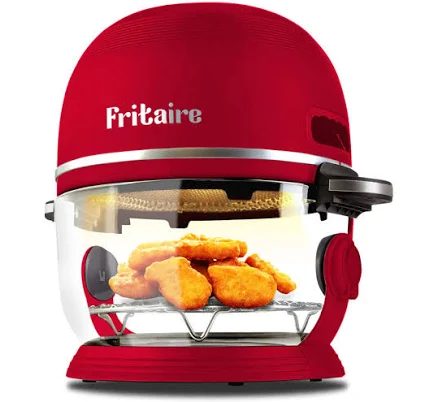
Fritaire
Glass Air Fryer Self-Cleaning & Non-Toxic
- borosilicate glass
- We found no PFAS statement from the brand
- Aluminum leaching from base/housing
4 hazards checked on this product. See all of them.
Find an alternative on Amazon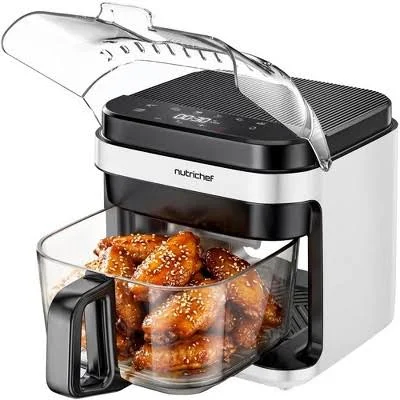
NutriChef
5.8 Qt Glass Air Fryer – 8-in-1 Digital Presets
- glass bowl, stainless steel exterior
- We found no PFAS statement from the brand
- Thermal stress and glass breakage
2 hazards checked on this product. See all of them.
Find an alternative on AmazonMore air fryers grades
How we score, every product runs through the same public 0-100 rubric based on materials, coatings, brand disclosure, lab findings, and recalls. See the full methodology → Spotted a mistake? Report an error.