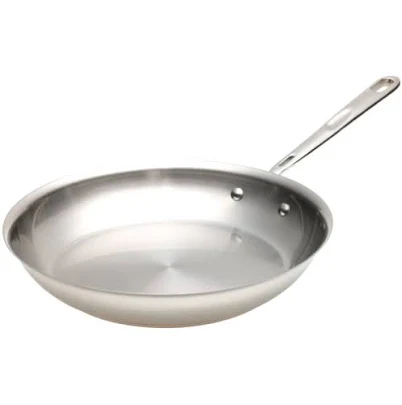
Emerilware Frying Pan
Skip this nonstick cookware if PFAS concerns you.
Emerilware nonstick pans lack any coating specifications. The brand says nothing about PFAS, and many nonstick lines use Teflon-type coating or Teflon-family coating.
The better-graded swap
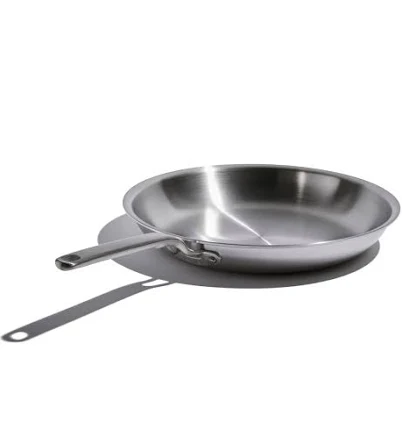
Heritage Steel
Heritage Steel Eater Fry Pan
100/100 safety
Same rubric that flunked this product. The swap earned Excellent.
Still want this one anyway? Check the price on Amazon. We’d swap it.
Material
nonstick coating (unspecified type)
Brand disclosure
Brand is silent on PFAS
Lab data
No public lab test
Is Emerilware Frying Pan non-toxic? What it is made of
Emerilware frying pans use a nonstick coating of unspecified chemistry, which is the core safety question. The substrate is typically aluminum, a lightweight conductor that heats quickly but can leach if the nonstick layer degrades or if acidic foods sit in contact. Without manufacturer disclosure of whether the coating is Teflon-type coating-based, ceramic, or another polymer, you cannot assess whether heated fumes or coating breakdown pose the primary risk to your household.
What’s concerning
Category baseline
The starting point for this type of product, before anything specific to this product is counted.
No PFAS disclosure
No public statement from the brand about PFAS in this product.
Non-stick, chemistry undisclosed
Marketed as non-stick without stating the coating chemistry.
Teflon-type coating fume risk (thermal decomposition)
If the coating is Teflon-type coating-based (unconfirmed for this product), overheating above 500F can release fluorinated gases. Emerilware does not specify coating type, so fume risk cannot be ruled out; adherence to medium-heat use mitigates but does not eliminate this.
Aluminum leaching
Nonstick coatings degrade over time or with improper use, exposing the aluminum substrate. Acidic foods and scratching accelerate exposure; chronic aluminum ingestion is associated with neurological concerns, though dietary intake limits are not formally established.
Coating degradation and microparticle ingestion
Nonstick coatings, especially at budget price points, commonly flake or peel within 1-3 years of use. Ingestion of small coating fragments is possible if use continues after visible wear; long-term effects of such exposure are not well-characterized.
Manufacturer disclosure opacity
The lack of specific coating chemistry disclosure is itself a safety hazard, preventing informed choice. This is a structural issue with the brand, not a direct health claim, but limits your ability to assess suitability if you have PFAS or thermal-degradation concerns.
What’s reassuring
Lead
No recalls or public testing data for Emerilware implicates heavy metals in handles or fasteners; however, this product category is not routinely third-party tested, so absence of evidence does not confirm absence of risk.
Source, ATSDR ↗The full breakdown
The brand's record and disclosure
Emeril Lagasse cookware is marketed under the Emerilware brand by various manufacturers; cookware formulations have shifted over production runs. The brand has not publicly committed to PFAS-free standards or disclosed specific coating chemistry, and no independent certifications (such as GreenGuard or GOTS equivalents for cookware) are on record. This silence on material composition is a significant transparency gap for a consumer product category where coating safety directly affects food safety.
How it compares in its category
Nonstick cookware ranges from Teflon-type coating-based (traditional, inexpensive, linked to PFAS concern) to ceramic or mineral-oil coatings (marketed as lower concern but often less durable). Emerilware sits in the mainstream budget-to-mid-range segment where coating chemistry is rarely disclosed; competitors at similar price points often face identical opacity. Premium or eco-certified brands typically disclose coating type or offer Teflon-type coating-free alternatives, making them easier to evaluate if PFAS concern is high.
If you buy it
Never exceed medium heat; high heat accelerates coating degradation and increases fume risk. Replace the pan if the nonstick surface shows flaking, discoloration, or bare spots. Hand wash only; dishwasher use degrades most nonstick coatings faster. Store dry and avoid prolonged contact with acidic foods (tomato sauce, vinegar, citrus) to minimize aluminum leaching if the coating wears through.
What we don’t know
- Basis
- Model estimate, 35% confidence, not a lab result
- Lab test
- None on record for this exact product
- Brand statement
- Emeril Lagasse has made none
Formulations change between production runs, so check the current label. How we grade.
Better-graded alternatives in Cookware
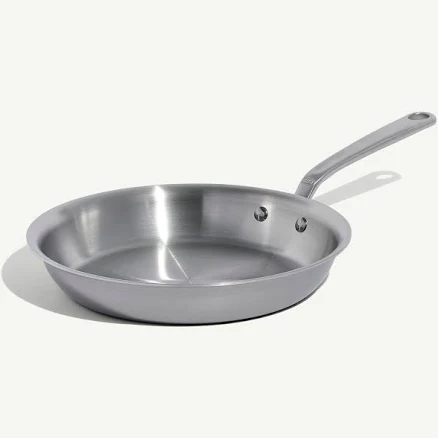
Made In
Stainless Clad Fry Pan
- Stainless steel clad construction, no nonstick coating
- The brand calls it PFAS-free, which we have not verified
- Clad separation or delamination over time
Made In
10' Stainless Clad Frying Pan
- stainless steel clad construction, no nonstick coating
- The brand calls it PFAS-free, which we have not verified
- Nickel leaching from stainless steel
3 hazards checked on this product. See all of them.
Heritage Steel
Eater Fry Pan
- Clad stainless steel, no coating
- The brand calls it PFAS-free, which we have not verified
- Metal ion release during cooking (iron, nickel, chromium)
More cookware grades
How we score, every product runs through the same public 0-100 rubric based on materials, coatings, brand disclosure, lab findings, and recalls. See the full methodology → Spotted a mistake? Report an error.