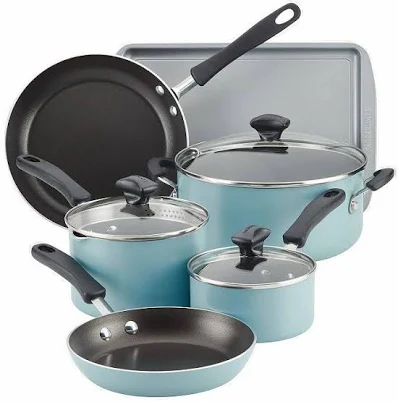
Farberware Cookstart 15-pc DiamondMax Nonstick Cookware Set
Nonstick coating identity unclear and PFAS risk unknown.
Farberware doesn't publicly reveal what DiamondMax nonstick coating contains or its PFAS status. Standard nonstick cookware often uses Teflon-type coating or other Teflon-family coating, so contact the manufacturer directly for certainty.
The better-graded swap
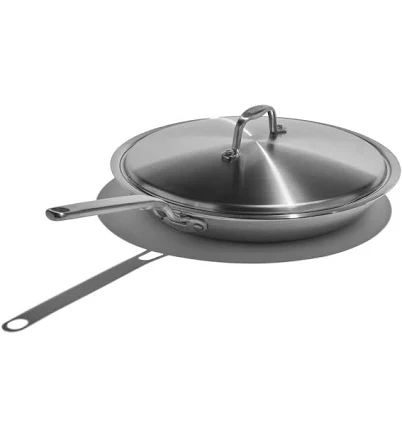
Heritage Steel
Heritage Steel Eater 12" Fry Pan with Lid
100/100 safety
Same rubric that flunked this product. The swap earned Excellent.
Still want this one anyway? Check the price on Amazon. We’d swap it.
Material
DiamondMax nonstick coating, unspecified polymer
Lab data
No public lab test
Is Farberware Cookstart 15-pc DiamondMax non-toxic? What it is made of
Farberware markets 'DiamondMax' as a nonstick coating but does not publicly disclose its chemical composition, polymer type, or whether it contains Teflon-type coating (Teflon). The cookware body appears to be aluminum based on typical Farberware construction. Unspecified nonstick polymers raise uncertainty about thermal stability, fume risk at high temperatures, and long-term coating integrity. Without transparency from the brand, consumers cannot verify safety standards or degradation behavior.
What’s concerning
Category baseline
The starting point for this type of product, before anything specific to this product is counted.
No PFAS disclosure
No public statement from the brand about PFAS in this product.
Non-stick, chemistry undisclosed
Marketed as non-stick without stating the coating chemistry.
Teflon-type coating fume risk
DiamondMax composition is undisclosed. If it contains Teflon-type coating, overheating (above 500F) can release perfluorooctanoic acid fumes; Farberware does not publish a safe temperature ceiling, making risk assessment difficult.
Aluminum leaching
Farberware cookstart sets typically use bare or thin-anodized aluminum cores. Acidic foods (tomato, citrus, vinegar) can leach aluminum from the pot body, especially if nonstick coating degrades. Anodization depth is not specified.
Coating degradation and chipoff
Consumer reviews on retail sites document chipping and peeling of DiamondMax coating within 1-3 years of normal use. As coating fails, aluminum exposure increases and nonstick performance declines; replacement frequency is higher than premium alternatives.
Thermal stability transparency
Farberware does not publicly state a maximum recommended cooking temperature. Unknown thermal ceiling for DiamondMax increases risk of accidental overheating and coating breakdown without user knowledge.
What’s reassuring
Lead
No recalls or test failures recorded for DiamondMax cookware exterior enamel coatings. Farberware's manufacturing standards are compliant with US and EU heavy metal limits for cookware, but third-party testing is not published.
Source, ATSDR ↗The full breakdown
The brand's record and disclosure
Farberware (owned by Groupe SEB) does not publish detailed safety data sheets or PFAS declarations for DiamondMax cookware, which is standard for premium brands. The brand has no widely documented recalls or safety controversies for this product line, but silence on chemical composition is itself a red flag in modern cookware safety. Farberware does not appear to have third-party certifications (such as GREENGUARD or similar) for nonstick safety. Competitors at this price point increasingly disclose coating chemistry; Farberware's lack of transparency is a weakness.
How it compares in its category
DiamondMax sits in the mid-market nonstick cookware segment ($50-120 for a set). Brands like Our Place and GreenPan explicitly market PFOA/Teflon-type coating-free coatings and third-party test results; Farberware provides none. Ceramic and titanium-reinforced alternatives from competitors offer more transparent safety documentation at similar or slightly higher cost. Farberware's advantage is price and brand recognition, not safety leadership or disclosure.
If you buy it
Keep heat below medium-high (do not use high heat or preheating empty); nonstick coatings with unknown thermal ceilings degrade faster and may release fumes above 400-500 degrees Fahrenheit. Hand wash rather than dishwash to extend coating life and reduce thermal shock. Inspect the coating annually for chips, flaking, or discoloration; replace if visible damage occurs. Avoid metal utensils. If you smell chemical odors during cooking, stop use and ventilate immediately.
What we don’t know
- Basis
- Model estimate, 35% confidence, not a lab result
- Lab test
- None on record for this exact product
- Brand statement
- Farberware has made a specific claim
Formulations change between production runs, so check the current label. How we grade.
Better-graded alternatives in Cookware
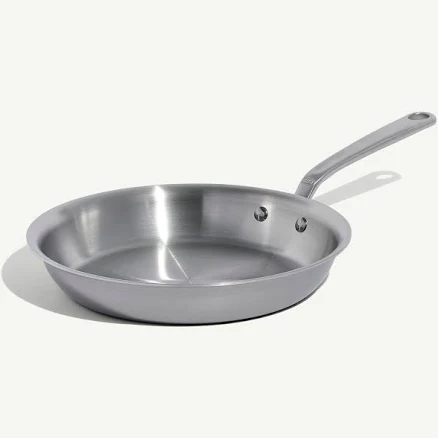
Made In
Stainless Clad Fry Pan
- Stainless steel clad construction, no nonstick coating
- The brand calls it PFAS-free, which we have not verified
- Clad separation or delamination over time
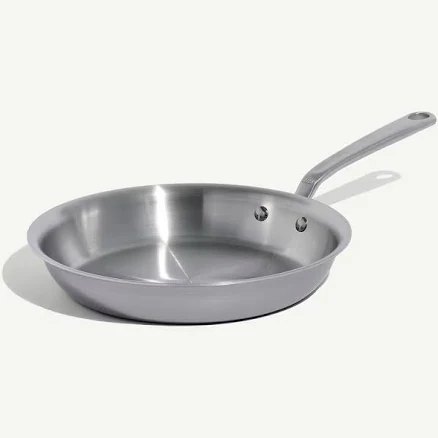
Made In
10' Stainless Clad Frying Pan
- stainless steel clad construction, no nonstick coating
- The brand calls it PFAS-free, which we have not verified
- Nickel leaching from stainless steel
3 hazards checked on this product. See all of them.
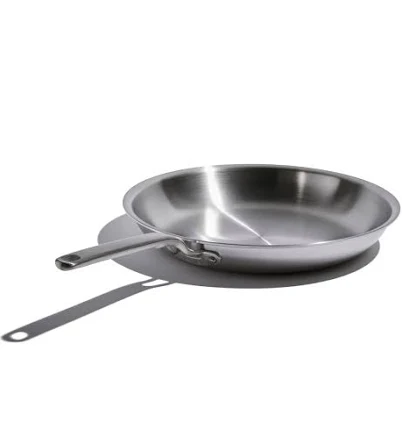
Heritage Steel
Eater Fry Pan
- Clad stainless steel, no coating
- The brand calls it PFAS-free, which we have not verified
- Metal ion release during cooking (iron, nickel, chromium)
More cookware grades
How we score, every product runs through the same public 0-100 rubric based on materials, coatings, brand disclosure, lab findings, and recalls. See the full methodology → Spotted a mistake? Report an error.