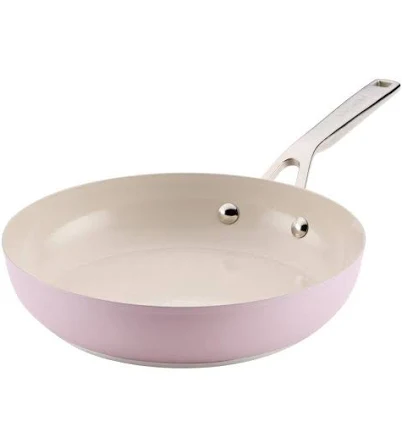
KitchenAid Color-Finished Stainless Steel 3-Ply Base Ceramic Nonstick Frying Pan
Ceramic nonstick likely lower risk, but coating specifics undisclosed by brand.
KitchenAid does not disclose nonstick coating composition. Ceramic coatings are generally lower PFAS concern than Teflon-type coating, but lack of transparency limits certainty.
The better-graded swap
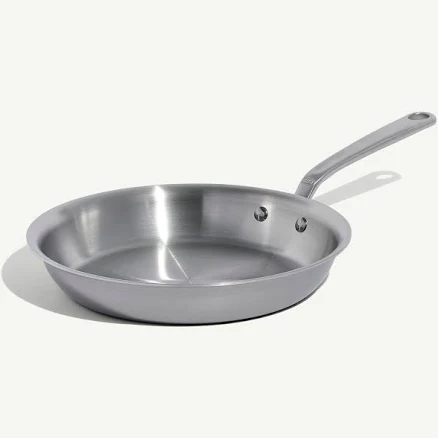
Made In
Made In Stainless Clad Fry Pan
100/100 safety
Same rubric that flunked this product. The swap earned Excellent.
Still want this one anyway? Check the price on Amazon. We’d swap it.
Material
Ceramic nonstick coating, stainless steel base
Lab data
No public lab test
Is KitchenAid Color-Finished Stainless Steel non-toxic? What it is made of
This pan combines a stainless steel (likely 18/10 grade) base with a ceramic nonstick coating. Ceramic coatings are inorganic (silica-based) rather than Teflon-family coating, so they do not release Teflon-type coating fumes even if overheated. Stainless steel itself does not leach under normal cooking conditions, though prolonged contact with very acidic foods can cause minor ion migration. The 3-ply construction means copper or aluminum is sandwiched between steel layers for heat distribution; this metal does not directly contact food.
What’s concerning
Category baseline
The starting point for this type of product, before anything specific to this product is counted.
No PFAS disclosure
No public statement from the brand about PFAS in this product.
Non-stick, chemistry undisclosed
Marketed as non-stick without stating the coating chemistry.
Ceramic coating degradation and delamination
Ceramic nonstick coatings are durable but not permanent. If coating flakes or peels from impacts or thermal cycling, bare stainless steel (not a material linked to PFAS) or underlying aluminum (lower concern) becomes exposed. No recalls on this specific model, but user reports of ceramic loss over 1-3 years of use exist for ceramic nonstick cookware broadly.
Thermal stability of coating at high heat
Ceramic coatings can off-gas or degrade if heated above 400-500F repeatedly. KitchenAid does not publish a maximum safe temperature for this specific coating. Using high heat or preheating empty significantly above manufacturer guidance may shorten coating life or trigger uncharacterized fumes.
What’s reassuring
Lead
No public testing or recalls have identified lead or cadmium contamination in KitchenAid ceramic-coated cookware. Modern ceramic cookware for food contact typically meets FDA and international standards, but KitchenAid does not publish third-party certification or independent test results for this product.
Source, ATSDR ↗Aluminum core leaching
The aluminum in the 3-ply base is encased by stainless steel layers and does not contact food directly. Aluminum leaching is not a known concern for properly constructed 3-ply cookware with intact cladding. Stainless steel bonding integrity is not publicly documented for this model.
Teflon-type coating/Teflon-type coating-related fume emissions
Ceramic nonstick formulations do not contain Teflon-type coating or PFOA by definition. This product avoids the primary risk associated with traditional nonstick cookware. Brand does not disclose whether any legacy Teflon-type coating equipment was used in manufacturing, but finished coating is ceramic.
The full breakdown
The brand's record and disclosure
KitchenAid (owned by Whirlpool) does not publicly disclose specific ceramic coating suppliers or composition details for this product. No major recalls have been issued for this pan model related to coating safety, lead, or cadmium. The brand has not made explicit PFAS-free claims or published third-party certifications (e.g., GreenGuard, NSF) for nonstick cookware, leaving coating specifics opaque.
How it compares in its category
Ceramic nonstick pans occupy a middle tier between traditional Teflon-type coating nonstick (higher PFOA/Teflon-type coating risk if degraded) and uncoated stainless steel (no coating hazards but requires more oil and skill). This KitchenAid model is positioned competitively; most major brands (T-fal, Calphalon, GreenPan) offer similar ceramic options. Ceramic coatings generally perform better on durability than budget alternatives but may lose nonstick properties faster than premium Teflon-type coating if subjected to high heat or abrasive scrubbing.
If you buy it
Keep heat below medium-high (350-400F target) to preserve ceramic coating integrity and minimize any potential off-gassing. Avoid metal utensils and abrasive scouring pads; use wood or silicone tools and soft sponges. Hand-wash rather than dishwasher when possible, as harsh detergent cycles can degrade coatings over time. Replace the pan if the ceramic coating visibly peels, flakes, or develops bare metal spots, as this creates a leaching pathway.
What we don’t know
- Basis
- Model estimate, 58% confidence, not a lab result
- Lab test
- None on record for this exact product
- Brand statement
- Kitchenaid has made a specific claim
Formulations change between production runs, so check the current label. How we grade.
Better-graded alternatives in Cookware
Made In
Stainless Clad Fry Pan
- Stainless steel clad construction, no nonstick coating
- The brand calls it PFAS-free, which we have not verified
- Clad separation or delamination over time
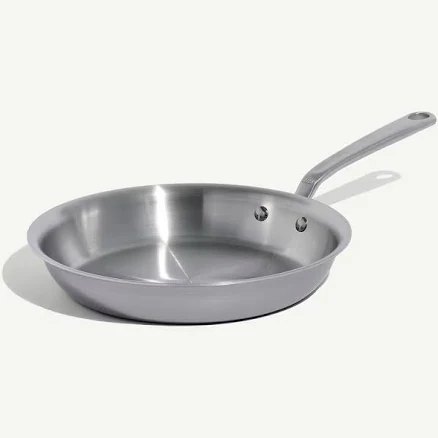
Made In
10' Stainless Clad Frying Pan
- stainless steel clad construction, no nonstick coating
- The brand calls it PFAS-free, which we have not verified
- Nickel leaching from stainless steel
3 hazards checked on this product. See all of them.
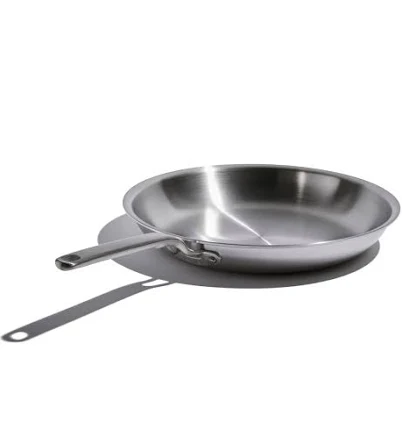
Heritage Steel
Eater Fry Pan
- Clad stainless steel, no coating
- The brand calls it PFAS-free, which we have not verified
- Metal ion release during cooking (iron, nickel, chromium)
More cookware grades
How we score, every product runs through the same public 0-100 rubric based on materials, coatings, brand disclosure, lab findings, and recalls. See the full methodology → Spotted a mistake? Report an error.