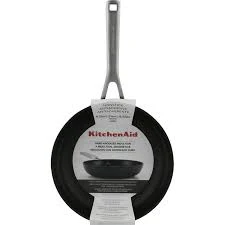
KitchenAid Induction Nonstick Frying Pan
Nonstick coating identity unknown; PFAS risk unclear without disclosure.
KitchenAid does not publicly specify the nonstick coating chemistry. Most nonstick cookware historically used Teflon-type coating/PFOA, though newer alternatives exist. Without brand transparency, PFAS exposure risk cannot be ruled out.
The better-graded swap
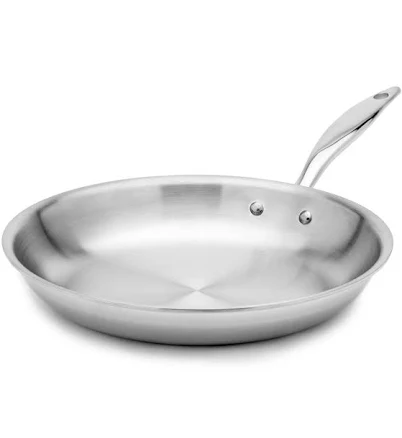
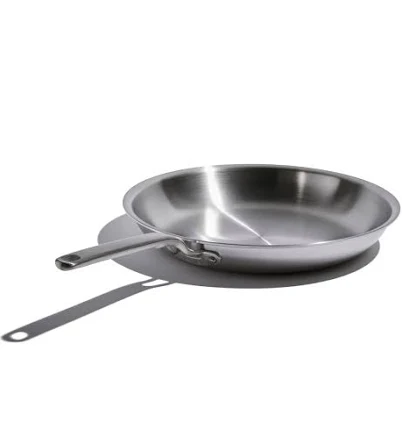
Heritage Steel
Heritage Steel Fry Pan
100/100 safety
Same rubric that flunked this product. The swap earned Excellent.
Still want this one anyway? Check the price on Amazon. We’d swap it.
Material
nonstick coating, unspecified type
Lab data
No public lab test
Is KitchenAid Induction Nonstick Frying Pan non-toxic? What it is made of
KitchenAid has not publicly disclosed whether this pan uses Teflon-type coating (Teflon), ceramic, or another nonstick chemistry. The coating type determines heat stability and degradation risk. Nonstick coatings generally degrade when exposed to sustained high heat, and Teflon-type coating specifically can emit fumes above 500°F (260°C). Without material transparency, you cannot reliably assess the upper safe temperature or lifespan of the coating.
What’s concerning
Category baseline
The starting point for this type of product, before anything specific to this product is counted.
No PFAS disclosure
No public statement from the brand about PFAS in this product.
Non-stick, chemistry undisclosed
Marketed as non-stick without stating the coating chemistry.
Teflon-type coating fume risk (thermal decomposition)
If the coating is Teflon-type coating, overheating above 500°F can release toxic fumes. KitchenAid does not confirm the coating type, so risk cannot be ruled out. Induction heating can rapidly reach high temperatures if burner is set high.
Coating degradation and microflaking
Nonstick coatings on this class of cookware typically show visible wear within 2-4 years of regular use. Flakes or peeling are signs the coating integrity is compromised and the pan should be retired to avoid ingestion of coating particles.
Coating identity and composition unknown
KitchenAid labels the pan 'nonstick' but does not disclose whether it is Teflon-type coating, Teflon-type coating-free, ceramic, or hybrid. This opacity prevents independent assessment of long-term safety or disposal concerns. Consumer cannot verify PFAS-free status or alternative chemistry claims.
What’s reassuring
Aluminum leaching
If the pan has an aluminum core or base, leaching risk depends on coating integrity and pH of food. No specific aluminum leaching data for KitchenAid induction nonstick pans is on record. Intact coating should prevent contact; damage is the primary concern.
Lead
No recalls or testing reports document lead or cadmium contamination in KitchenAid cookware. Modern US-market cookware is unlikely to contain these metals, but brand certification would confirm.
Source, ATSDR ↗The full breakdown
The brand's record and disclosure
KitchenAid has not published material safety data sheets or coating composition for this product line. The company does not advertise PFAS-free certification or third-party testing on cookware. This silence on nonstick chemistry is common in the industry but leaves consumers unable to cross-check safety claims. No major recalls specific to this pan model are on record, but the lack of disclosure itself is a transparency gap.
How it compares in its category
Most mid-range induction nonstick pans use Teflon-type coating or proprietary Teflon-type coating variants; KitchenAid's approach is industry standard but opaque. Cast iron or stainless steel induction pans eliminate nonstick coating risk entirely but require seasoning or different handling. Ceramic nonstick alternatives exist but are often less durable. KitchenAid's refusal to specify is typical of major cookware brands, not exceptional.
If you buy it
Never exceed medium-high heat; induction heats quickly and heat spikes are easy. Replace the pan immediately if the nonstick surface shows visible flaking, chipping, or white discoloration. Hand wash only; dishwashers accelerate coating breakdown. Store without stacking other cookware directly on the cooking surface. Given coating ambiguity, assume a 3-5 year functional lifespan under normal use.
What we don’t know
- Basis
- Model estimate, 35% confidence, not a lab result
- Lab test
- None on record for this exact product
- Brand statement
- Kitchenaid has made a specific claim
Formulations change between production runs, so check the current label. How we grade.
Better-graded alternatives in Cookware
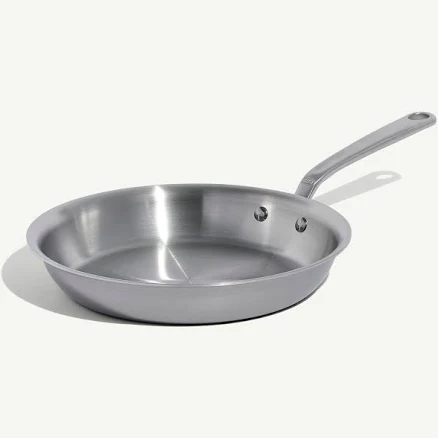
Made In
Stainless Clad Fry Pan
- Stainless steel clad construction, no nonstick coating
- The brand calls it PFAS-free, which we have not verified
- Clad separation or delamination over time
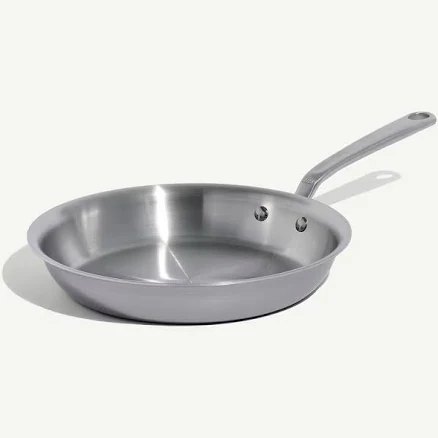
Made In
10' Stainless Clad Frying Pan
- stainless steel clad construction, no nonstick coating
- The brand calls it PFAS-free, which we have not verified
- Nickel leaching from stainless steel
3 hazards checked on this product. See all of them.
Heritage Steel
Eater Fry Pan
- Clad stainless steel, no coating
- The brand calls it PFAS-free, which we have not verified
- Metal ion release during cooking (iron, nickel, chromium)
More cookware grades
How we score, every product runs through the same public 0-100 rubric based on materials, coatings, brand disclosure, lab findings, and recalls. See the full methodology → Spotted a mistake? Report an error.