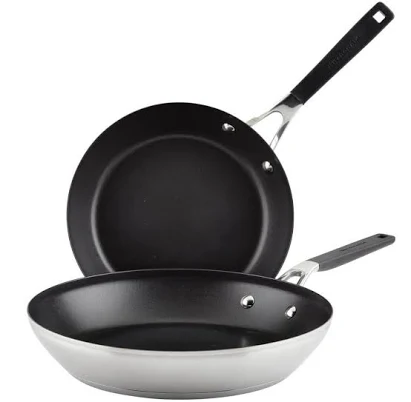
KitchenAid Stainless Steel Nonstick Frying Pan Set
Nonstick coating composition undisclosed. Check product label for details.
KitchenAid does not publicly disclose the nonstick coating type on this pan set. Most nonstick cookware uses Teflon-type coating or other Teflon-family coating; contact the brand directly for coating specifics before purchase.
The better-graded swap
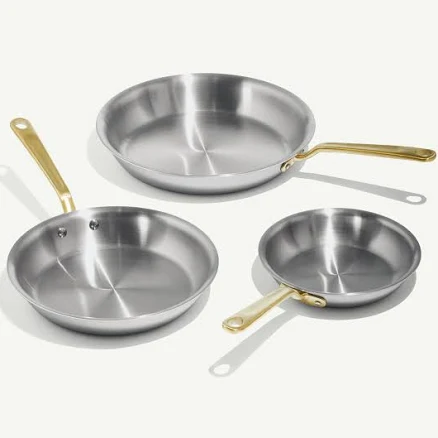
Made In
Made In Stainless Clad Frying Pan Set 3-Piece Professional-Grade 5-Layer Metal Construction
100/100 safety
Same rubric that flunked this product. The swap earned Excellent.
Still want this one anyway? Check the price on Amazon. We’d swap it.
Material
Stainless steel base with unspecified nonstick coating
Lab data
No public lab test
Is KitchenAid Stainless Steel Nonstick non-toxic? What it is made of
KitchenAid's nonstick frying pans pair a stainless steel base (which does not leach under normal cooking) with an unspecified nonstick coating. The brand does not publicly disclose whether this coating contains Teflon-type coating (Teflon) or Teflon-type coating-free alternatives like ceramic or silicone-based polymers. This opacity matters because Teflon-type coating coatings can emit toxic fumes if overheated above 500°F, while some alternatives carry their own stability concerns. Without label transparency, you cannot make an informed choice about your specific unit's thermal safety profile.
What’s concerning
Category baseline
The starting point for this type of product, before anything specific to this product is counted.
No PFAS disclosure
No public statement from the brand about PFAS in this product.
Non-stick, chemistry undisclosed
Marketed as non-stick without stating the coating chemistry.
Teflon-type coating fume risk (thermal)
Coating composition is undisclosed. If Teflon-type coating-based, overheating above 500°F can produce fluorinated gases; user error (unattended pan, high burner) is the primary risk vector. No incident records exist for this specific model, but the risk is inherent to any unlabeled nonstick.
Coating degradation over time
Typical nonstick cookware experiences wear from thermal cycling and abrasion. Consumer reviews mention some KitchenAid nonstick pans losing efficacy or showing visible wear within 2-3 years of regular use, though durability varies by care.
Coating delamination and microparticle release
If the nonstick layer separates from the stainless steel base due to impact or thermal stress, small particles may enter food. This is a mechanical rather than chemical hazard, but undisclosed coating materials make it harder to assess the particle composition risk.
What’s reassuring
Aluminum leaching
The stainless steel base and nonstick coating act as barriers between food and any aluminum interior. No aluminum exposure is expected during normal use unless the coating is compromised.
Lead
Modern cookware coatings sold in North America are not permitted to contain intentional lead or cadmium. No recalls or testing data suggest contamination in this product line.
Source, ATSDR ↗The full breakdown
The brand's record and disclosure
KitchenAid is owned by Whirlpool Corporation and does not maintain a publicly visible stance on PFAS avoidance or nonstick coating transparency. The company has not published material safety data sheets or ingredient disclosures for its cookware nonstick surfaces. No major recalls for nonstick-related fume incidents or coating failures have been documented for this product line in public records. The absence of proactive communication is notable in a market where competitors (e.g., GreenPan, Our Place) now market Teflon-type coating-free formulations as a selling point.
How it compares in its category
This set sits in the mid-market segment. Compared to budget nonstick (often untested coatings), KitchenAid's stainless steel body and established brand history suggest better durability, but it offers less transparency than premium brands that explicitly disclose Teflon-type coating-free or ceramic coatings. Many competitors now openly certify their nonstick as Teflon-type coating and PFOA free; KitchenAid's silence on this point is a relative weakness in 2024's consumer landscape. For equivalent price, you can find pans with full coating disclosure.
If you buy it
Never exceed medium-high heat; keep the stovetop below 400°F to minimize any risk of coating degradation or fume emission. Hand wash rather than dishwasher, as thermal shock and abrasion accelerate coating wear. Inspect the pan surface monthly for chips, flaking, or dark spots; discard and replace if coating integrity is compromised. If you notice any odor or discoloration during heating, immediately remove from heat and ventilate the kitchen; this signals potential coating breakdown.
What we don’t know
- Basis
- Model estimate, 35% confidence, not a lab result
- Lab test
- None on record for this exact product
- Brand statement
- Kitchenaid has made a specific claim
Formulations change between production runs, so check the current label. How we grade.
Better-graded alternatives in Cookware
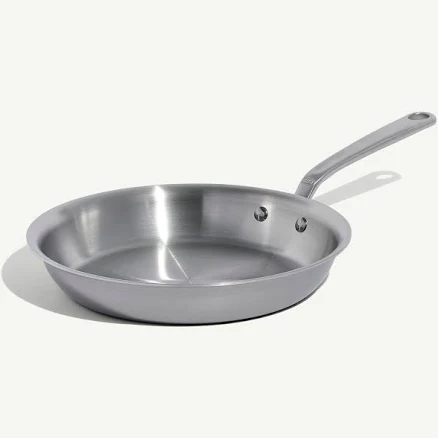
Made In
Stainless Clad Fry Pan
- Stainless steel clad construction, no nonstick coating
- The brand calls it PFAS-free, which we have not verified
- Clad separation or delamination over time
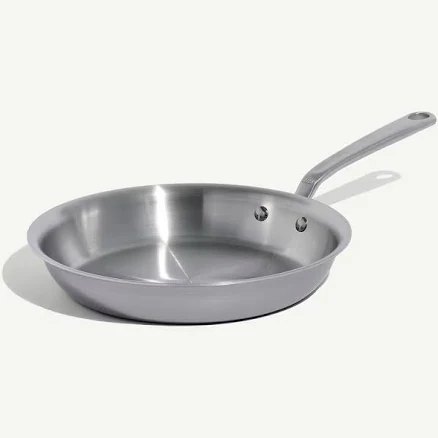
Made In
10' Stainless Clad Frying Pan
- stainless steel clad construction, no nonstick coating
- The brand calls it PFAS-free, which we have not verified
- Nickel leaching from stainless steel
3 hazards checked on this product. See all of them.
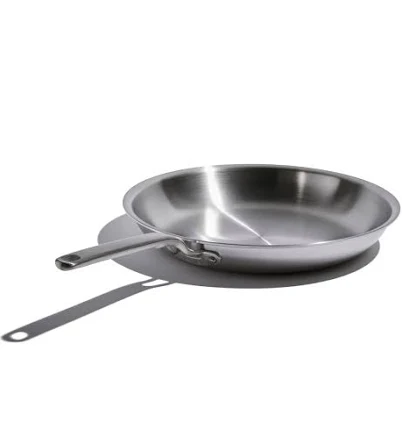
Heritage Steel
Eater Fry Pan
- Clad stainless steel, no coating
- The brand calls it PFAS-free, which we have not verified
- Metal ion release during cooking (iron, nickel, chromium)
More cookware grades
How we score, every product runs through the same public 0-100 rubric based on materials, coatings, brand disclosure, lab findings, and recalls. See the full methodology → Spotted a mistake? Report an error.