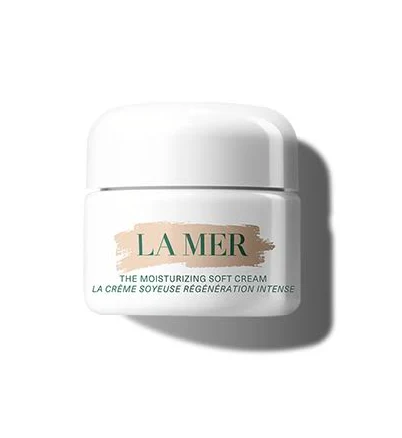
La Mer The Moisturizing Soft Cream
Lower PFAS concern, but La Mer provides no testing disclosure.
This oil-based moisturizer lacks waterproofing or grease-resistance claims that suggest PFAS use. La Mer hasn't publicly tested for or committed to avoiding PFAS.
We flunk more products than we pass. This one earned its grade. How we grade
Material
Oil-in-water cream emulsion with mineral oil, petrolatum, glycerin, proprietary marine complex
Brand disclosure
Brand is silent on PFAS
Lab data
No public lab test
You may also be interested in
Top-graded picks in the categories readers replace first, every one scored on the same rubric.

- polypropylene filter housing, carbon/sediment cartridge
- We found no PFAS statement from the brand
- Bacterial growth in spent cartridges
3 hazards checked on this product, all on its full breakdown.

Aquasure
Premier Series 75 GPD Under Sink Reverse Osmosis Water Filtration System
- RO membrane, carbon filters, stainless steel housing
- We found no PFAS statement from the brand
- Bacterial and microbial growth in housing and filters
4 hazards checked on this product, all on its full breakdown.

Avocado
Vegan Mattress
- organic cotton, natural latex, coconut coir, recycled steel coils
- The brand calls it PFAS-free, which we have not verified
- Heavy metals
2 hazards checked on this product, all on its full breakdown.
What La Mer The Moisturizing Soft Cream is made of, ingredients and materials
La Mer's Soft Cream is an oil-in-water emulsion relying on mineral oil and petrolatum as occlusive agents, combined with glycerin for hydration and a proprietary marine complex (likely sea kelp and mineral extracts). Mineral oil and petrolatum are inert petroleum derivatives with no known systemic absorption risk in leave-on skincare; they are widely approved in cosmetics globally. The formula contains no volatile solvents or reactive chemicals typical of risk products in this category.
What’s concerning
Category baseline
The starting point for this type of product, before anything specific to this product is counted.
No PFAS disclosure
No public statement from the brand about PFAS in this product.
Fragrance allergens and sensitizers
La Mer's proprietary fragrance blend and botanical marine extracts (often including seaweed derivatives) can trigger contact dermatitis or allergic reactions in sensitized individuals; no specific allergen disclosure is provided on packaging.
Emulsion stability and preservative efficacy over time
Oil-in-water creams can degrade if stored improperly (heat, light exposure) and may support microbial growth if preservative system is compromised; once-open shelf life is typically 6-12 months depending on storage conditions.
What’s reassuring
Base material not linked to PFAS
The main material recorded for this product is not one associated with PFAS.
Heavy metals
The marine complex may contain naturally sourced minerals; no recalls or regulatory findings document heavy metal contamination in La Mer products. Mineral oil and petrolatum themselves are refined and do not accumulate metals.
Source, FDA ↗Formaldehyde / VOCs
No public ingredient list discloses formaldehyde-releasing preservatives (imidazolidinyl urea, dmdm hydantoin, etc.) in this formulation; standard preservative systems in luxury creams use non-releasing alternatives, though La Mer does not guarantee this in marketing.
Source, ATSDR ↗Talc contamination in mineral components
This product is a liquid/cream emulsion and not a powder; talc exposure risk is not applicable. Mineral oil and petrolatum do not contain talc as standard ingredients.
How is this PFAS grade calculated?
The brand's record and disclosure
La Mer (owned by Estée Lauder) maintains no public commitments to PFAS testing disclosure or restriction, which is typical of luxury skincare but represents a transparency gap. The brand has no recorded safety recalls or documented regulatory actions specific to this product or line. Estée Lauder operates under FDA oversight and EU cosmetic regulations in key markets, meeting baseline safety standards, though formulary transparency beyond regulatory minimum is limited.
How it compares in its category
This product sits at the premium end of the moisturizer market with a price-to-ingredient ratio dominated by brand equity rather than rare actives. Compared to mass-market alternatives (e.g., Cetaphil, CeraVe), La Mer offers no clinically unique protection against the hazards relevant to moisturizers; comparable formulas with mineral oil and glycerin are available at lower cost. The marine complex is largely unvalidated in peer literature relative to standard humectants, making it primarily a differentiation claim.
If you buy it
Apply a pea-sized amount to damp skin once or twice daily; the occlusive nature means less is more and prevents over-application wastage. Store in a cool, dry place away from direct sunlight to prevent emulsion breakdown and oxidation of mineral oil (though degradation risk is low over typical shelf life of 2-3 years unopened). Discontinue use only if you develop contact dermatitis; fragrance and botanical extracts in the marine complex are potential irritants for sensitive skin, though incidence is low. No heat-related risks or maintenance requirements apply to a leave-on cream.
What is not known about PFAS in this product?
- Basis
- Model estimate, 72% confidence, not a lab result
- Lab test
- None on record for this exact product
- Brand statement
- La Mer has made none
Formulations change between production runs, so check the current label. How we grade.
What are the PFAS-free alternatives to La Mer The Moisturizing Soft Cream?
- Plant oils, butters, waxes
- We found no PFAS statement from the brand
- Fragrance allergens
2 hazards checked on this product, all on its full breakdown.
- Water, oils, glycerin, botanical extracts
- The brand calls it PFAS-free, which we have not verified
- Fragrance allergens (botanical extracts)
3 hazards checked on this product, all on its full breakdown.
- Water-based serum, niacinamide and zinc actives in glycerin base
- We found no PFAS statement from the brand
- 1,4-dioxane as a manufacturing byproduct
2 hazards checked on this product, all on its full breakdown.
More moisturizer grades
How we score, every product runs through the same public 0-100 rubric based on materials, coatings, brand disclosure, lab findings, and recalls. See the full methodology → Spotted a mistake? Report an error.