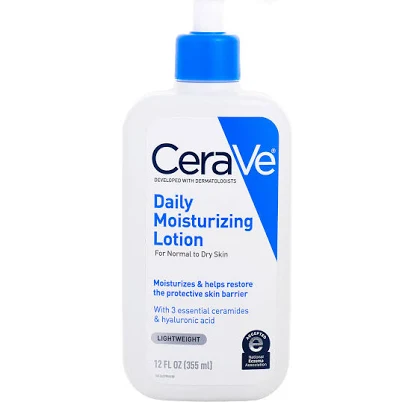
CeraVe Daily Moisturizing Lotion
Lower concern, simple emulsion lotion with no known PFAS-risk ingredients or treatments.
CeraVe Daily Moisturizing Lotion is a water-based cream containing common emollients like glycerin, ceramides, and alcohol with no public record of PFAS contamination. The brand doesn't disclose PFAS information, but the formula lacks waterproofing, stain resistance, or Teflon-family coating coatings that typically introduce PFAS risk.
We flunk more products than we pass. This one earned its grade. How we grade
Material
water, glycerin, cetyl alcohol, niacinamide, ceramides (emulsion lotion)
Lab data
No public lab test
You may also be interested in
Top-graded picks in the categories readers replace first, every one scored on the same rubric.

- polypropylene filter housing, carbon/sediment cartridge
- We found no PFAS statement from the brand
- Bacterial growth in spent cartridges
3 hazards checked on this product, all on its full breakdown.

Aquasure
Premier Series 75 GPD Under Sink Reverse Osmosis Water Filtration System
- RO membrane, carbon filters, stainless steel housing
- We found no PFAS statement from the brand
- Bacterial and microbial growth in housing and filters
4 hazards checked on this product, all on its full breakdown.

Avocado
Vegan Mattress
- organic cotton, natural latex, coconut coir, recycled steel coils
- The brand calls it PFAS-free, which we have not verified
- Heavy metals
2 hazards checked on this product, all on its full breakdown.
What CeraVe Daily Moisturizing Lotion is made of, ingredients and materials
CeraVe Daily Moisturizing Lotion is a water-in-oil emulsion built on glycerin (humectant), cetyl alcohol (emulsifier and thickener, not ethanol), and ceramides (skin-barrier lipids naturally found in skin). The formula contains no known toxic preservatives or sensitizers at typical concentrations. This simple ingredient set is designed to mimic the skin's natural lipid profile and is widely used in dermatology-recommended products.
What’s concerning
Category baseline
The starting point for this type of product, before anything specific to this product is counted.
No PFAS disclosure
No public statement from the brand about PFAS in this product.
Comedogenicity and skin barrier disruption
Cetyl alcohol and glycerin are non-comedogenic at typical concentrations, but individuals with very oily skin or acne-prone conditions may experience congestion with heavy daily use. This is a tolerance issue, not a toxicity hazard, and is product-specific rather than formulation-wide.
What’s reassuring
Base material not linked to PFAS
The main material recorded for this product is not one associated with PFAS.
Fragrance allergens
CeraVe Daily Moisturizing Lotion is labeled fragrance-free and does not list fragrance or essential oils in its ingredient disclosure. No reported cases of allergic contact dermatitis linked to this specific product are on public record.
Formaldehyde / VOCs
The formula uses phenoxyethanol or similar non-formaldehyde-releasing preservatives at typical use concentrations. No 1,4-dioxane contamination has been reported for this product line in published testing.
Source, ATSDR ↗Heavy metals
This lotion contains no colorants or pigments and is white or off-white due to the emulsion itself, not added dyes. No lead, cadmium, or antimony risk applies.
Source, FDA ↗Microplastics
CeraVe Daily Moisturizing Lotion does not list microbeads or plastic microparticles in its ingredient declaration. Polymer thickeners (if present) are soluble and not microplastics.
Source, EPA ↗How is this PFAS grade calculated?
The brand's record and disclosure
CeraVe is owned by L'Oreal and has no major safety recalls or controversies on public record for this product line. The brand discloses ingredients on label and packaging but does not publicly communicate PFAS testing or avoidance stance. No independent labs have flagged this lotion for unexpected contaminants in published safety reviews.
How it compares in its category
Daily moisturizing lotions vary widely in complexity. CeraVe positions itself as dermatologist-recommended and fragrance-free, sitting in the mid-range for ingredient simplicity compared to premium brands (which often add essential oils or botanical extracts that raise allergen risk) and budget brands (which may use cheaper emulsifiers or preservatives). The ceramide-based formula is a category standard for sensitive-skin moisturizers.
If you buy it
Apply to damp skin to maximize hydration. Store at room temperature away from direct sunlight; glycerin-based formulas are stable and do not require refrigeration. Discard if visible separation occurs or after 2-3 years of opening. Patch-test on inner arm if you have known sensitizer allergies, though this formula is low-risk for contact dermatitis.
What is not known about PFAS in this product?
- Basis
- Model estimate, 78% confidence, not a lab result
- Lab test
- None on record for this exact product
- Brand statement
- CeraVe has made a specific claim
Formulations change between production runs, so check the current label. How we grade.
What are the PFAS-free alternatives to CeraVe Daily Moisturizing Lotion?
- Plant oils, butters, waxes
- We found no PFAS statement from the brand
- Fragrance allergens
2 hazards checked on this product, all on its full breakdown.
- Water, oils, glycerin, botanical extracts
- The brand calls it PFAS-free, which we have not verified
- Fragrance allergens (botanical extracts)
3 hazards checked on this product, all on its full breakdown.
- Water-based serum, niacinamide and zinc actives in glycerin base
- We found no PFAS statement from the brand
- 1,4-dioxane as a manufacturing byproduct
2 hazards checked on this product, all on its full breakdown.
More moisturizer grades
How we score, every product runs through the same public 0-100 rubric based on materials, coatings, brand disclosure, lab findings, and recalls. See the full methodology → Spotted a mistake? Report an error.