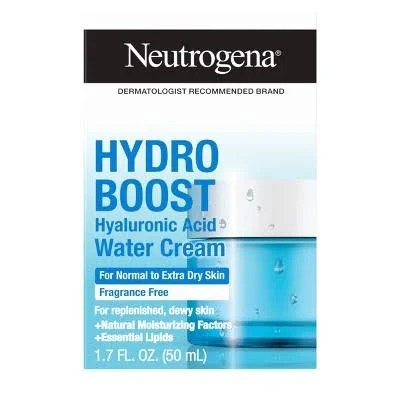
Neutrogena Hydro Boost Water Cream
Lower concern; typical moisturizer with no known PFAS-linked ingredients.
The water-based cream claims no Teflon-type coating, Teflon-family coating, or durable water repellency treatments. Neutrogena makes no PFAS claims either direction.
We flunk more products than we pass. This one earned its grade. How we grade
Material
Water-based emulsion cream; no Teflon-type coating, Teflon-family coating, or durable water repellency claimed
Lab data
No public lab test
You may also be interested in
Top-graded picks in the categories readers replace first, every one scored on the same rubric.

- polypropylene filter housing, carbon/sediment cartridge
- We found no PFAS statement from the brand
- Bacterial growth in spent cartridges
3 hazards checked on this product, all on its full breakdown.

Aquasure
Premier Series 75 GPD Under Sink Reverse Osmosis Water Filtration System
- RO membrane, carbon filters, stainless steel housing
- We found no PFAS statement from the brand
- Bacterial and microbial growth in housing and filters
4 hazards checked on this product, all on its full breakdown.

Avocado
Vegan Mattress
- organic cotton, natural latex, coconut coir, recycled steel coils
- The brand calls it PFAS-free, which we have not verified
- Heavy metals
2 hazards checked on this product, all on its full breakdown.
What Neutrogena Hydro Boost Water Cream is made of, ingredients and materials
Neutrogena Hydro Boost Water Cream is a water-based emulsion marketed as lightweight and hydrating. The product relies on humectants (likely glycerin or hyaluronic acid) to draw moisture into skin, emulsifiers to stabilize the water-oil mixture, and preservatives to prevent microbial growth. Water-based formulations generally present lower dermal penetration risk than occlusive oils or heavy silicones, though preservative systems warrant routine scrutiny in any leave-on cosmetic.
What’s concerning
Category baseline
The starting point for this type of product, before anything specific to this product is counted.
No PFAS disclosure
No public statement from the brand about PFAS in this product.
Preservative sensitivity and allergic contact dermatitis
Water-based creams require preservatives; common agents in Neutrogena lines include methylisothiazolinone (MIT) or phenoxyethanol. Although not linked to hazards at regulated levels, MIT has triggered contact allergies in sensitive individuals and was restricted in some markets. Full INCI review recommended for users with known sensitivities.
Fragrance allergens
Hydro Boost Water Cream contains fragrance (parfum listed as an ingredient in standard formulations). Fragrance allergens vary by batch and are not required to be individually declared; individuals with fragrance sensitivity or atopic dermatitis may experience irritation.
Emulsifier-related irritation or barrier compromise
Synthetic emulsifiers (commonly polysorbates or cetyl alcohol derivatives) can occasionally disrupt the skin barrier or trigger irritation in very sensitive skin. Risk is low at cosmetic-grade concentrations but should be monitored in individuals with compromised or reactive skin.
Contamination risk from improper storage or use
Water-based formulations are more susceptible to microbial overgrowth than anhydrous products if exposed to moisture, warm temperatures, or contaminated applicators. Proper storage and applicator hygiene are essential to prevent secondary bacterial or fungal colonization.
What’s reassuring
Base material not linked to PFAS
The main material recorded for this product is not one associated with PFAS.
Heavy metals
Hydro Boost Water Cream does not contain intentional colorants, mica, or mineral pigments listed in standard formulations. No historical reports of heavy metal contamination in this product line are on record.
Source, FDA ↗How is this PFAS grade calculated?
The brand's record and disclosure
Neutrogena (Johnson & Johnson subsidiary) maintains moderate transparency on ingredient disclosure via product labeling and online ingredient lists; full INCI declarations are publicly available. The brand has faced isolated regulatory actions on unrelated product lines but no major recalls or substantiated safety crises tied to this moisturizer line. J&J has committed to phasing certain legacy preservatives (e.g., parabens in premium lines) but does not explicitly advertise paraben-free status across all Hydro Boost products.
How it compares in its category
This product sits in the mainstream mass-market moisturizer segment, with formulation complexity and preservative load typical for drugstore creams. Water-based moisturizers generally pose lower occlusion and barrier-disruption risk than heavier creams or oils. Compared to premium or natural brands, Neutrogena's reliance on conventional synthetic emulsifiers and preservatives is standard; it does not claim organic, hypoallergenic, or fragrance-free positioning that might set it apart or impose additional verification burden.
If you buy it
Store in a cool, dry place away from direct sunlight to preserve emulsion stability and inhibit preservative degradation. Use a clean applicator or fingertips to avoid introducing bacteria into the jar, as water-based formulations support microbial growth if contaminated. Replace the product 6-12 months after opening, or immediately if you notice separation, odor change, or visible mold. If skin irritation develops, discontinue use and patch-test on a small area before resuming.
What is not known about PFAS in this product?
- Basis
- Model estimate, 78% confidence, not a lab result
- Lab test
- None on record for this exact product
- Brand statement
- Neutrogena has made a specific claim
Formulations change between production runs, so check the current label. How we grade.
What are the PFAS-free alternatives to Neutrogena Hydro Boost Water Cream?
- Plant oils, butters, waxes
- We found no PFAS statement from the brand
- Fragrance allergens
2 hazards checked on this product, all on its full breakdown.
- Water, oils, glycerin, botanical extracts
- The brand calls it PFAS-free, which we have not verified
- Fragrance allergens (botanical extracts)
3 hazards checked on this product, all on its full breakdown.
- Water-based serum, niacinamide and zinc actives in glycerin base
- We found no PFAS statement from the brand
- 1,4-dioxane as a manufacturing byproduct
2 hazards checked on this product, all on its full breakdown.
More moisturizer grades
How we score, every product runs through the same public 0-100 rubric based on materials, coatings, brand disclosure, lab findings, and recalls. See the full methodology → Spotted a mistake? Report an error.