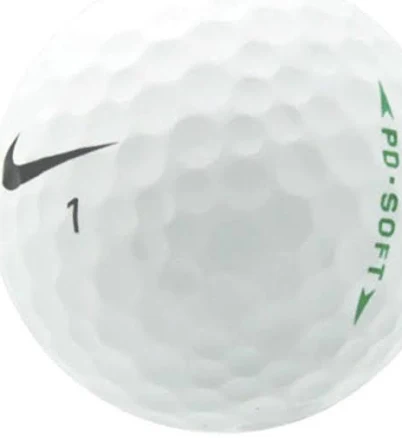
Nike PD Soft
Golf ball with standard polymers, lower concern than coated apparel.
Uses ionomer and polymer materials typical of golf balls with no known PFAS treatment required. Nike discloses nothing about PFAS in this line.
We flunk more products than we pass. This one earned its grade. How we grade
Material
Surlyn ionomer cover, soft polymer core
Lab data
No public lab test
You may also be interested in
Top-graded picks in the categories readers replace first, every one scored on the same rubric.

- polypropylene filter housing, carbon/sediment cartridge
- We found no PFAS statement from the brand
- Bacterial growth in spent cartridges
3 hazards checked on this product, all on its full breakdown.

Aquasure
Premier Series 75 GPD Under Sink Reverse Osmosis Water Filtration System
- RO membrane, carbon filters, stainless steel housing
- We found no PFAS statement from the brand
- Bacterial and microbial growth in housing and filters
4 hazards checked on this product, all on its full breakdown.

Avocado
Vegan Mattress
- organic cotton, natural latex, coconut coir, recycled steel coils
- The brand calls it PFAS-free, which we have not verified
- Heavy metals
2 hazards checked on this product, all on its full breakdown.
What Nike PD Soft is made of, ingredients and materials
Nike PD Soft uses a Surlyn ionomer resin cover bonded to a soft polymer core. Surlyn is a thermoplastic elastomer widely used in golf ball construction because it resists abrasion, maintains shape under compression, and does not leach additives under normal playing conditions. The soft core formulation reduces compression force, meaning less dense polymer compounds that shed fewer volatile compounds during use. Neither Surlyn nor standard polybutadiene cores are known to off-gas harmful volatile organics at the temperatures experienced in golf play.
What’s concerning
Category baseline
The starting point for this type of product, before anything specific to this product is counted.
No PFAS disclosure
No public statement from the brand about PFAS in this product.
Microplastic shedding during use or wear
Any polymer ball will shed microscopic fragments when struck and abraded on grass and greens. This is a minor environmental concern if balls are lost in natural settings, but poses no direct user hazard via inhalation or ingestion during normal play.
What’s reassuring
Base material not linked to PFAS
The main material recorded for this product is not one associated with PFAS.
Volatile organic compound (VOC) off-gassing from polymer core
Surlyn and polybutadiene formulations in golf balls do not volatilize at ambient or typical playing temperatures. No established off-gassing hazard has been documented for this product category.
Heavy metals
Golf ball covers are topical contact only and brief. Surlyn is FDA-listed for indirect food contact; no dyes or pigments used in PD Soft construction are known to migrate under skin contact or moisture. No recalls or incidents on record.
Source, FDA ↗Thermal degradation if exposed to extreme heat
Surlyn softens above 140F but does not emit toxic fumes at consumer-accessible temperatures. Stored golf balls in vehicles or attics may discolor or lose compression over time, but no chemical hazard results from normal heat exposure.
Formaldehyde / VOCs
Modern golf ball construction uses epoxy or polyurethane adhesives rather than formaldehyde-releasing binders. No public data suggests PD Soft uses legacy formaldehyde-based adhesives; this is standard industry practice across all major brands.
Source, ATSDR ↗How is this PFAS grade calculated?
The brand's record and disclosure
Nike has not disclosed PFAS content or testing results for golf balls specifically, though the company has committed to reducing PFAS in apparel and footwear lines. No recalls or safety alerts have been issued for Nike PD Soft balls. For golf equipment, Nike's transparency lags behind some competitors, but the product category itself carries minimal regulatory scrutiny because golf balls are not food contact or worn items. The brand's general record on material transparency in sports equipment is mixed; they prioritize apparel disclosure over hard goods.
How it compares in its category
Golf balls uniformly use ionomer or urethane covers with polymer cores; PD Soft's Surlyn and soft-core design is mainstream and comparable to Titleist, Callaway, and Bridgestone alternatives. None of these products undergo hazard labeling because the finished ball is chemically inert and not subject to consumer exposure hazards like coatings, colorants, or heat-activated off-gassing. The PD Soft is neither better nor worse from a chemical safety standpoint than competing mid-range golf balls; brand reputation and performance drive differentiation, not material safety.
If you buy it
Golf balls require no special handling or maintenance. Store in a cool, dry place to prevent minor cover degradation over years of storage; exposure to extreme heat (above 140F sustained) is rare in normal use but can soften the cover slightly, though this does not create hazardous emissions. Replace balls when visible cover cracks, cuts, or permanent dents appear, as these compromise performance rather than safety. Wash with mild soap and water if desired; no special cleaning products are required or recommended.
What is not known about PFAS in this product?
- Basis
- Model estimate, 72% confidence, not a lab result
- Lab test
- None on record for this exact product
- Brand statement
- Nike has made a specific claim
Formulations change between production runs, so check the current label. How we grade.
More golf balls & equipment grades
How we score, every product runs through the same public 0-100 rubric based on materials, coatings, brand disclosure, lab findings, and recalls. See the full methodology → Spotted a mistake? Report an error.